Cosmologie · Temps (durée) · Espace-temps
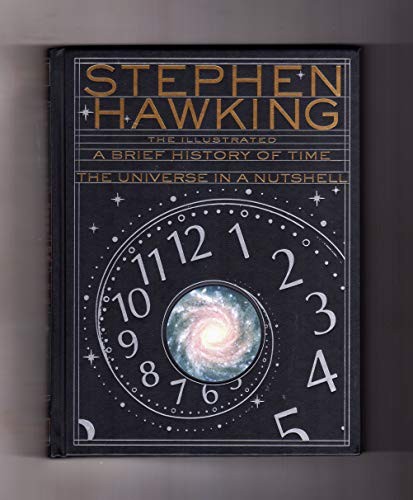
A Brief History of Time by Stephen Hawking — Summary, Key Ideas & Quotes
1988241 pages✦ 3-min Big ideas★ 4.1 (236)
Rate it
Stephen Hawking's ‘A Brief History of Time* has become an international publishing phenomenon. Translated into thirty languages, it has sold over ten million copies worldwide and lives on as a science book that continues to captivate and inspire new readers each year. When it was first published in 1988 the ideas discussed in it were at the cutting edge of what was then known about the universe. In the intervening twenty years there have been extraordinary advances in the technology of observing both the micro- and macro-cosmic world. Indeed, during that time cosmology and the theoretical sciences have entered a new golden age . Professor Hawking is one of the major scientists and thinkers to have contributed to this renaissance.
Hawking explores what time and space really are, challenging everyday assumptions. He discusses how time is not absolute but can bend and stretch, as described by Einstein’s theory of relativity. This means that time can move differently depending on gravity and speed, upending our intuitive understanding. Hawking also delves into the concept of a finite yet unbounded universe, likening it to the surface of the Earth—without edges, but not infinite.
One of the book’s central topics is the Big Bang theory, which posits that the universe began as a singularity—a point of infinite density and temperature. Hawking explains how evidence from cosmic background radiation and the expansion of galaxies supports this idea. He also discusses the possibility of a universe with no boundary, suggesting that asking what happened before the Big Bang may be meaningless.
“If time travel is possible, where are the tourists from the future?”
“However difficult life may seem, there is always something you can do and succeed at.”
“We are just an advanced breed of monkeys on a minor planet of a very average star.”