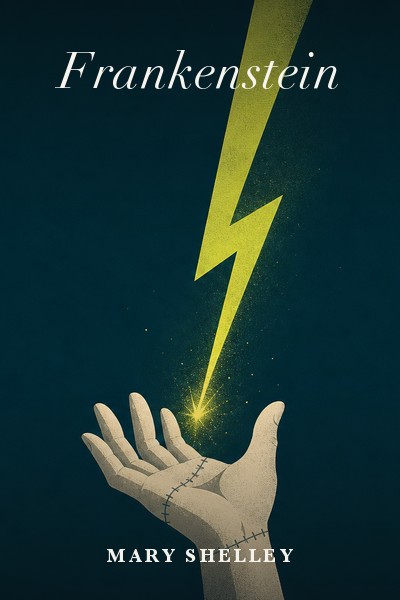

Mary Shelley's 'Frankenstein' explores the dark side of ambition, the quest for knowledge, and the consequences of playing God
Read full overviewShow less›
In 'Frankenstein', Mary Shelley delves into the perils of unbridled ambition and the moral implications of scientific exploration. The novel tells the story of Victor Frankenstein, a young scientist who becomes obsessed with creating life, only to face catastrophic consequences when his creation, a living being made from dead body parts, turns against him. This tale raises profound questions about the nature of humanity, the responsibilities of creators towards their creations, and the ethical boundaries of scientific inquiry. Readers will encounter themes of isolation, the search for acceptance, and the duality of creation and destruction, all woven into a narrative that is as cautionary as it is compelling.
Mary Shelley's 'Frankenstein' serves as a timeless exploration of the human condition, grappling with themes of ambition, isolation, and the moral implications of creation. Through the tragic story of Victor Frankenstein and his creature, readers are prompted to reflect on the responsibilities that come with knowledge and the consequences of forsaking ethical boundaries. The novel's relevance endures in modern discussions about science, technology, and the nature of humanity, making it a powerful cautionary tale for all generations. Ultimately, 'Frankenstein' challenges us to consider our own ambitions and the impact they have on ourselves and those around us, urging a thoughtful examination of the delicate balance between creation and destruction.
Ratings at a glance
- 1The Pursuit of Knowledge as a Double-Edged Sword
- 2Isolation and Alienation: The Human Condition
- 3The Nature of Humanity: Creator vs. Creation
- 4The Consequences of Playing God
- 5The Search for Acceptance and Belonging
A glimpse inside

Victor Frankenstein's quest for knowledge drives the narrative, showcasing the Enlightenment-era belief in the power of science. Read moreVictor Frankenstein's quest for knowledge drives the narrative, showcasing the Enlightenment-era belief in the power of science. Initially, Victor's ambition leads him to study natural philosophy and chemistry, disciplines that promise to unlock the secrets of life. However, his relentless pursuit blinds him to the ethical implications of his work. When he successfully animates a creature, rather than experiencing joy, he is filled with horror and regret. This pivotal moment illustrates the core idea that the pursuit of knowledge, while noble, can lead to dire consequences when it disregards moral responsibility. Shelley's message resonates today, reminding readers that scientific advancement must be tempered with ethical considerations. Show less
Both Victor Frankenstein and his creature experience profound isolation, emphasizing the theme of alienation. Victor's obsessive pursuit of knowledge distances him from f… Read moreBoth Victor Frankenstein and his creature experience profound isolation, emphasizing the theme of alienation. Victor's obsessive pursuit of knowledge distances him from family and friends, leading to his eventual mental and emotional breakdown. He becomes increasingly isolated, retreating into himself as he grapples with guilt and remorse for creating the monster. Conversely, the creature, despite its initial innocence, is shunned by society due to its grotesque appearance. This rejection drives the creature towards despair and vengeance, highlighting how isolation can distort one's nature and lead to destructive behavior. Shelley's exploration of isolation serves as a poignant commentary on the human need for connection and acceptance. Show less
Read the full text — free
About the author
Read Mary Shelley's work free on Lumina — the complete text plus an 8-minute summary and key ideas, no account needed