
Unravel the dark tapestry of human nature through the lens of infamous historical crimes
Read full overviewShow less›
In 'Celebrated Crimes,' Alexandre Dumas delves into the shadowy corners of history, revealing a collection of notorious tales that illuminate the darker aspects of humanity. This work is not merely a recounting of crimes; it is an exploration of the motivations, societal conditions, and psychological complexities that drive individuals to commit heinous acts. Readers will encounter infamous figures such as the Borgias and the Cenci, witnessing how power, ambition, and betrayal can lead to catastrophic ends. Dumas's vivid storytelling transforms historical accounts into gripping narratives, making the reader ponder the thin line between heroism and villainy. Through these tales, one gains a deeper understanding of how the past continues to echo in our modern world.
Dumas's 'Celebrated Crimes' serves as a compelling exploration of the darker aspects of human nature, revealing the complexities of ambition, power, and morality through the lens of historical figures. By examining the infamous tales of the Borgias, Cenci, and others, readers are confronted with the harsh realities of a society where crime often intertwines with politics and personal ambition. The narratives provoke critical reflections on justice and the human condition, urging readers to grapple with the ethical implications of the choices made by these historical figures. Ultimately, Dumas’s work stands as a testament to the enduring fascination with true crime and its capacity to illuminate the intricacies of human behavior, reminding us that the echoes of the past continue to resonate in our contemporary world.
- 1The Borgias: A Family of Ambition and Deceit
- 2The Cenci: Tragedy and Revenge in Renaissance Rome
- 3Urbain Grandier: The Price of Defiance
- 4The Marchioness of Brinvilliers: Poison and Intrigue
- 5The Marchioness of Ganges: A Life Marked by Jealousy
A glimpse inside

The Borgia family, particularly under the patriarchal figure of Rodrigo Borgia, who became Pope Alexander VI, epitomizes the intersection of power, ambition, and moral de… Read moreThe Borgia family, particularly under the patriarchal figure of Rodrigo Borgia, who became Pope Alexander VI, epitomizes the intersection of power, ambition, and moral decay. Rodrigo's rise to power was marked by ruthless manipulation, including bribery and betrayal, which ultimately shaped the political landscape of Renaissance Italy. Dumas paints a portrait of the Borgias that encapsulates their dark allure and the extent of their cruelty. The family is notorious for their intrigues, such as the calculated eliminations of rivals and the infamous poisonings that secured their dominance. The story of Lucrezia Borgia, often vilified in history, reveals the complexities of her character; she was a pawn in her father’s schemes yet also a figure of resilience. Dumas utilizes her life as a lens to examine the roles women played in turbulent political landscapes. Through her story, readers not only witness the treachery of the Borgia family but also reflect on the societal structures that enabled such ambition to flourish. Show less
The tale of the Cenci family is a harrowing narrative of abuse, revenge, and the quest for justice. At the heart of this story lies Beatrice Cenci, a young woman subjecte… Read moreThe tale of the Cenci family is a harrowing narrative of abuse, revenge, and the quest for justice. At the heart of this story lies Beatrice Cenci, a young woman subjected to her father Francesco's tyrannical rule and abuse. Dumas recounts the events leading to Francesco's murder, painting a vivid picture of the familial oppression that pushed Beatrice to desperate measures. The trial that followed her father’s death highlights the societal injustices of the time, where the powerful often escaped unscathed while the innocent suffered. This account serves as a poignant reminder of the lengths to which individuals will go to seek justice, particularly when traditional systems fail them. Dumas's portrayal of Beatrice as a tragic heroine invites readers to reflect on the complexities of morality and the consequences of revenge. The psychological depth of the characters and the portrayal of their struggles emphasize the human capacity for both compassion and cruelty. Show less
Read the full text — free
About the author
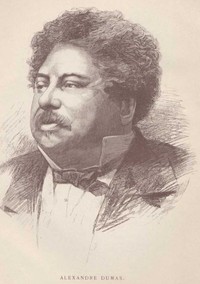
Alexandre Dumas has 7 works free to read on Lumina, including Camille (La Dame aux Camilias), The conspirators; or, The chevalier d'Harmental, The Count of Monte Cristo