

Big ideas · from the full text
Empire of AI
by Karen Hao · 3 min read · Lumina’s commentary, written with AI
About this book
When AI expert and investigative journalist Karen Hao first began covering OpenAI in 2019, she thought they were the good guys. Founded as a nonprofit with safety enshrined as its core mission, the organization was meant, its leader Sam Altman told us, to act as a check against more purely mercantile, and potentially dangerous, forces. What could go wrong? Over time, Hao began to wrestle ever more deeply with that question. Increasingly, she realized that the core truth of this massively disruptive sector is that its vision of success requires an almost unprecedented amount of resources: the “compute” power of high-end chips and the processing capacity to create massive large language models, the sheer volume of data that needs to be amassed at scale, the humans “cleaning up” that data for sweatshop wages throughout the Global South, and a truly alarming spike in the usage of energy and water underlying it all. The truth is that we have entered a new and ominous age of empire: only a small handful of globally scaled companies can even enter the field of play. At the head of the pack with its ChatGPT breakthrough, how would OpenAI resist such temptations? Spoiler alert: it didn’t. Armed with Microsoft’s billions, OpenAI is setting a breakneck pace, chased by a small group of the most valuable companies in human history—toward what end, not even they can define. All this time, Hao has maintained her deep sourcing within the company and the industry, and so she was in intimate contact with the story that shocked the entire tech industry—Altman’s sudden firing and triumphant return. The behind-the-scenes story of what happened, told here in full for the first time, is revelatory of who the people controlling this technology really are. But this isn’t just the story of a single company, however fascinating it is. The g forces pressing down on the people of OpenAI are deforming the judgment of everyone else too—as such forces do. Naked power finds the ideology to cloak itself; no one thinks they’re the bad guy. But in the meantime, as Hao shows through intrepid reporting on the ground around the world, the enormous wheels of extraction grind on. By drawing on the viewpoints of Silicon Valley engineers, Kenyan data laborers, and Chilean water activists, Hao presents the fullest picture of AI and its impact we’ve seen to date, alongside a trenchant analysis of where things are headed. An astonishing eyewitness view from both up in the command capsule of the new economy and down where the real suffering happens, *Empire of AI* pierces the veil of the industry defining our era.
As an Amazon Associate, Lumina earns from qualifying purchases. How this works
♫ AI-generated voice · press play below to listen and read along; tap any passage to jump to it
Scale is a decision people make

In Empire of AI, Karen Hao frames OpenAI’s emphasis on “scale” as a choice made by people with power, money, and specific beliefs about progress—not as an inevitable path. Bigger models and heavier computation helped produce striking products. But the same choice also made the work more expensive, less open, and more dependent on companies that can supply massive computing systems.
Why it matters
When scale is seen as a choice, its costs can be debated instead of treated as fate.
An example
OpenAI’s expansion depended on Microsoft’s large investment and access to major computing systems.
Keep in mind
The summary supports this pattern for OpenAI; it does not prove that all AI research must follow the same route.
AI systems rely on human labor that is easy to miss

In Empire of AI, Karen Hao emphasizes that generative AI is built with people as well as code. Contractors screen disturbing material, write sample answers, compare model outputs, and help systems appear more useful. The book describes how some workers face unstable access to jobs, low pay, emotional strain, or blocked payments, and argues that outsourcing helps keep this labor out of public view.
Why it matters
Once the workers are visible, the moral question includes who absorbs harm and insecurity.
An example
Kenyan contractors reviewed graphic abuse, violence, and self-harm content for moderation training.
Keep in mind
Some company and worker accounts are disputed, so the summary does not present every detail as settled fact.
Cloud AI depends on local resources
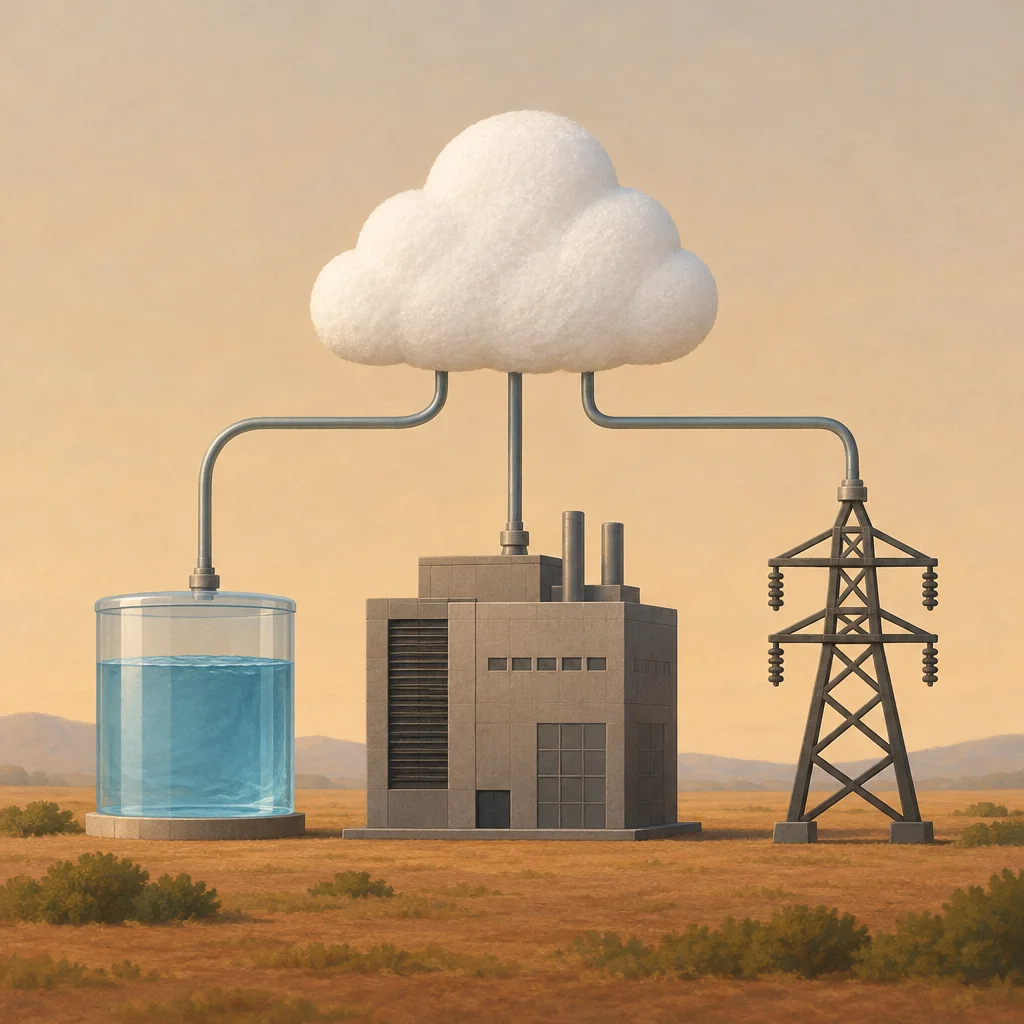
In Empire of AI, Karen Hao connects AI services to physical infrastructure: data centers, water, land, power grids, and extraction. Users may experience AI as weightless and online, but the book emphasizes local impacts. Near Santiago, organizers in Chile raised concerns about scarce water, few permanent jobs, and hard-to-reach company processes, and pushed for consultation rights. In Uruguay, Daniel Peña drew attention to a project’s water demands.
Why it matters
A tool that feels distant to users can still change daily life for people near its infrastructure.
An example
Organizers in Chile challenged a water-cooled data center plan and sought consultation rights.
Keep in mind
These cases show that people can challenge projects; they do not show that every local campaign can redirect a global company.
Future-risk talk can eclipse current impacts

In Empire of AI, Karen Hao describes a split between people focused on extreme future AI disasters and people demanding accountability for harms now. The book does not claim future risks are fake. Instead, it argues that a narrow focus on frontier danger—such as debates about frontier models and computing thresholds—can push aside concerns about privacy, labor, bias, copyright, environmental costs, and the market power of leading firms.
Why it matters
Risk language can protect people, but it can also decide whose suffering gets attention first.
An example
Policy debates focused on frontier models and computing thresholds while critics raised privacy, labor, bias, copyright, and environmental issues.
Keep in mind
The summary supports an overshadowing concern; it does not disprove claims about serious future AI risks.
Mission oversight can buckle under leverage
Contains plot details

In Empire of AI, Karen Hao uses OpenAI’s 2023 leadership crisis to test whether nonprofit oversight could steer a commercial AI giant. Independent directors removed Sam Altman after concerns about honesty and blocked oversight. The book describes how employee pressure, investor pressure, and Microsoft’s offer to hire key leaders helped push events toward Altman’s return, alongside a changed board.
Why it matters
A public mission may not control an organization when jobs, investment, and infrastructure pull another way.
An example
After Altman was dismissed, more than 700 employees signed a letter calling for his return.
Keep in mind
The book’s reading of the crisis is supported by the summary, but the later review was narrow and its findings were not published.
Liked the ideas? Read Empire of AI in full.
The big ideas are free on Lumina. The complete book is available from:
As an Amazon Associate, Lumina earns from qualifying purchases. How this works
Who's talking about Empire of AI
Public statements we checked against the original source
- Discussed it
 Gary MarcusCognitive scientist and AI critic
“In her bestseller Empire of AI, Karen Hao crisply sets the stage.”
Portraits from Wikimedia Commons · photo credits and licences