
Main learnings
Improv Wisdom
by Patricia Ryan Madson · 3 min read
- Type: Nonfiction
- Format: Practical guide
- Topic: Creativity
- Topic: Personal growth
- Topic: Relationships
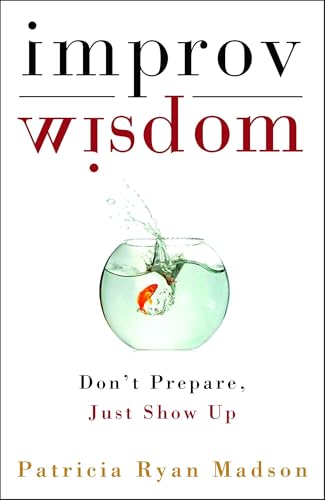
About this book
A practical guide to using improvisation in everyday life. Patricia Ryan Madson brings the habits of improv into work, relationships, and uncertain moments: notice what is happening, begin without waiting for confidence, and help other people contribute. Short examples and exercises make the ideas approachable for readers who have no interest in performing onstage.
Who it's for: For anyone curious about creativity, everyday confidence, and responding to change; no acting background is needed.
AI-narrated · An AI-generated voice reads the same Lumina commentary shown on this page.
Accept the offer, then add to it

In Improv Wisdom, Patricia Ryan Madson opens with a cooperative move: accept what another person brings, then add something that lets things continue. The point is not to block, correct, or seize control first. Acceptance means entering the moment as it is—an idea, a need, a feeling—and joining it so shared action can keep unfolding, instead of shutting it down or replacing it with your own plan.
Why it matters
It frames your response as partnership rather than control, withdrawal, or quick judgment.
An example
Gertrude joins Samantha’s imagined closet-monster moment, and the fear turns into shared play between them.
Keep in mind
The book says affirmation needs sensible limits and cannot promise success.
Look at the moment before managing it

In Improv Wisdom, Patricia Ryan Madson argues that people often lose the real situation by trying to manage it too early. You may be planning what to say, judging yourself, or aiming at a fixed outcome, and then you stop noticing what is actually happening. The book emphasizes present attention first. When you look and listen to what is being offered right now, you get better material for your next move than a private script can provide.
Why it matters
You cannot respond well after you stop noticing what the moment is offering you.
An example
Rachel speaks at her aunt’s funeral while anxious, and finds her words through the act of speaking.
Keep in mind
The book does not reject preparation; needed training and expertise still matter.
Begin with the nearest concrete step

In Improv Wisdom, Patricia Ryan Madson lowers the barrier to action by focusing on the next concrete step. Instead of waiting for the right mood, a perfect plan, or a flawless starting point, you show up and do the nearest real thing. The book suggests that taking one small, immediate action can create energy and information that thinking alone does not produce. It is a way to begin when a task feels too large, unclear, or heavy.
Why it matters
It helps when work feels oversized, vague, or emotionally loaded, and starting seems impossible.
An example
When Mary feels defeated by household disorder, the narrator starts with nearby toys, dishes, and rubbish.
Keep in mind
A small first act can begin movement, but it does not remove every deeper cause.
Use mistakes, but do not excuse harm

In Improv Wisdom, Patricia Ryan Madson treats mistakes as part of unscripted life. The book’s approach is to notice the error, acknowledge it, and choose the next action instead of freezing in shame. At the same time, it draws a boundary. Some situations require exact care, and harm caused by carelessness is not excused by spontaneity. When trust or safety is damaged, the book points toward apology and repair rather than cleverness or denial.
Why it matters
It avoids both shame-driven paralysis and careless “anything goes” spontaneity.
An example
A performer forgets a character’s name and works the lapse into the scene rather than stopping it.
Keep in mind
The book treats serious errors differently from playful slips; trust and safety require repair.
Notice support and pass it on

In Improv Wisdom, Patricia Ryan Madson presents gratitude as a concrete practice rather than a vague feeling. The focus is on noticing the specific help that makes ordinary life possible—things like repaired roads, warm rooms, and tools—and then responding in tangible ways. The book describes thanking particular people, returning what you can, or passing help along to someone else. By making support visible, gratitude becomes a prompt for care and responsibility, not just a mood.
Why it matters
It makes dependence easier to see and turns it into a reason to care for others.
An example
In Naikan reflection in Japan, the narrator reviews help received, help returned, and trouble caused.
Keep in mind
Gratitude can steady a response, but the summary does not say it erases hardship.
Liked the ideas? Read Improv Wisdom in full.
The summary is free on Lumina. The complete book is available from: