
Main learnings
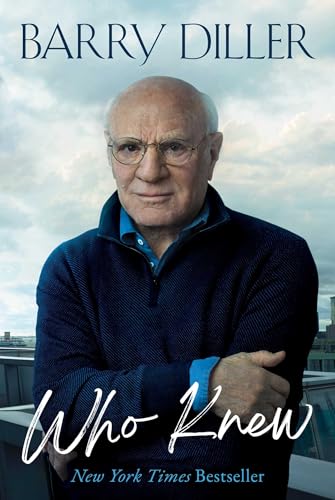
Who Knew
by Barry Diller · 3 min read
- Type: Nonfiction
- Format: Memoir
- Topic: Business
- Topic: Relationships
About this book
Barry Diller's memoir connects a public career in television, film, and internet companies with a more guarded private life. Alongside decisions about businesses and creative work, he examines intimacy, family, and the difficulty of depending on others. The book follows how professional ambition and personal relationships shape each other over a lifetime.
Who it's for: For readers interested in media businesses and personal memoirs that connect work with private identity and family.
AI-narrated · An AI-generated voice reads the same Lumina commentary shown on this page.
Control protects Diller, but it cannot give him intimacy

In Who Knew, Barry Diller describes learning early to rely on himself. Family instability, a missed camp pickup, fear about his sexuality, and a breakdown at nineteen all contribute to a guarded style. In business, that control helps him negotiate and hold steady under pressure. In private life, the same habit makes dependence feel dangerous. The memoir keeps returning to the gap between command and closeness.
Why it matters
The book’s emotional center is not only success. It is the cost of needing safety through control.
An example
His life with Diane von Fürstenberg and her children gives him his first lasting sense of home.
Keep in mind
The summary supports this pattern in Diller’s life, not a general rule about all leaders.
The career advances through experiments, not destiny

In Who Knew, Barry Diller portrays his career as a sequence of moves shaped by openings, mistakes, and curiosity more than a single master plan. The summary traces him from agency work through ABC, Paramount, Fox, QVC, HSN, Ticketmaster, and IAC. It emphasizes lucky breaks, failed deals, missed investments, and plans that were too ambitious, alongside moments of insight. He keeps looking at what screens, audiences, and transactions might become.
Why it matters
This makes achievement look more human: a mix of judgment, timing, help, error, and persistence.
An example
After leaving News Corp, he visits QVC and sees screens as tools for buying and interaction.
Keep in mind
The memoir’s evidence comes from Diller’s own experience and from the events he chooses to include.
Hard argument can sharpen work and wound people

In Who Knew, Barry Diller treats disagreement as part of making creative work. The summary links his approach to television development meetings, script decisions, marketing ideas, and team building. He believes strong argument can sharpen the result. At the same time, the summary says some people experience his style as punishing, and Diller admits not every intervention works. The book presents conflict as a tool with tradeoffs, not a virtue by itself.
Why it matters
The memoir makes room for a serious question: better work may still carry human damage.
An example
His combative television development meetings aim to improve shows, but some colleagues experience them as harsh.
Keep in mind
The summary does not give every colleague’s account, so the full balance of benefit and harm remains limited.
Business independence and personal dependence pull in opposite directions

Who Knew by Barry Diller contrasts two forms of freedom. In work, the summary shows him learning that acting like an owner is different from being one. That lesson helps explain why he moves away from News Corp and later seeks control through QVC, Silver King, HSN, and IAC. In his personal life, the story moves toward accepting family ties. The memoir places independence in business alongside a growing willingness to depend on others in love.
Why it matters
The book shows that freedom can mean different things at work and at home.
An example
Murdoch tells Diller that News Corp has only one principal, and Diller later leaves.
Keep in mind
This is Lumina’s synthesis of two strands in the summary, not a stated theory quoted from Diller.
Building matters most when tied to responsibility
Contains plot details

In Who Knew, Barry Diller describes a shift in what he values, away from money or rank and toward making things. The summary lists what he builds—television formats, studios, networks, internet companies, a headquarters, and Little Island—and ties wealth to responsibility. It also stays cautious about claims, noting he does not present parks as solutions to large social problems. The theme remains grounded in what he says these projects can, and cannot, mean.
Why it matters
It gives the memoir a late-life measure of value: make things, but know what they can and cannot do.
An example
Little Island survives cost growth, opposition, and litigation before opening to large public audiences.
Keep in mind
The source supports Diller’s stated view of parks, not any broad proof of their social impact.
Liked the ideas? Read Who Knew in full.
The summary is free on Lumina. The complete book is available from: