
Main learnings
Make Your Bed
by William H. McRaven · 3 min read
- Type: Nonfiction
- Format: Practical guide
- Topic: Personal growth
- Topic: Leadership
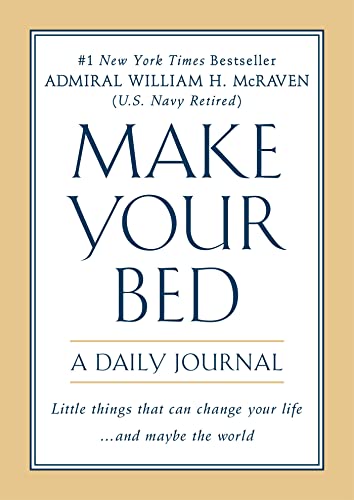
About this book
A book of ten life lessons drawn from military training, command, and personal hardship. William H. McRaven argues that small daily actions can build habits that matter in difficult times. Stories about discipline, courage, help, and hope support his view that people can keep acting even when circumstances are painful or unfair.
Who it's for: For readers who enjoy short, direct lessons about discipline and leadership grounded in military experience.
AI-narrated · An AI-generated voice reads the same Lumina commentary shown on this page.
Small order can build resolve

In Make Your Bed, William H. McRaven treats making the bed as a first, small act of discipline. In training, the bed had to meet exact standards before the day really began. The same kind of routine later gives him a small point of control in places that do not feel controllable, like a hospital room, a submarine, and deployment. It is not a cure for hard life. It is a starting point.
Why it matters
Discipline becomes something a person can practice before life feels heroic.
An example
An inspector checked the bed closely and tested the mattress with a quarter.
Keep in mind
The summary says order from small acts does not remove grief or chaos.
Endurance needs other people

In Make Your Bed, William H. McRaven argues that endurance is not only individual grit. Training requires people to depend on one another to move and paddle a heavy raft. When someone gets sick or worn down, others work harder and share food so the group can keep going. Later, after a parachuting accident, McRaven’s recovery and return to service depend on care from his wife, help from friends, and support from Admiral Eric Olson.
Why it matters
The lesson turns toughness into shared responsibility rather than lonely pride.
An example
When one trainee became sick or spent, others worked harder and shared food.
Keep in mind
The source supports this through specific episodes, not a full theory of relationships.
Conduct matters more than appearance

In Make Your Bed, William H. McRaven argues that first impressions about strength can be shallow. People judge by bodies, status, or a confident look, and the book warns against that habit. A short recruit refuses to quit a difficult swim and finishes near the front, showing conduct under pressure. McRaven also describes dismissing a frail-looking civilian who turns out to be Tommy Norris, a decorated SEAL once considered too small for training. These examples push attention toward behavior, not appearance.
Why it matters
It warns readers not to mistake an impressive look for real courage.
An example
A short recruit refused to leave the swim and finished near the front.
Keep in mind
These cases challenge shallow judgment; they do not prove every underdog will win.
Failure can prepare people, but not by magic

In Make Your Bed, William H. McRaven treats failure as something that can train you, but not automatically. In the Circus, poor performance brings extra hard exercise, and that pressure can drive trainees into deeper exhaustion. Still, McRaven and Marc Thomas improve after repeated extra drills. The book also describes a later command loss that tests whether McRaven will keep working and rebuild trust. The emphasis is on the response after failure, not on praising failure itself.
Why it matters
The point is to learn after failure, not to praise failure itself.
An example
Extra flutter kicks after weak swims helped the pair improve for a later long swim.
Keep in mind
The summary says failure does not help automatically; people must respond and keep learning.
Hope is something people do for each other

In Make Your Bed, William H. McRaven frames hope as an act rather than only a feeling. During Hell Week, a trainee sings while exhausted men sit in cold mud, and others join in; the shared act helps them resist the offer to quit. The book also describes John Kelly meeting grieving families at Dover with compassion shaped by his own loss. McRaven does not claim hope removes suffering. It shows hope as something people offer one another so they can endure what is still painful.
Why it matters
Courage widens from personal bravery into care for people in pain.
An example
A song in the mud helped tired trainees resist the offer to quit.
Keep in mind
The source shows hope helping people endure; it does not claim hope cures grief.
Liked the ideas? Read Make Your Bed in full.
The summary is free on Lumina. The complete book is available from: