

Big ideas · from the full text
The Comfort Crisis
by Michael Easter · 4 min read · Lumina’s commentary, written with AI
- Topic: Psychology
About this book
In many ways, we’re more comfortable than ever before. But could our sheltered, temperature-controlled, overfed, underchallenged lives actually be the leading cause of many our most urgent physical and mental health issues? In this gripping investigation, award-winning journalist Michael Easter seeks out off-the-grid visionaries, disruptive genius researchers, and mind-body conditioning trailblazers who are unlocking the life-enhancing secrets of a counterintuitive solution: discomfort. Easter’s journey to understand our evolutionary need to be challenged takes him to meet the NBA’s top exercise scientist, who uses an ancient Japanese practice to build championship athletes; to the mystical country of Bhutan, where an Oxford economist and Buddhist leader are showing the world what death can teach us about happiness; to the outdoor lab of a young neuroscientist who’s found that nature tests our physical and mental endurance in ways that expand creativity while taming burnout and anxiety; to the remote Alaskan backcountry on a demanding thirty-three-day hunting expedition to experience the rewilding secrets of one of the last rugged places on Earth; and more. Along the way, Easter uncovers a blueprint for leveraging the power of discomfort that will dramatically improve our health and happiness, and perhaps even help us understand what it means to be human. The Comfort Crisis is a bold call to break out of your comfort zone and explore the wild within yourself.
As an Amazon Associate, Lumina earns from qualifying purchases. How this works
♫ AI-generated voice · press play below to listen and read along; tap any passage to jump to it
Useful hardship is chosen, hard, and bounded

In The Comfort Crisis, Michael Easter argues that the point is not “pain is good.” The book’s middle ground is that a challenge can teach you something when you choose it, prepare for it, and keep it within survivable limits. It draws on Elliott’s “misogi” idea and Seery’s research to suggest that too little difficulty can soften people, while too much can harm them. Elliott abandoning a Grand Canyon attempt shows stopping can be the right call.
Why it matters
This keeps the book from becoming a reckless praise of suffering or a simple comfort cleanse.
An example
Elliott abandoned a Grand Canyon attempt, showing that stopping can be the right choice.
Keep in mind
The summary supports moderate, managed adversity; it does not show that any painful event helps people grow.
Boredom and quiet can give attention room to recover

In The Comfort Crisis, Michael Easter portrays boredom as more than an irritant. During long waits for caribou, the narrator first tries to invent small distractions. With time, his mind settles, and he becomes more observant and more reflective, including about his marriage. The book contrasts this slow settling with screens that can quickly soothe restlessness but may crowd out slower thought. The claim is not that boredom guarantees creativity—only that quiet can sometimes give attention room to recover.
Why it matters
The idea reframes empty time as a possible resource, not just wasted space to fill.
An example
While waiting for caribou, the narrator first invents distractions, then grows more observant and reflective.
Keep in mind
The book says boredom is a signal to change activity, not a guaranteed source of creativity.
Hunger, appetite, stress, and reward are different forces

In The Comfort Crisis, Michael Easter separates physical hunger from other pressures that shape eating. On the expedition, the hunters burn far more than they eat, making hunger hard to ignore. Back home, the narrator’s eating is influenced by stress and easy access, not just bodily need. Trevor Kashey has him record normal intake and discovers his portion estimates are badly off. From there, Kashey focuses on adjusting habits—food, protein, sleep, movement, and stress—without banning entire categories of food. The fasting case is presented as not final.
Why it matters
This gives a more flexible way to think about eating than shame, denial, or strict forbidden-food rules.
An example
Kashey has the narrator record normal intake and finds his portion estimates are badly off.
Keep in mind
The fasting discussion includes possible benefits and some animal evidence, so the case is not final.
Thinking about death can sharpen gratitude and choice
Contains plot details

In The Comfort Crisis, Michael Easter describes mortality as something people often avoid but may need to face. In Bhutan, Buddhist teachers emphasize that everything changes and that clinging to status, possessions, and even life can create suffering. On the hunt, after shooting the bull, the narrator helps butcher it and feels sadness, gratitude, and a stronger connection to meat and what it represents. The book presents death awareness as a way daily choices can feel less abstract and relationships more immediate, while noting Bhutan’s happiness has many causes beyond death reflection alone.
Why it matters
Death awareness can make daily choices feel less abstract and relationships more urgent.
An example
After shooting the bull, the narrator helps butcher it and feels sadness, gratitude, and connection to meat.
Keep in mind
Bhutan’s happiness cannot be explained by death reflection alone; the guides name many causes.
Modern bodies may need practical, varied movement
Contains plot details
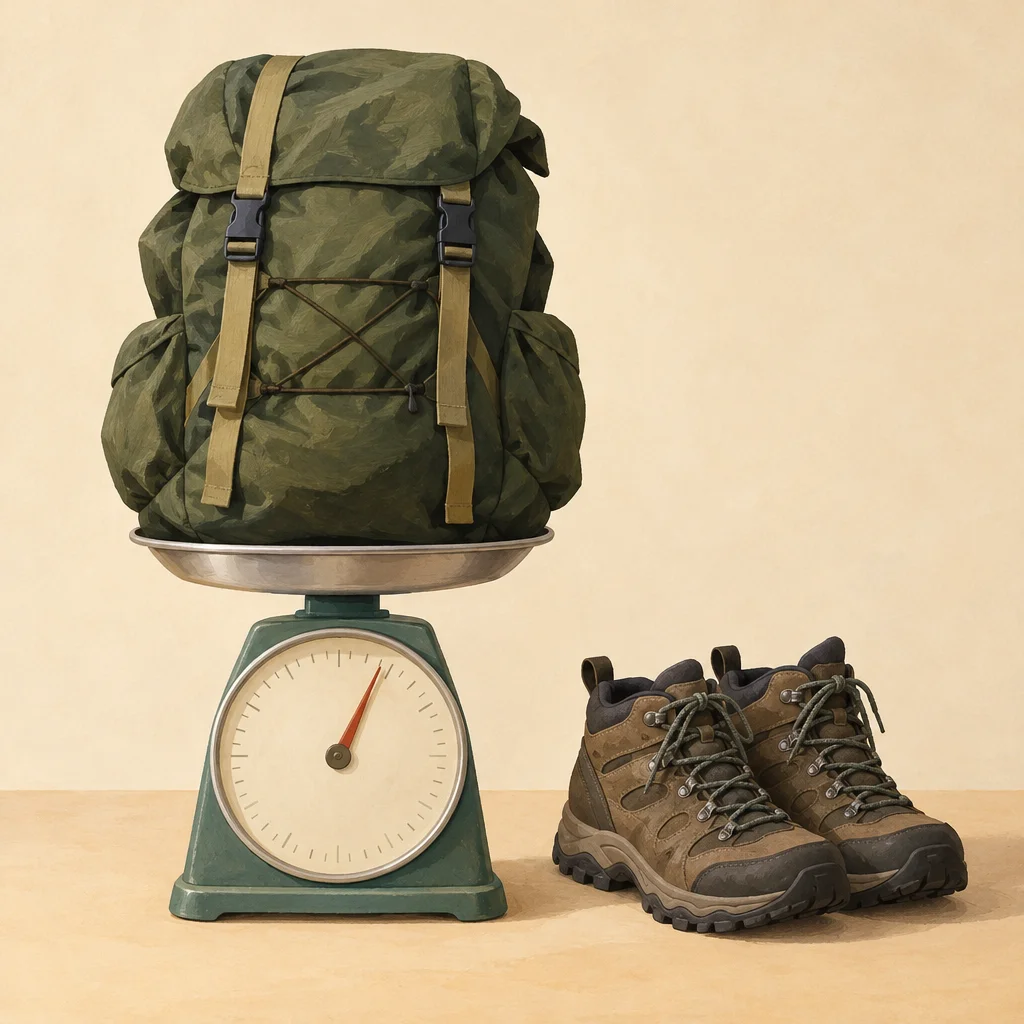
In The Comfort Crisis, Michael Easter contrasts the hunt’s heavy, awkward labor with supported exercise and sedentary routines. Carrying meat over unstable ground demands several capacities at once: strength, endurance, balance, and attention. The book gives a vivid measure: each hunter carries roughly 90 to 110 pounds of caribou over five hard miles. From that, the everyday lesson is smaller—rucking and frequent gentle movement can rebuild useful capacity when done gradually and fitted to the person. The book also notes exercise is not a cure-all, and extreme loads are not the daily model.
Why it matters
Fitness becomes less about gym performance and more about being able to carry, walk, adapt, and recover.
An example
Each hunter carries roughly 90 to 110 pounds of caribou over five hard miles.
Keep in mind
The book notes exercise is not a cure for everything, and extreme loads are not the model for daily life.
Liked the ideas? Read The Comfort Crisis in full.
The big ideas are free on Lumina. The complete book is available from:
As an Amazon Associate, Lumina earns from qualifying purchases. How this works