
Big ideas · from the full text
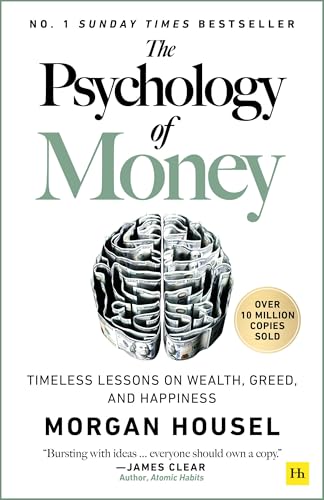
The Psychology of Money
by Morgan Housel · 3 min read · Lumina’s commentary, written with AI
About this book
Over 10 million copies sold around the world. The original book from Morgan Housel, the New York Times bestselling author of The Art of Spending Money.
As an Amazon Associate, Lumina earns from qualifying purchases. How this works
♫ AI-generated voice · press play below to listen and read along; tap any passage to jump to it
Money decisions are shaped by behavior, not just math

In The Psychology of Money, Morgan Housel argues that handling money is less about raw intelligence and more about behavior under stress. People’s past experiences, fears, and what markets felt like when they first started shape what seems normal. That is why the book emphasizes habits. A person with modest work and steady restraint may do better than someone with high status but weak limits, as shown in the contrast between Ronald Read and Richard Fuscone.
Why it matters
It frames personal finance as judgment, patience, and self-control—not only knowledge or calculations.
An example
Ronald Read’s steady, low-key habits accumulated millions, while Richard Fuscone’s reliance on borrowing ended in bankruptcy.
Keep in mind
The book says we can understand a choice without calling that choice wise.
Compounding depends on staying in the game

In The Psychology of Money, Morgan Housel argues that compounding needs time, and time disappears when risk forces you out. Big gains do not matter if a later blowup wipes out the ability to keep going. The book highlights Jesse Livermore: after major wins near the 1929 crash, he later speculated again and lost his fortune. The point is not that growth is impossible, but that survival is what keeps the long run available.
Why it matters
Avoiding ruin matters because it preserves the years that compounding requires.
An example
Jesse Livermore made large gains around the 1929 crash, then later lost his fortune after speculating again.
Keep in mind
Survival can keep the chance for growth alive, but it cannot promise strong returns.
Savings buy flexibility, even when unseen

In The Psychology of Money, Morgan Housel draws a line between looking rich and being secure. Wealth is often invisible because it is money not spent. Savings can create room to leave a bad job, handle illness, wait through market trouble, or choose work for better reasons. The book’s example is personal to the narrator: the narrator’s family kept cash partly so they would not have to sell stocks under pressure. The emphasis is on options, not appearances.
Why it matters
It reframes the goal from impressing others to preserving freedom and future choices.
An example
The narrator’s family kept cash partly so they wouldn’t be forced to sell stocks under pressure.
Keep in mind
The summary ties this advice to having enough income first, so it may not answer basic scarcity.
A plan only works if you can stick with it

In The Psychology of Money, Morgan Housel argues that financial plans can fail even when the math looks strong, because real people feel fear, regret, and shifting family needs. A reasonable plan may beat a perfect-looking plan if it helps someone stay calm and keep going. The book points to Harry Markowitz’s own allocation choice: it was shaped partly by a desire to limit future regret, not purely by theory. The central idea is endurance, not elegance.
Why it matters
It reminds you that advice must fit the person living with it, not just an abstract model.
An example
Harry Markowitz’s personal allocation aimed partly to reduce future regret, not only to satisfy theory.
Keep in mind
Comfort can support discipline, but a comfortable choice is not automatically a sound one.
A good story can make weak evidence feel safe

In The Psychology of Money, Morgan Housel warns that when money feels uncertain, people reach for comforting narratives. Strong stories can hide weak judgment and make thin evidence seem convincing. The book points to investors accepting Bernie Madoff’s unusually smooth returns, treating that acceptance as wishful belief. It also cautions that long-term savers can be harmed by copying signals meant for short-term traders. Knowing your own time horizon helps separate what matters from what is just noise.
Why it matters
Clear goals and horizons reduce the temptation to borrow someone else’s risks or trust soothing stories.
An example
Investors accepted Madoff’s unusually smooth returns, which the book treats as wishful belief.
Keep in mind
The book treats history as useful context, not as a reliable script for the future.
Liked the ideas? Read The Psychology of Money in full.
The big ideas are free on Lumina. The complete book is available from:
As an Amazon Associate, Lumina earns from qualifying purchases. How this works