

Mathematics · Addresses, essays, lectures · Pure Mathematics
A Mathematician's Apology by G. H. Hardy — Summary, Key Ideas & Quotes
1940153 pages✦ 3-min Big ideas★ 4.0 (10)
Rate it
G. H. Hardy was one of this century's finest mathematical thinkers, renowned among his contemporaries as a 'real mathematician … the purest of the pure'. He was also (as C. P. Snow recounts in his Foreword to the 1967 edition) 'unorthodox, eccentric, radical, ready to talk about anything'. This 'apology', written in 1940 as his mathematical powers were declining, offers a brilliant and engaging account of mathematics as very much more than a science; when it was first published, Graham Greene hailed it alongside Henry James's notebooks as 'the best account of what it was like to be a creative artist'. C. P. Snow's Foreword gives sympathetic and witty insights into Hardy's life, with its rich store of anecdotes concerning his collaboration with the brilliant Indian mathematician Ramanujan, his aphorisms and idiosyncrasies, and his passion for cricket. This is a unique account of the fascination of mathematics and of one of its most compelling exponents in modern times.
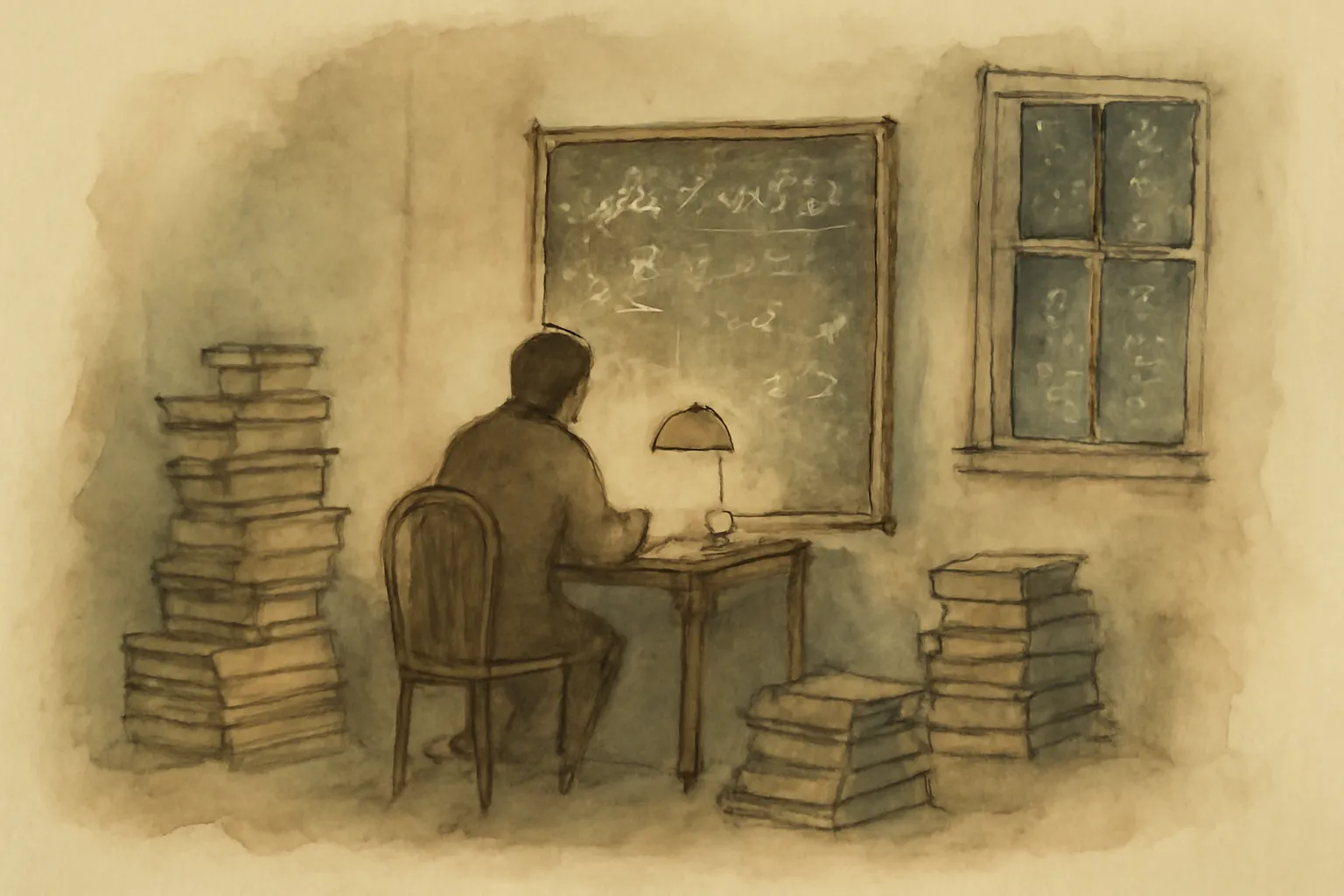
Hardy insists that pure mathematics is fundamentally a creative and aesthetic endeavor, more akin to poetry or painting than to the utilitarian sciences. He argues that mathematicians are driven by the search for beauty, elegance, and intellectual satisfaction, not by practical applications. For Hardy, the value of mathematics lies in its abstract structures and the pleasure derived from discovering deep, unexpected connections. This perspective challenges the common view of mathematics as dry or merely useful, positioning it as a form of artistic expression.
A central theme of the book is Hardy’s unapologetic embrace of 'useless' mathematics. He contends that the most profound mathematical work is often pursued without regard for practical application and that this very uselessness is a virtue. Hardy sees pure mathematics as protected from misuse and as a testament to human curiosity and creativity. He provocatively claims that the utility of mathematics is not what makes it valuable, but rather its purity and detachment from worldly concerns.
“A mathematician, like a painter or poet, is a maker of patterns.”
“It is not worth an intelligent man's time to be in the majority. By definition, there are already enough people to do that.”
“Beauty is the first test: there is no permanent place in the world for ugly mathematics.”
“I have never done anything 'useful'. No discovery of mine has made, or is likely to make, directly or indirectly, for good or ill, the least difference to the amenity of the world.”