1.Mathematics as a Creative Art
Hardy insists that pure mathematics is fundamentally a creative and aesthetic endeavor, more akin to poetry or painting than to the utilitarian sciences. He argues that mathematicians are driven by the search for beauty, elegance, and intellectual satisfaction, not by practical applications. For Hardy, the value of mathematics lies in its abstract structures and the pleasure derived from discovering deep, unexpected connections. This perspective challenges the common view of mathematics as dry or merely useful, positioning it as a form of artistic expression.
2.The Value of Uselessness
A central theme of the book is Hardy’s unapologetic embrace of 'useless' mathematics. He contends that the most profound mathematical work is often pursued without regard for practical application and that this very uselessness is a virtue. Hardy sees pure mathematics as protected from misuse and as a testament to human curiosity and creativity. He provocatively claims that the utility of mathematics is not what makes it valuable, but rather its purity and detachment from worldly concerns.
3.Aging and the Loss of Creative Power
Written as Hardy felt his own mathematical abilities waning, the book is suffused with reflections on aging and the inevitable decline of creative powers. Hardy is candid about the pain of no longer being able to contribute original work, and he explores the emotional landscape of a mathematician whose best years are behind him. This vulnerability gives the book a poignant, human dimension, making it resonate beyond mathematics with anyone who has faced the loss of their creative prime.
4.Legacy and Immortality
Hardy is deeply concerned with the idea of legacy—what mathematicians leave behind and how they are remembered. He discusses the drive for immortality through lasting work and the desire to be part of the ongoing story of mathematics. This theme is intertwined with his reflections on the nature of achievement and the ways in which creative individuals seek meaning in their lives and work.
5.The Nature of Mathematical Discovery
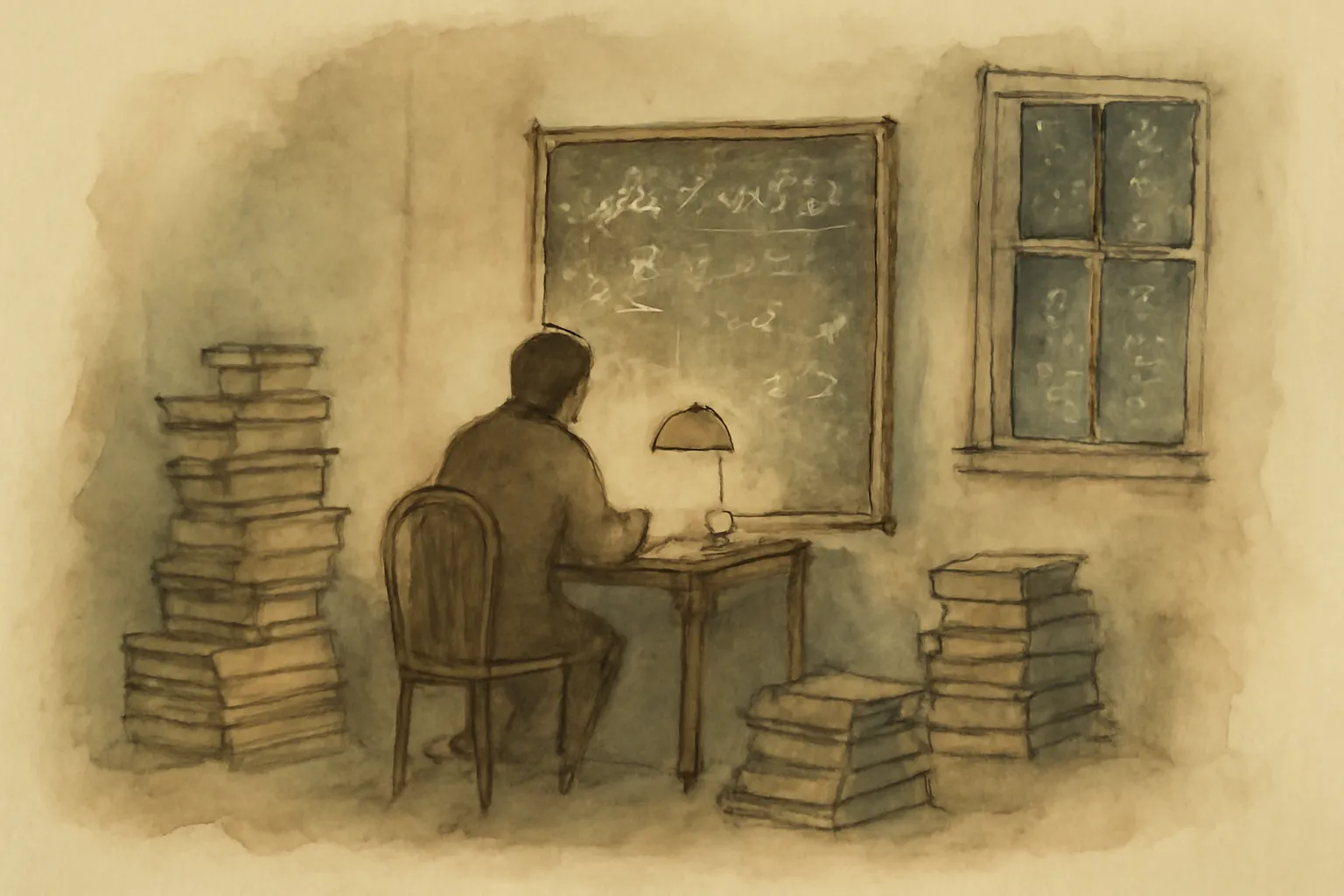
Hardy demystifies the process of mathematical creation, emphasizing that it is not about solving practical problems but about constructing beautiful arguments and uncovering profound truths. He discusses the qualities required for mathematical greatness—imagination, intuition, and a sense of beauty—and is frank about the rarity of true originality. His insights into the mind of the mathematician offer readers a window into the challenges and joys of high-level intellectual work.
6.Elitism and Honesty
Hardy’s tone is unapologetically elitist at times, as he draws sharp distinctions between real mathematicians and mere calculators or appliers. He is also strikingly honest, even ruthless, in his assessment of his own achievements and those of others. This candor, while controversial, gives the book its unique voice and provokes readers to reflect on the nature of excellence and self-knowledge.