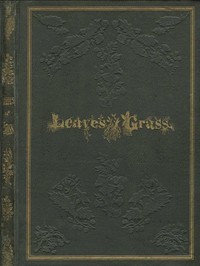

Walt Whitman's 'Leaves of Grass' celebrates the interconnectedness of humanity and nature, urging readers to embrace their individuality and the collective spirit of America
Read full overviewShow less›
In 'Leaves of Grass,' Walt Whitman offers a profound exploration of the human experience through a lens of democracy, individuality, and the beauty of nature. This seminal work is a celebration of life in all its complexities, from the joys of love and companionship to the struggles of war and existence. Whitman invites readers to reflect on their own identities while recognizing their connection to the broader tapestry of humanity. Throughout the poems, he emphasizes the importance of self-expression and the beauty found in the mundane, encouraging a deeper appreciation for the world around us. Engaging with this text provides not only a glimpse into the mind of one of America's greatest poets but also an opportunity to understand the essence of what it means to be human in a rapidly changing world.
In 'Leaves of Grass,' Walt Whitman weaves a rich tapestry of themes that resonate deeply with the human experience. His celebration of individuality, nature, love, and democracy invites readers to reflect on their own lives and the broader societal context in which they exist. By championing the common man and emphasizing the importance of unity in diversity, Whitman articulates a vision of America that is both inclusive and aspirational. His work challenges us to embrace our authentic selves while recognizing the interconnectedness of all people. Ultimately, 'Leaves of Grass' remains a timeless exploration of what it means to be human, urging us to cherish our experiences and the world around us.
Ratings at a glance
- 1The Celebration of the Individual
- 2The Essence of Nature
- 3War and Its Dualities
- 4The Power of Love
- 5Democracy as a Living Entity
A glimpse inside

Whitman begins 'Leaves of Grass' by singing the praises of the individual, which he sees as a microcosm of the larger democratic society. Read moreWhitman begins 'Leaves of Grass' by singing the praises of the individual, which he sees as a microcosm of the larger democratic society. He asserts that every person holds equal value, regardless of gender, class, or background. His famous line "For every atom belonging to me as good belongs to you" encapsulates this idea, suggesting that our shared humanity connects us all. Whitman’s reflections on his own life experiences—ranging from his upbringing in Paumanok to his travels across America—illustrate the diversity of the human experience. He emphasizes that true democracy arises when individuals recognize their intrinsic worth and their role in the collective narrative of society. This celebration of individualism serves as a call to embrace one’s unique identity while also acknowledging the interconnectedness of all lives. Show less
Nature plays a critical role in Whitman's poetry, serving as both a backdrop and a vital component of human existence. He frequently draws on natural imagery to convey co… Read moreNature plays a critical role in Whitman's poetry, serving as both a backdrop and a vital component of human existence. He frequently draws on natural imagery to convey complex emotions and ideas, portraying the earth as a living entity with which humans are intimately connected. In his poems, the landscapes of America—from the prairies to the rivers—are not just settings; they are characters that reflect the soul of the nation. Whitman suggests that by immersing ourselves in nature, we can achieve a deeper understanding of ourselves and our place in the universe. He invites readers to find beauty in the simplest aspects of the natural world, such as a single blade of grass, which becomes a symbol of life, growth, and continuity. This connection to nature is a recurring theme, reinforcing the idea that to understand humanity, one must first appreciate the world that sustains it. Show less
Read the full text — free
About the author
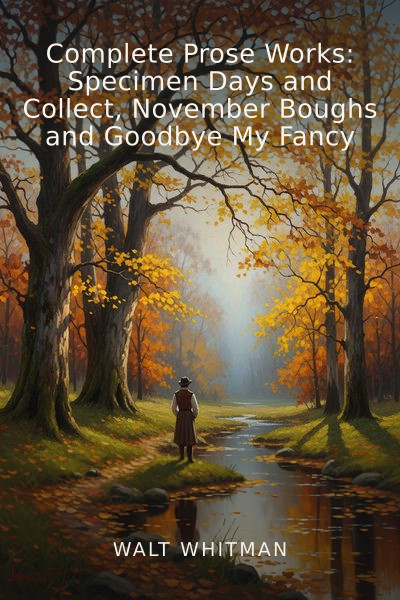
Walt Whitman has 2 works free to read on Lumina, including Complete Prose Works: Specimen Days and Collect, November Boughs and Goodbye My Fancy
All 2 books by Walt Whitman →