
Discovering the profound wisdom of Stoicism through Seneca's letters can transform your understanding of time, friendship, and the essence of a fulfilled life
Read full overviewShow less›
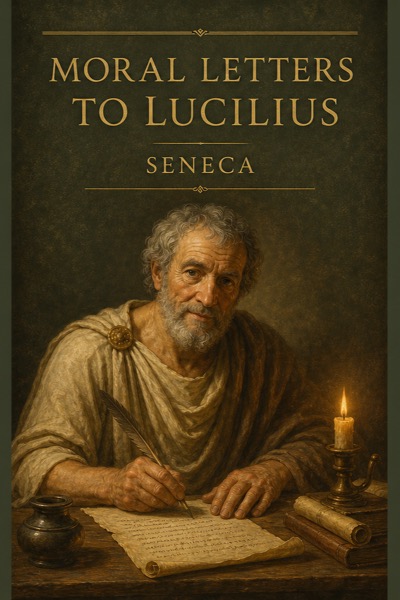
Seneca's 'Moral Letters to Lucilius' is a treasure trove of Stoic philosophy, offering timeless insights into the human condition. Addressed to his friend Lucilius, these letters delve into key themes such as the value of time, the nature of true friendship, and how to confront death with dignity. Seneca's reflections encourage readers to cultivate inner peace, embrace simplicity, and align their actions with their values. By exploring these letters, you will gain practical wisdom that can guide you through life’s challenges, ultimately leading to a more meaningful existence. Whether you seek to improve your relationships, manage your fears, or find contentment amid chaos, Seneca's teachings provide a powerful framework for personal growth and resilience.
Seneca's 'Moral Letters to Lucilius' serves as a profound guide to navigating the complexities of life through the lens of Stoic philosophy. Each letter offers insights that encourage self-examination, mindfulness, and the pursuit of wisdom. By embracing the lessons of time management, the nature of true friendship, and the acceptance of mortality, readers can cultivate a richer, more meaningful existence. The call to live authentically and to share knowledge resonates across generations, reminding us that personal growth is interconnected with our relationships and our contributions to others. Ultimately, Seneca's teachings empower us to lead lives of purpose, resilience, and lasting joy.

- 1The Value of Time: Your Most Precious Resource
- 2Reading with Purpose: The Danger of Distraction
- 3True Friendship: The Foundation of Trust
- 4Facing Death: Embracing Life's Impermanence
- 5The Philosopher's Mean: Finding Balance in Life
A glimpse inside

In the first letter, Seneca emphasizes that time is the only true possession we have, one that is often squandered or taken for granted. Read moreIn the first letter, Seneca emphasizes that time is the only true possession we have, one that is often squandered or taken for granted. He challenges Lucilius to recognize that much of life is wasted on trivial pursuits and distractions. By urging him to grasp each hour and prioritize meaningful actions, Seneca highlights the importance of living intentionally. He argues that every moment should be treated as a gift, reminding us that procrastination leads to a life half-lived. The notion that we are 'dying daily' reinforces the urgency of making the most of our time. This perspective not only inspires mindfulness but also fosters a sense of agency over our lives, encouraging us to seize the present rather than deferring our aspirations to an uncertain future. Show less
Seneca warns Lucilius against the pitfalls of superficial reading and constant distraction in the second letter. He argues that engaging with too many authors or ideas ca… Read moreSeneca warns Lucilius against the pitfalls of superficial reading and constant distraction in the second letter. He argues that engaging with too many authors or ideas can lead to a disordered mind, akin to a plant that cannot grow strong if frequently uprooted. Instead, he advocates for a focused approach, where one immerses oneself in a select few master thinkers to truly digest their wisdom. This idea is akin to savoring a delicious meal rather than hastily consuming a buffet. By digesting ideas thoroughly, one can internalize them and apply their lessons more effectively. Seneca’s advice encourages readers to be deliberate in their learning, fostering deeper understanding and personal growth rather than a superficial accumulation of knowledge. Show less
Read the full text — free
About the author
Seneca has 3 works free to read on Lumina, including On the Happy Life, On the Shortness of Life
All 3 books by Seneca →