
Margaret of Anjou rises from the complexities of royal court life to become a fierce and resilient leader amid national turmoil
Read full overviewShow less›
In 'Margaret of Anjou: Makers of History,' Jacob Abbott unveils the extraordinary life of Margaret, the queen of Henry VI, who became a defining figure in the Wars of the Roses and the tumultuous politics of 15th-century England. Far from a mere pawn in royal games, Margaret emerges as a remarkable strategist and a warrior queen, navigating the brutal realities of her time with tenacity and intelligence. Readers will explore the fierce rivalries, intricate alliances, and personal sacrifices that shaped her reign, as well as the societal norms that constrained women in power. By immersing in Margaret's story, one gains insight into the intricacies of leadership and the relentless pursuit of legacy amidst chaos and conflict.
Margaret of Anjou's life is a compelling narrative of resilience, ambition, and the harsh realities of power. Through Jacob Abbott's exploration, readers witness a woman who navigated the intricate politics of her time, facing both external threats and internal strife with unwavering determination. Her story is not just one of personal triumphs and tragedies but also a reflection of the broader historical currents that shaped England during a pivotal era. As a queen who fought fiercely for her family's legacy, Margaret's journey challenges us to rethink the roles of women in history and the complexities of leadership. Ultimately, her life serves as a powerful reminder of the enduring human spirit in the face of adversity.
- 1The Historical Context of Conflict
- 2Margaret's Formative Years
- 3The Role of Women in Power
- 4Court Intrigues and Alliances
- 5The Burden of Leadership
Notable quotes
“Margaret of Anjou was a heroine; not a heroine of romance and fiction, but of stern and terrible reality.”
“Thus she became most intimately involved in the quarrel.”
“The mass of the common people were held in a state of abject submission to the will of the chieftains, very much in the condition of slaves.”
A glimpse inside

Margaret of Anjou's life was intricately tied to two major conflicts: the Wars of the Roses and the ongoing battles between England and France. Read moreMargaret of Anjou's life was intricately tied to two major conflicts: the Wars of the Roses and the ongoing battles between England and France. The Wars of the Roses stemmed from a deep-seated dispute over the English throne between the houses of York and Lancaster, fueled by competing claims and the ambitions of powerful nobles. Abbott emphasizes how these internal strifes reflected not only the ambitions of noble families but also the broader social turmoil that gripped England. At the same time, the Hundred Years' War with France created an external pressure that further complicated governance in England. This duality of conflict illustrates the precariousness of Margaret's position; as a representative of the Lancastrian claim, she was embroiled in a battle for survival on multiple fronts. Her narrative is not just a story of a queen but a window into an era of relentless upheaval that shaped English history profoundly. The resulting chaos forced Margaret to take an active role in both politics and military strategy, leading to her eventual transformation into a leader of considerable influence. Show less
Margaret was born into the noble family of Anjou, the daughter of King René, which afforded her a rich background in aristocratic culture and political ambition. Read moreMargaret was born into the noble family of Anjou, the daughter of King René, which afforded her a rich background in aristocratic culture and political ambition. Her early life was marked by expectations, as she was groomed for a significant role in European politics. Abbott details her upbringing, which included exposure to the intricate dynamics of court life and the values of chivalry, reinforcing the ideals that would influence her actions as queen. Her marriage to Henry VI at a young age was a calculated political alliance intended to strengthen the Lancastrian claim to the English throne. This union was not only a personal bond but also a strategic maneuver within the larger context of Anglo-French relations, reflecting the importance of marriage alliances among the nobility. The narrative reveals how these formative experiences equipped Margaret with the skills necessary to navigate the complex political landscape that awaited her. The contrast between her sheltered upbringing and the brutal realities of power she would soon face underscores the dramatic shifts that defined her life. Show less
Read the full text — free
About the author
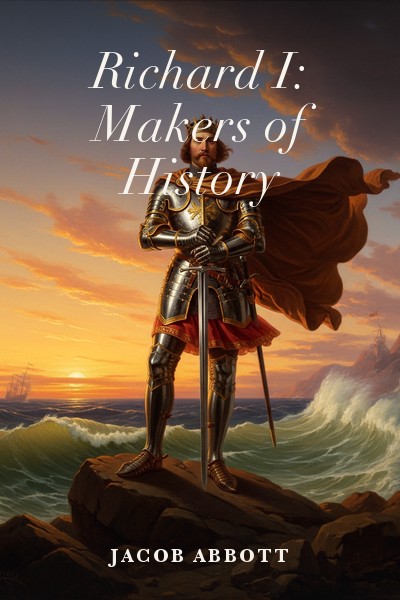
Jacob Abbott has 4 works free to read on Lumina, including Richard I: Makers of History, Romulus: Makers of History, Xerxes: Makers of History
All 4 books by Jacob Abbott →