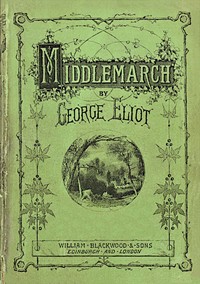

Provincial English life intertwined — ambition, marriage, and reform in a richly woven panorama.
Read full overviewShow less›
George Eliot’s Middlemarch is a profound exploration of life in a provincial English town during the early 19th century. It intricately weaves together the lives of its characters, revealing their dreams, disappointments, and the societal pressures they navigate. Readers will encounter a rich portrayal of ambition, love, and the limitations imposed by gender and class. The novel serves as a mirror reflecting the complexities of human relationships and the often unfulfilled desires that drive individuals. Through the lens of various characters, Eliot examines the moral and philosophical dilemmas that arise in the pursuit of personal fulfillment and societal contribution.
Middlemarch remains a timeless exploration of the human condition, capturing the intricacies of life in a changing society. Through its richly drawn characters and their interwoven narratives, Eliot delves into the tensions between ambition, morality, and social structures. The novel prompts readers to reflect on their own lives, encouraging a deeper understanding of the complexities of human relationships and the pursuit of meaning. Ultimately, Middlemarch serves as a poignant reminder of the enduring struggle for authenticity and fulfillment in a world often marked by constraints and contradictions.
- 1The Quest for Meaning
- 2The Role of Women in Society
- 3Ambition and Disillusionment
- 4The Interconnectedness of Lives
- 5Social Change and Progress
A glimpse inside

At the heart of Middlemarch is the existential quest for meaning and purpose. Characters like Dorothea Brooke and Tertius Lydgate embody this pursuit, each driven by idea… Read moreAt the heart of Middlemarch is the existential quest for meaning and purpose. Characters like Dorothea Brooke and Tertius Lydgate embody this pursuit, each driven by ideals that ultimately clash with reality. Dorothea, with her aspirations for a noble life through marriage to Mr. Casaubon, seeks to contribute to a greater good through intellectual partnership. However, her idealism leads to disillusionment as she grapples with the constraints of her marriage and the limitations of her husband’s ambitions. Lydgate, a young doctor, hopes to revolutionize medicine in Middlemarch but finds his aspirations stifled by the town’s entrenched social and political structures. Through these narratives, Eliot illustrates how the pursuit of meaning is fraught with challenges, highlighting the tension between individual desires and societal expectations. Show less
Eliot poignantly addresses the limited roles available to women in 19th-century society, as exemplified by Dorothea and Rosamond Vincy. Read moreEliot poignantly addresses the limited roles available to women in 19th-century society, as exemplified by Dorothea and Rosamond Vincy. Dorothea, characterized by her intellectual curiosity and desire for a meaningful life, finds herself trapped within the confines of marriage and societal norms that dictate her worth. Her marriage to Casaubon, which she initially perceives as a path to achieving her ambitions, ultimately becomes a source of profound frustration and alienation. In contrast, Rosamond embodies the societal ideal of femininity, focused on beauty and social standing, yet her shallow aspirations lead her to a life of superficiality and disappointment. Through these contrasting portrayals, Eliot critiques the restrictive nature of gender roles and the societal structures that inhibit women from achieving their potential. Show less
Read the full text — free
About the author
George Eliot has 3 works free to read on Lumina, including Silas Marner, The Mill on the Floss.
All 3 books by George Eliot →Frequently asked
Worlds to get lost in
Take Lumina everywhere
Read offline, listen to AI summaries, speed-read, and sync your progress across devices — free on iPhone.
Download for iPhone