Unraveling the intricate web of textual corruption to preserve the integrity of the Holy Gospels
Read full overviewShow less›
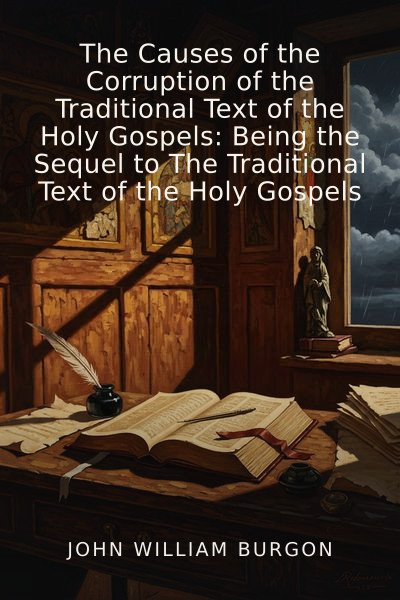
In 'The Causes of the Corruption of the Traditional Text of the Holy Gospels,' John William Burgon delves deep into the complexities surrounding the textual history of the New Testament. This work serves as a meticulous investigation into the myriad ways the original texts have been altered over time, both accidentally and intentionally. By examining the various causes of corruption, Burgon aims to safeguard the authentic message of the Gospels against the tide of scholarly revisions that threaten to dilute their essence. Readers will gain a profound understanding of the historical context, the challenges faced by early scribes, and the critical importance of preserving the original text. This exploration not only enlightens the faithful about the integrity of their scriptures but also invites critical reflection on how textual variations can shape theological interpretations and beliefs.
Burgon's 'The Causes of the Corruption of the Traditional Text of the Holy Gospels' serves as an essential resource for understanding the complexities of scriptural transmission. By illuminating the various accidental and intentional factors that have led to textual corruption, Burgon advocates for a careful and respectful approach to the Gospels. His work emphasizes the need to preserve the original integrity of these texts, as they are foundational to Christian belief and practice. In a time when textual revisions are common, Burgon's insights remind us of the sacred duty to honor the original words of scripture. Ultimately, this exploration invites readers to engage deeply with their faith, recognizing the historical context that shapes their understanding of the Gospels.

- 1The Importance of the Traditional Text
- 2The Fallacy of Revisionist Textual Criticism
- 3Accidental Causes of Corruption
- 4Homoeoteleuton: The Perils of Similar Endings
- 5The Impact of Uncial Writing
Notable quotes
“Id verius quod prius, id prius quod ab initio.”
“Yielding to no one in my desire to see the Greek of the New Testament judiciously revised, I freely avow that recent events have convinced me.”
“Nothing can be more exquisitely precise than St. John's way of describing an incident.”
A glimpse inside

Burgon emphasizes the principle that what is 'verius quod prius'—the truth is that which came first. This foundational idea asserts that the earliest versions of the Gosp… Read moreBurgon emphasizes the principle that what is 'verius quod prius'—the truth is that which came first. This foundational idea asserts that the earliest versions of the Gospels, as passed down from the Apostles, hold the most authentic teachings of Christ. By understanding this premise, readers appreciate the urgency of preserving the traditional text against the encroachments of modern critical scholarship that often seeks to revise or update these texts. The argument is not merely about maintaining the original words but about safeguarding the core of Christian doctrine that has sustained the Church through centuries. Burgon firmly holds that texts upheld by the earliest Christian communities possess a sacred sanctity that later revisions cannot replicate. He urges the Church to recognize the weight of historical testimony and the importance of continuity in preserving these texts, arguing that straying from the original can lead to theological errors that have consequences for faith and practice. Show less
Burgon critiques the calls for a revised Greek text of the New Testament, arguing that such efforts often stem from a misunderstanding of the unique nature of scriptural… Read moreBurgon critiques the calls for a revised Greek text of the New Testament, arguing that such efforts often stem from a misunderstanding of the unique nature of scriptural texts compared to other ancient writings. He argues that the received text, often attributed to Erasmus, was constructed with care and intention, despite critiques that label it as rushed or poorly sourced. Burgon warns against the dangers of trusting modern revisions that lack the historical context and depth of understanding that the traditional text embodies. He believes that the rush to revise without a comprehensive grasp of the implications can lead to a dilution of the Gospel's original message, which has been preserved through the ages. By presenting a case against the reliability of newer critical editions, Burgon calls for a deeper appreciation of the historical integrity of the traditional text, reminding readers that each alteration risks altering the heart of the Christian message itself. Show less
Read the full text — free
About the author
John William Burgon has 2 works free to read on Lumina, including The Last Twelve Verses of the Gospel According to S. Mark
All 2 books by John William Burgon →