

History · Europe, history
The Discovery of the Middle Ages by Florin Curta — Summary, Key Ideas & Quotes
2002526 pages✦ 3-min Big ideas★ 5.0 (1)
Rate it
Southeastern Europe in the Middle Ages stood at a crossroads of trade and crusading routes and fell within the spheres of influence of both the Byzantine Orthodox Church and Latin Christendom. This authoritative survey draws on historical and archaeological sources in the narration of 750 years of the history of the region, including Romania, southern Ukraine, southern Hungary, Croatia, Slovenia, Serbia, Montenegro, Bulgaria, Macedonia, Albania and Greece. Exploring the social, political and economic changes marking the transition from late Antiquity to the early Middle Ages, this book addresses important themes such as the rise of medieval states, the conversion to Christianity, the monastic movement inspired by developments in Western Europe and in Byzantium, and the role of material culture (architecture, the arts and objects of daily life) in the representation of power.
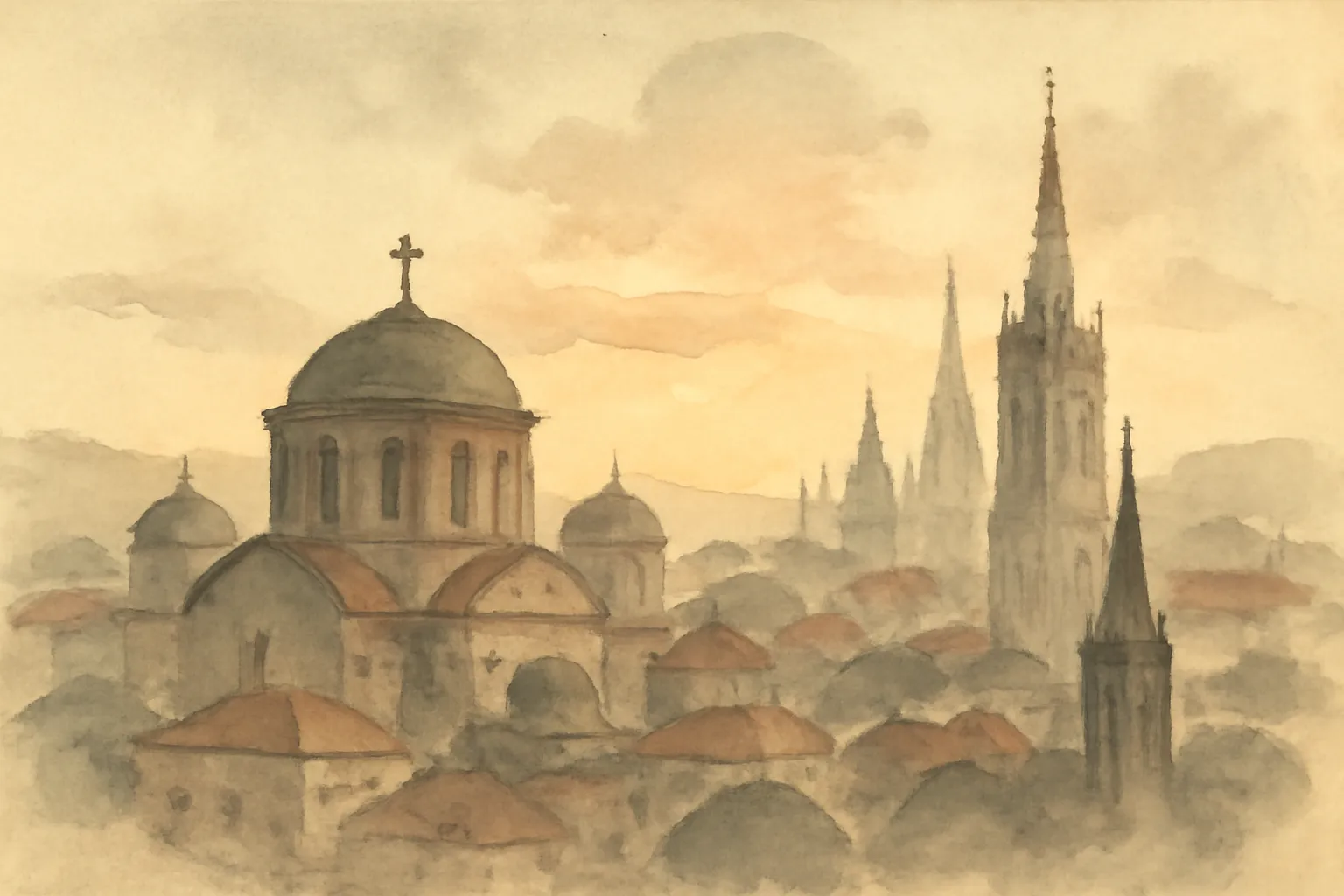
Curta emphasizes Southeastern Europe’s unique position as a meeting point for diverse cultures, religions, and political powers. Rather than being a passive recipient of influence, the region actively negotiated its identity amid pressures from Byzantium, Latin Christendom, and migrating peoples. This perspective challenges the traditional view of the Balkans as merely a periphery, instead highlighting its central role in shaping medieval Europe’s dynamics.
A hallmark of Curta’s approach is his integration of archaeological evidence with textual sources. By examining material culture—such as fortifications, religious buildings, and everyday objects—he reconstructs social and economic life that written records alone cannot capture. This method reveals patterns of settlement, trade, and power that illuminate how societies adapted to shifting political landscapes.