
Prisoners of war · Burma · History
The Narrow Road to the Deep North by Richard Flanagan — Summary, Key Ideas & Quotes
2000445 pages✦ 3-min Big ideas★ 4.0 (1)
Rate it
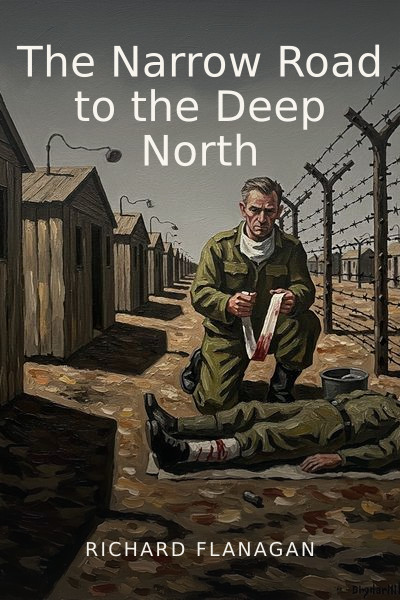
The Narrow Road to the Deep North is a love story unfolding over half a century between a doctor and his uncle’s wife. Taking its title from one of the most famous books in Japanese literature, written by the great haiku poet Basho, Flanagan’s novel has as its heart one of the most infamous episodes of Japanese history, the construction of the Thailand-Burma Death Railway in World War II. In the despair of a Japanese POW camp on the Death Railway, surgeon Dorrigo Evans is haunted by his love affair with his uncle’s young wife two years earlier. Struggling to save the men under his command from starvation, from cholera, from beatings, he receives a letter that will change his life forever. [Source][1]
At its core, the novel is a meditation on the endurance—and the limits—of love. Dorrigo Evans’s affair with Amy, his uncle’s wife, becomes a defining memory that sustains and haunts him through the brutality of war and the emptiness of peacetime. Flanagan probes how love can be both a source of hope and, paradoxically, a cause of lifelong regret, shaping the choices and destinies of his characters long after the moment has passed.
Flanagan’s depiction of the POWs forced to build the Thailand-Burma Death Railway is unflinching and visceral. The novel does not shy away from the physical and psychological scars left by extreme suffering. Yet it also explores how trauma lingers, affecting survivors’ relationships, sense of self, and capacity for joy long after the war ends. The narrative asks whether it is possible to truly return from such darkness.
“A happy man has no past, while an unhappy man has nothing else.”
“The world is; it just is.”