

Neanderthals · Fossil hominids · History
The Neanderthals by Erik Trinkaus — Summary, Key Ideas & Quotes
1993454 pages✦ 3-min Big ideas
Rate it
In 1856, at the very time when Charles Darwin was writing The Origin of Species, which would popularize the revolutionary concept of evolution worldwide, the fossilized remains of a stocky, powerful, human-like creature were discovered in a German valley called Neandertal. The bones were believed by some scientists to have belonged to a primitive version of modern man. But how old were they? Thus began a controversy that has continued to this day, swirling around the origins and interpretation of the Neandertals, placing them at every possible location on our family tree. Now, Erik Trinkaus, one of the world's leading experts on Neandertals, has collaborated with the noted scientist and writer Pat Shipman on a sweeping and definitive examination of what we know and how we've come to know it. Neandertals, who clearly represent a phase of human evolution, possessed their own unique qualities that made them neither chimpanzee nor modern human.^
The nature of those qualities - and how Neandertals were discovered, debated, studied, and analyzed over the years - is presented with authority and anecdotal richness. The story ranges from the days of Georges Cuvier (known as "Magician of the Charnel House" for his ability to reconstruct from piles of bones a whole animal skeleton) to the latest researchers whose work with DNA has raised the possibility that we are all descended from one African woman (the "Eve" theory). The controversy carries over from the elite scientific societies of Victorian England and nineteenth-century universities in France and Germany to American laboratories. Along the way there are anthropologists painfully accumulating specimens in digs as distant as Belgium and South Africa, Java and the hills outside Beijing, gradually building up a substantial base for legitimate theorizing (illegitimate, too - the tale of the Piltdown hoax is an enlightening interlude).^
A contentious, combative saga unfolds of vested interests and accepted wisdom clashing with empirical evidence and informal guesses, for as the authors make clear, no one has ever found it easy to be objective about Neandertals. Opinions have veered wildly over time: Neandertals were hardly human, almost apes; they were human, but pathological and not ancient; they were cannibals and shuffling, depraved half-wits; they were indistinguishable (given a shave and a haircut) from your next-door neighbor; they were an evolutionary dead end. In short, they were what we wanted them to be. The Neandertals is an important contribution both to the literature of prehistory and to our understanding of the way subjective wishes and irrelevant moral assumptions can distort even the most serious scientific endeavors.
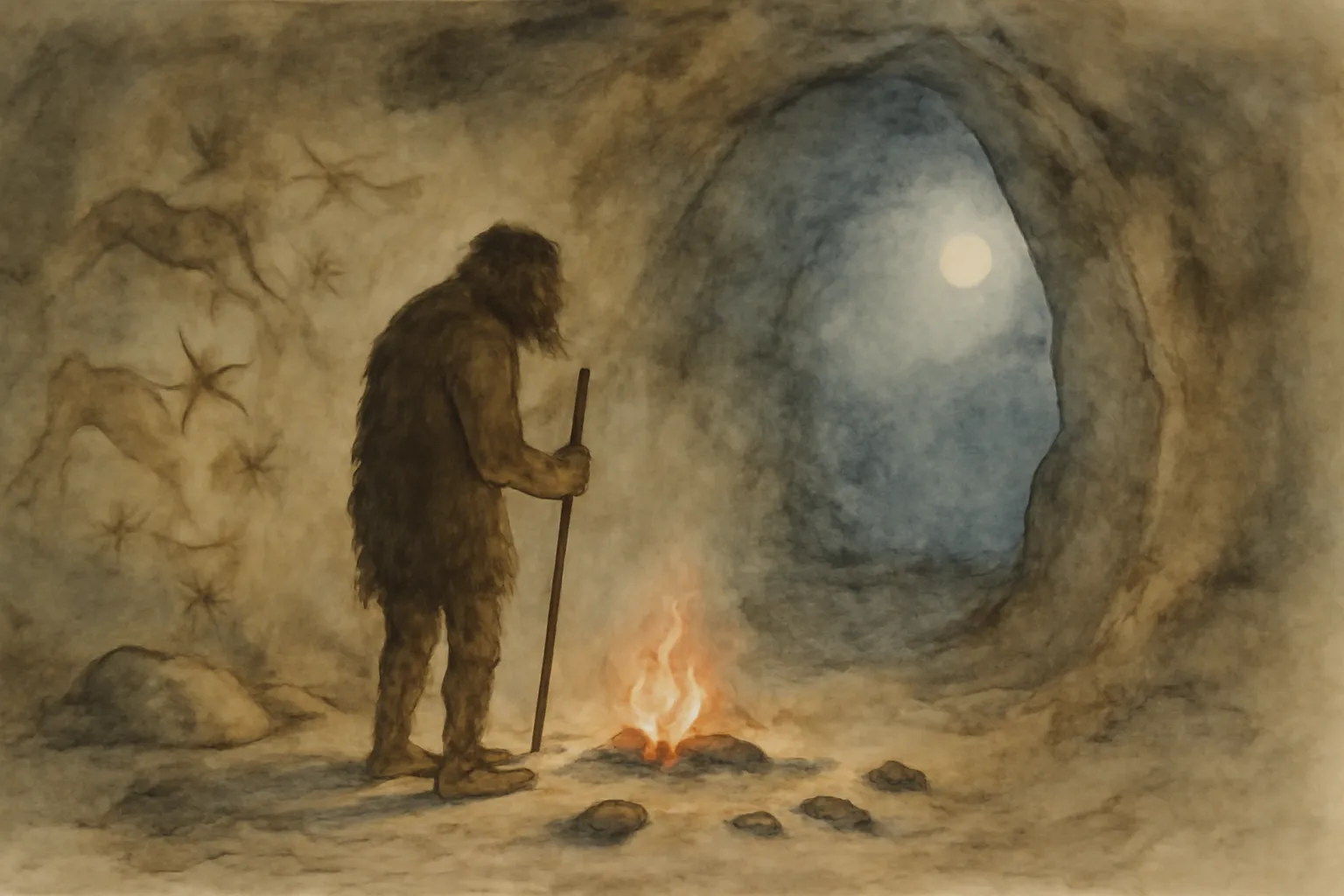
Trinkaus begins by situating the Neanderthal discovery within the broader context of 19th-century science, at a time when Darwin’s evolutionary theories were reshaping how humans saw themselves. The unearthing of Neanderthal remains in Germany sparked debates not just about their age and place in the human family tree, but about the very nature of humanity. This moment catalyzed a scientific revolution, forcing researchers to confront uncomfortable questions about our origins.
A core theme of the book is the dismantling of the stereotype of Neanderthals as dim-witted, club-wielding brutes. Trinkaus, drawing on decades of research, reveals that Neanderthals had complex social structures, used sophisticated tools, cared for their injured, and adapted to harsh environments. This nuanced portrait challenges the simplistic dichotomy between 'us' and 'them' and highlights the diversity of human evolution.