
Fiction
The Phantom 'Rickshaw, and Other Ghost Stories by Rudyard Kipling — Summary, Key Ideas & Full Text
151 pages13 chapters3h 2m read2h 9m speed read✦ 10-min Big ideasFree · no account
Rate it
Explore the haunting interplay of love, loss, and the supernatural in Rudyard Kipling's 'The Phantom 'Rickshaw.'
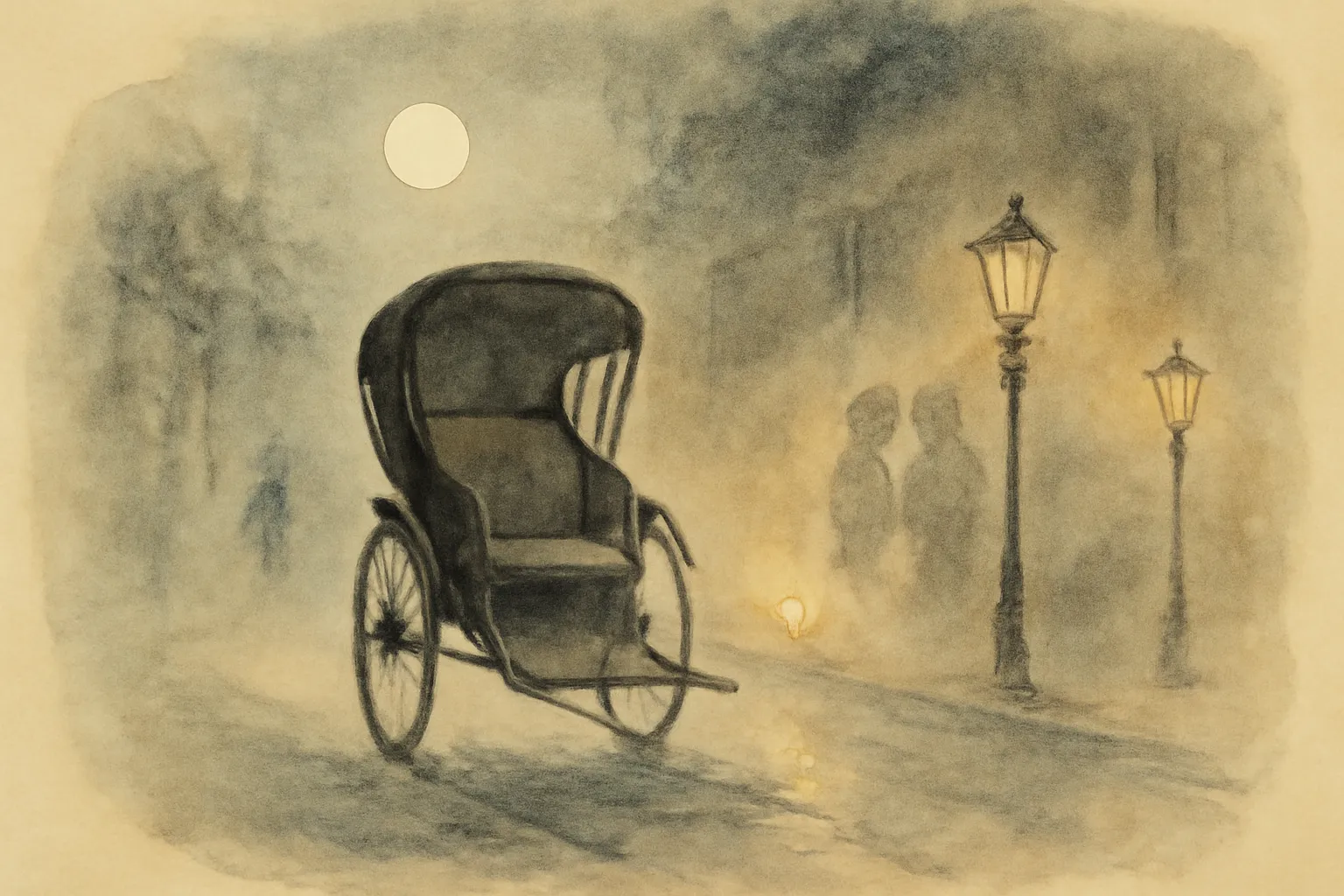
Rudyard Kipling's 'The Phantom 'Rickshaw, and Other Ghost Stories' immerses readers in a world where the boundaries between the living and the supernatural blur, especially in the context of colonial India. This collection of ghost stories captures the emotional turmoil and psychological complexities faced by characters grappling with love, guilt, and the weight of the past. Each tale not only showcases Kipling's masterful storytelling but also reflects broader themes of colonial identity, societal expectations, and the interplay between individual desires and cultural constraints. Through vivid imagery and richly developed characters, Kipling invites readers to confront their own fears and unresolved emotions, making the supernatural a vehicle for deeper exploration of the human condition. The stories resonate with the timeless struggles of the human heart, revealing that the ghosts we encounter may often mirror the specters of our own making.
Rudyard Kipling's 'The Phantom 'Rickshaw, and Other Ghost Stories' intricately weaves the threads of love, loss, and the supernatural within the rich tapestry of colonial India. Through masterful storytelling and deeply drawn characters, Kipling invites readers to confront their own fears while navigating the specters of their past. The collection serves as a poignant reminder that unresolved emotions have the power to haunt us, shaping our identities and experiences in profound ways. By blending the ordinary with the extraordinary, Kipling crafts narratives that resonate on both emotional and psychological levels, encouraging reflection on the complexities of human existence. Ultimately, this work underscores the enduring power of storytelling to illuminate the shadowy corners of the human experience, reminding us that our pasts, like ghosts, follow us wherever we go.
“May no ill dreams disturb my rest, Nor Powers of Darkness me molest.”
“Do you know what fear is? Not ordinary fear of insult, injury or death, but abject, quivering dread of something that you cannot see.”
“I recognized that for the rest of my natural life I should be among but not of my fellows.”
Rudyard Kipling has 5 works free to read on Lumina, including Captains Courageous, Kim, Puck of Pook's Hill
All 5 books by Rudyard Kipling →