
The Return of the Native intricately examines the conflict between human desires and the constraints of society, set against the tempestuous landscape of Egdon Heath
Read full overviewShow less›
Thomas Hardy's 'The Return of the Native' presents a profound exploration of love, ambition, and the formidable power of nature through the lives of its richly drawn characters. Set within the moody and atmospheric Egdon Heath, the novel follows Clym Yeobright, Eustacia Vye, and Thomasin Yeobright as they navigate their complex relationships and societal expectations. Readers will find themselves immersed in a world where human emotions clash with the indifferent forces of nature, revealing the tragic consequences of unfulfilled desires and misguided choices. Hardy's masterful prose and profound insights into human nature resonate long after the final page, making this a timeless exploration of love, identity, and the search for belonging.
Thomas Hardy's 'The Return of the Native' serves as a profound exploration of the human experience, intricately set against the haunting backdrop of Egdon Heath. Through the struggles of Clym, Eustacia, and Thomasin, Hardy delves into themes of ambition, love, isolation, and the inexorable forces of fate. The novel's rich imagery and complex characters invite readers to reflect on the nature of desire and the constraints imposed by society. Hardy's masterful storytelling and keen insights into the human condition resonate powerfully, reminding us of the fragility of dreams and the impact of our choices. Ultimately, 'The Return of the Native' stands as a timeless reminder of the intricate interplay between nature, society, and the individual, making it a classic work of literature that continues to captivate and provoke thought.
Ratings at a glance
- 1The Nature of Egdon Heath
- 2Clym Yeobright's Aspirations
- 3Eustacia Vye: The Enigmatic Femme Fatale
- 4The Role of Fate and Chance
- 5The Complexity of Love
Notable quotes
“The heath exhaling darkness as rapidly as the heavens precipitated it.”
“Poor little thing, her feelings got the better of her, no doubt. ’Tis nature.”
“I felt myself that he was hardly solid-going enough to mate with your family.”
A glimpse inside

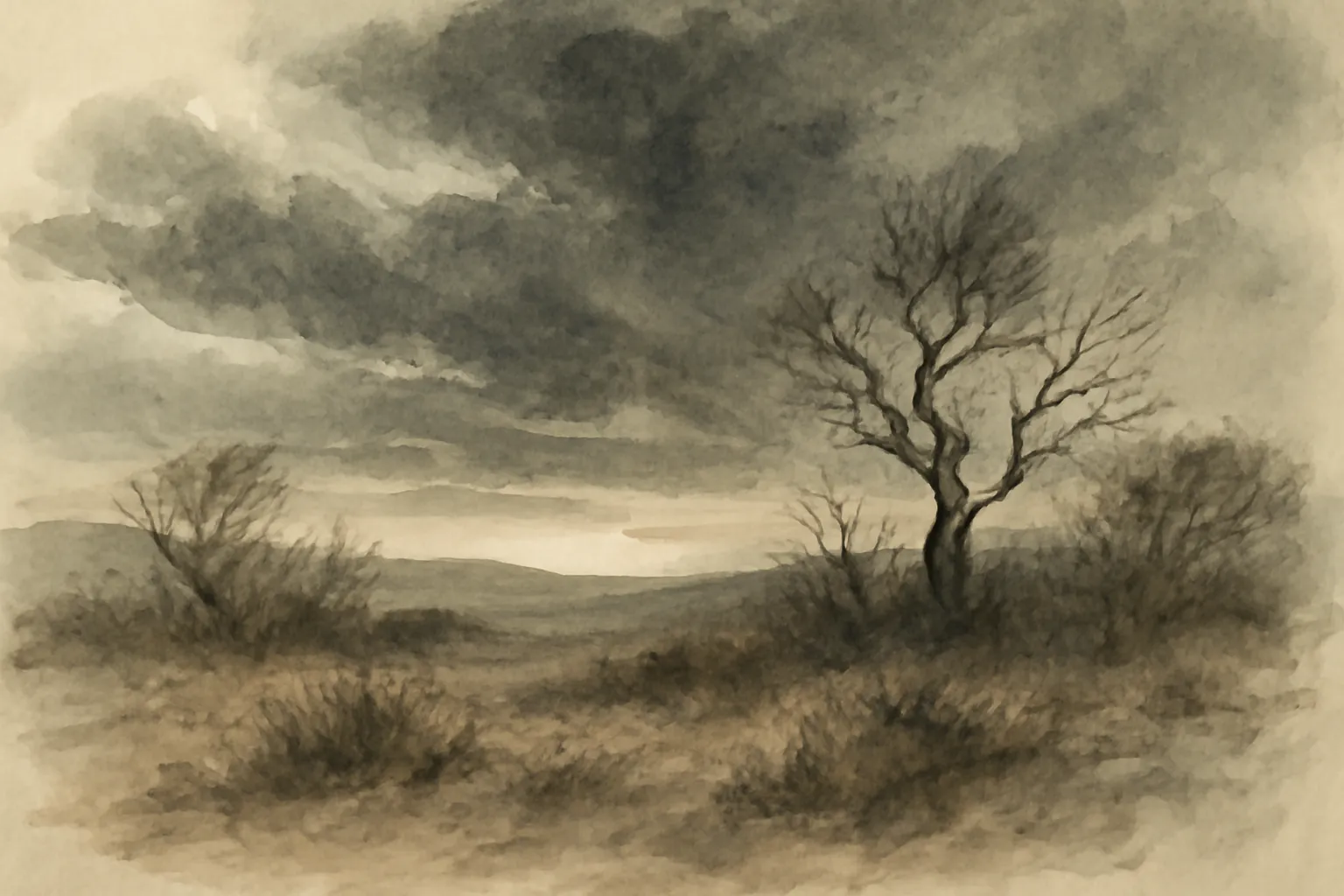
Egdon Heath transcends its role as a mere setting; it is a living entity that embodies the themes of isolation and the relentless passage of time. Read moreEgdon Heath transcends its role as a mere setting; it is a living entity that embodies the themes of isolation and the relentless passage of time. Hardy describes the heath as a vast, barren landscape where the merging of earth and sky suggests both beauty and foreboding. The heath's oppressive atmosphere directly influences the characters' emotions and decisions, making it a reflection of their inner turmoil. Hardy's vivid imagery captures the essence of the heath, portraying it as a place where darkness and light coexist, shaping the lives of its inhabitants. It becomes apparent that the heath is a character in its own right—its shifting moods parallel the characters' emotional states. For instance, the description of the heath wearing the appearance of night before its time signifies the potential for darkness to encroach upon the characters’ lives, foreshadowing the tragedies that will unfold. Hardy emphasizes that to understand the people of Egdon, one must first come to know the heath, as it is their unyielding companion through joy and sorrow. Show less
Clym Yeobright serves as a quintessential figure caught between ambition and reality, embodying the conflict between idealism and the harsh circumstances of rural life. Read moreClym Yeobright serves as a quintessential figure caught between ambition and reality, embodying the conflict between idealism and the harsh circumstances of rural life. After spending time in Paris, he returns to Egdon Heath, brimming with hopes of enlightening his fellow villagers through education and social reform. His vision reflects a deep-seated belief in the potential for improvement among the working class, and his noble intentions stand in stark contrast to the grim realities he faces. However, as Clym attempts to bring change, he encounters the stubborn resistance of the villagers, who are deeply entrenched in their traditional ways. His eagerness to uplift others becomes increasingly futile as he realizes that his aspirations are met with ignorance and apathy. Hardy illustrates how Clym's dreams, while noble, are crushed under the weight of societal expectations and personal relationships—particularly his tumultuous connection with Eustacia. Clym's tragic realization that his ambitions cannot coexist with the entrenched social order leads to a profound sense of disillusionment and self-doubt. Show less
Read the full text — free
About the author
Thomas Hardy has 7 works free to read on Lumina, including A pair of blue eyes, Desperate Remedies, Far from the Madding Crowd