

Human anatomy · Human evolution · Nature
Your Inner Fish by Neil Shubin — Summary, Key Ideas & Quotes
2008240 pages✦ 3-min Big ideas★ 4.3 (8)
Rate it
Why do we look the way we do? What does the human hand have in common with the wing of a fly? Are breasts, sweat glands, and scales connected in some way? To better understand the inner workings of our bodies and to trace the origins of many of today's most common diseases, we have to turn to unexpected sources: worms, flies, and even fish.Neil Shubin, a leading paleontologist and professor of anatomy who discovered Tiktaalik--the "missing link" that made headlines around the world in April 2006--tells the story of evolution by tracing the organs of the human body back millions of years, long before the first creatures walked the earth. By examining fossils and DNA, Shubin shows us that our hands actually resemble fish fins, our head is organized like that of a long-extinct jawless fish, and major parts of our genome look and function like those of worms and bacteria.Shubin makes us see ourselves and our world in a completely new light. Your Inner Fish is science writing at its finest--enlightening, accessible, and told with irresistible enthusiasm.From the Hardcover edition.
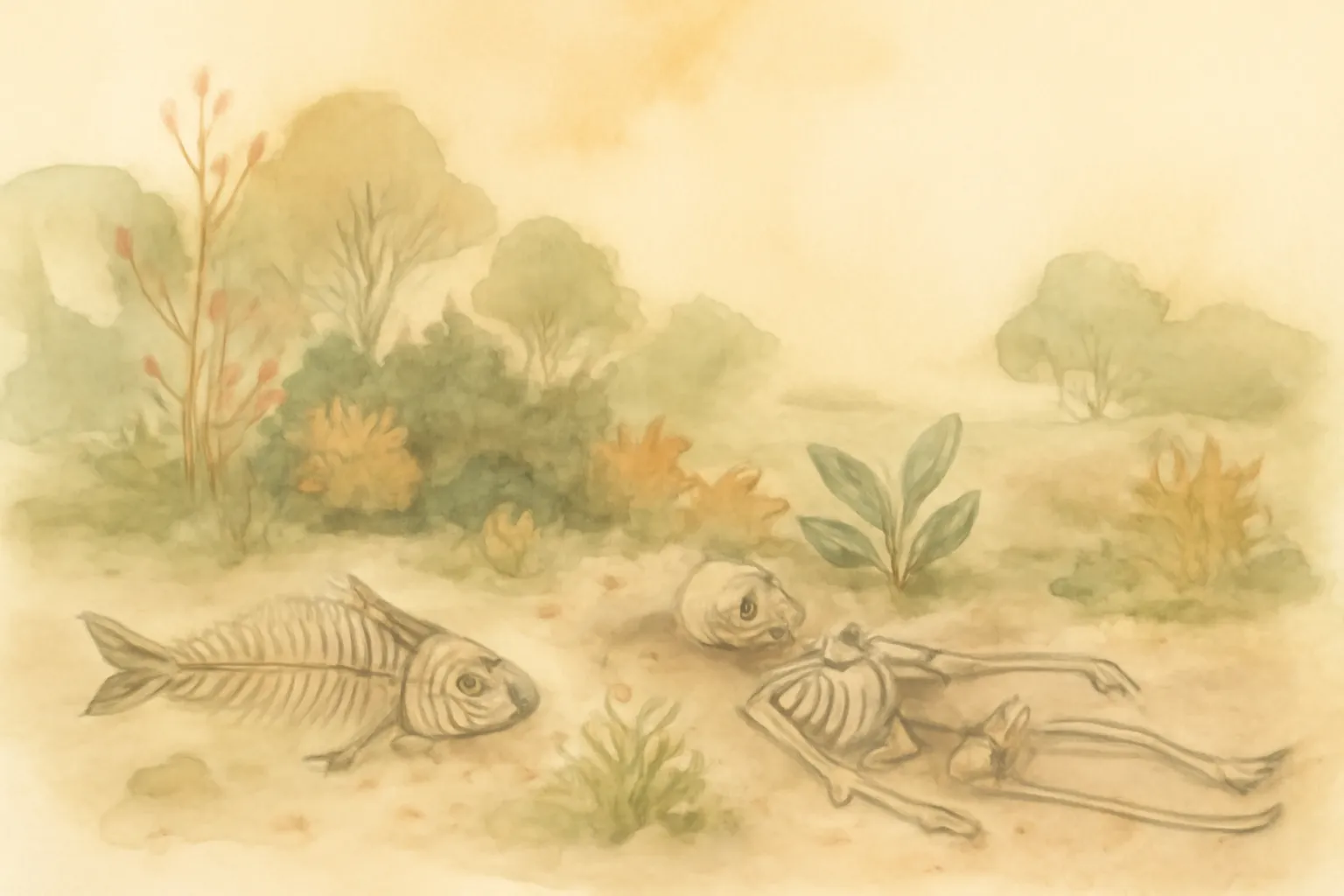
Shubin argues that our bodies are a patchwork of evolutionary innovations layered over millions of years. Features we take for granted—like our limbs, senses, and even vulnerabilities—can be traced to ancient fish, amphibians, and even simpler organisms. This mosaic nature explains both our strengths and our biological quirks, reframing human anatomy as a living archive of evolutionary experiments.
The book emphasizes how fossils and genetics complement each other in reconstructing our evolutionary story. Fossils like Tiktaalik, which Shubin helped discover, illuminate the transition from water to land. Genetic evidence, meanwhile, reveals how ancient developmental programs are reused and modified, connecting us to worms, flies, and fish at the molecular level. Together, these lines of evidence make the case for our deep kinship with all life.
“We are, each of us, a colony of ancient bodies.”
“If you know how to look, our bodies can be read as history books.”
