
The deep dive
The Thinking Machine
by Stephen Witt
17 min read · Original commentary by Lumina, written with AI
Recommended by Mustafa SuleymanHow did a company selling better game graphics become central to artificial intelligence? Stephen Witt follows the machinery, judgment, and accidents behind Nvidia’s rise. The deeper question is whether the habits that help a company build powerful technology also equip it to answer for that technology’s effects.
Prefer the quick version? Read the main learnings →♫ AI-generated voice · press play below to listen and read along; tap any passage to jump to it
01
A founder’s story that grows beyond its founder
The Thinking Machine is nonfiction: a business history, a portrait of Jensen Huang, and an inquiry into AI’s growing reach. Its starting point is Nvidia’s unlikely path from graphics chips to computing infrastructure. Its wider subject is the gap between building a successful machine and understanding what that machine will change.
Huang gives the story a human center. His immigrant childhood, engineering training, ambition, and demanding management help explain Nvidia’s character. Yet the book also follows researchers, software developers, manufacturers, customers, and investors. Their contributions prevent the company’s rise from becoming merely the unfolding of one person’s plan.
Readers should expect technical explanation alongside business conflict and personal observation. Parallel computing means carrying out many calculations at once. Neural networks are programs that learn patterns by adjusting numerical connections. The book tracks how these two approaches became useful to each other.
Lumina’s reading is that the central subject is preparedness without certainty. Nvidia developed capabilities before their biggest market existed. That achievement deserves explanation, but it does not settle the value of everything those capabilities later enabled. The book asks readers to hold admiration and scrutiny together.

Illustrated key idea
The AI boom grew from a gaming problem02
What does being right about technology actually prove?
The central question has two parts. How did Huang keep investing in an uncertain computing future long enough to benefit from it? And how much authority should that success give him over questions beyond engineering and business?
The first part is easier to test. Nvidia built chips, released software, attracted users, and sold systems. Its decisions faced concrete checks: compatibility, speed, reliability, costs, and orders. CUDA, the programming platform that opened Nvidia’s GPUs to broader computation, survived years of weak adoption. Later demand gave that persistence a striking commercial vindication.
But the second part requires different standards. A company can sell valuable equipment without proving that its customers will earn adequate returns. It can make calculation cheaper without identifying the jobs that will replace displaced work. It can improve climate modeling while adding to electricity demand. The book repeatedly separates technical capability from the broader claims made around it.
Huang’s practical focus is therefore both a strength and a limit. He asks what engineers can build and what customers need. Witt increasingly asks who bears the consequences when those needs become an industry. These questions overlap, but they are not interchangeable.
The book approaches the problem through changes of scale. It moves from circuits to chips, from chips to connected systems, and from systems to power grids and international supply chains. Each expansion reveals another dependency that a simple story of invention would miss.
For Lumina, the stakes concern the reach of expertise. Huang’s record supplies strong reasons to take his engineering judgment seriously. It does not make his views on labor, environmental costs, or future AI risk automatically decisive. Equally, uncertainty about those issues does not erase Nvidia’s achievements. An intelligent discussion needs both distinctions, rather than treating commercial success as either complete vindication or evidence of wrongdoing.
03
Preparation is not the same as prediction
The book’s first major idea is that a company can prepare effectively for a future it cannot describe precisely. Nvidia’s rise does not require Huang to have foreseen today’s generative AI. It requires him to have recognized useful capabilities, kept improving them, and responded when an outside breakthrough gave them a larger purpose.
Gaming created the initial discipline. Better graphics demanded many repeated calculations, and players had reasons to value faster results. Nvidia therefore had a paying market that pushed parallel processing forward. This mattered because earlier parallel machines had struggled with difficult programming and uncertain demand. Gaming supplied a practical reason to solve those problems, even before scientific users became important.
CUDA widened access without making GPUs universal machines. Scientists gained tools designed for calculations beyond images, but still needed skill to organize work across many processors. Their ordinary CPUs retained a role; Nvidia offered additional computing power, not a substitute for every function. This distinction helps explain why technical promise did not produce instant demand. Downloads disappointed, and several possible markets failed to develop. Persistence carried a real cost rather than simply delaying an inevitable reward.
Witt’s account of Huang’s reasoning is important here. Huang stayed close to researchers and employees, asking what existing hardware might make possible. He did not work backward from a detailed vision of modern AI. The book presents conviction built through repeated contact with promising work, not certainty about the winning application.
AlexNet provides a compact example. Alex Krizhevsky and Ilya Sutskever used two consumer Nvidia GPUs, CUDA, and ImageNet’s labeled pictures to train an image-recognition network. Its 2012 competition result made the combination difficult to ignore. The breakthrough depended on programming, data, learning methods, and affordable computation together. Nvidia supplied crucial tools, but the discovery did not originate as its fully formed corporate plan.
Lumina interprets this as a distinction between building options and predicting outcomes. An option is a capability that could support several future uses. CUDA made Nvidia useful to people whose eventual achievements Huang could not specify. When neural networks began demanding much more computation, the company could respond from an existing base.
The boundary matters. Successful patience does not prove that every costly experiment deserves indefinite support. Nvidia also abandoned projects, including its modem business. Nor can one successful outcome tell us how many similar investments would fail elsewhere. The book supports a narrower lesson: persistence becomes more credible when it remains connected to working systems, informed users, and changing evidence. That prepares the next question: once an opportunity arrives, what makes a supplier difficult to replace?
04
The product is the whole working system
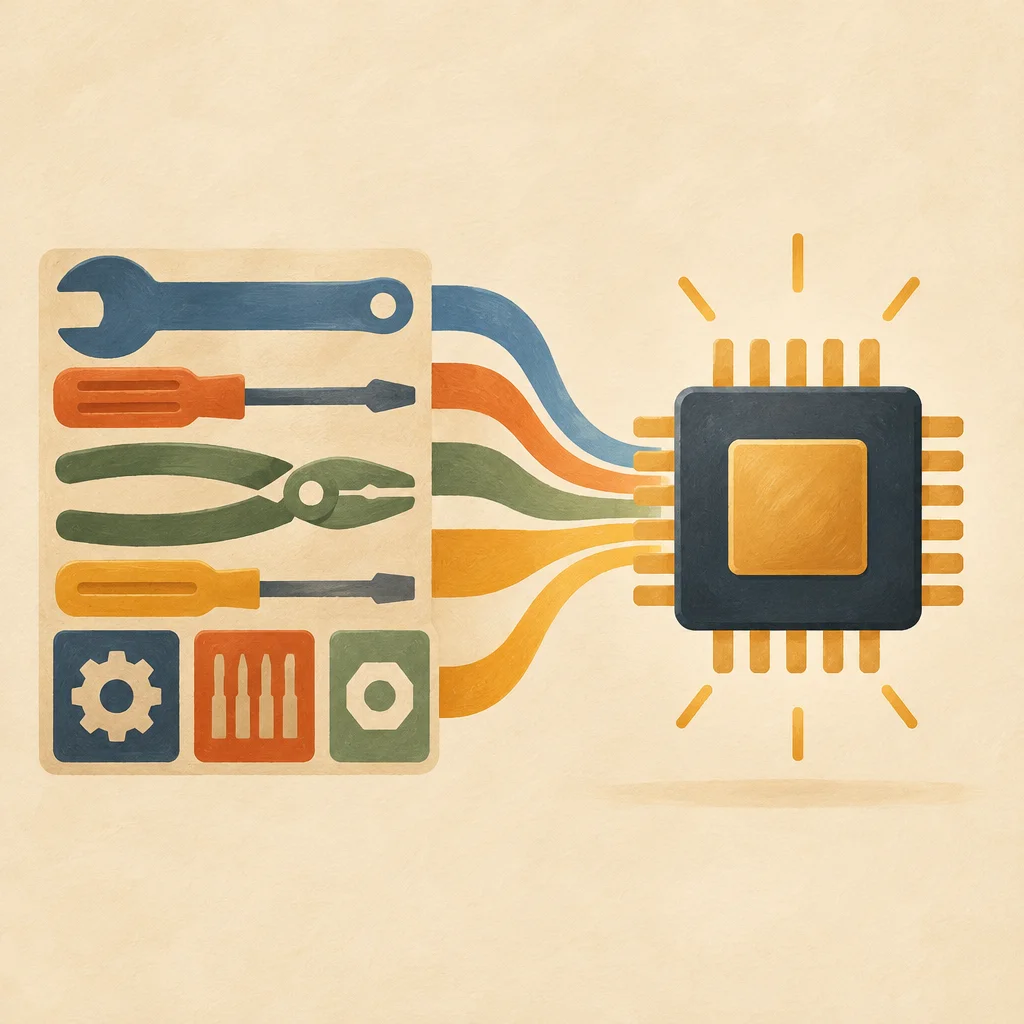
Nvidia’s advantage becomes clearer when the unit of analysis changes. A chip is a physical component. A useful computing platform includes that chip, the software that directs it, tools for programmers, and connections to other components. The book argues that Nvidia’s strength increasingly lay in making these parts work together.
CUDA is the bridge between the first idea and this one. It began as a way to expand the uses of graphics hardware. Over time, it also helped bind users to Nvidia. The software was free, but using it required Nvidia equipment. A tool that lowered one barrier could therefore create another: easy entry into a platform, followed by costly departure.
This is not simply a story of customers being trapped. The specialist libraries provided real value. cuDNN, for example, accelerated common neural-network calculations and helped developers make better use of the hardware. Programmers could spend less effort rebuilding basic operations. Those benefits gave customers practical reasons to remain, alongside the difficulty of changing tools.
The book makes a useful distinction between moving basic code and replacing an entire working environment. The first can be relatively straightforward. The second may require substitutes for many specialized tools, plus the effort of checking that everything still works. A rival chip’s lower price does not automatically make the whole switch cheaper.
The same reasoning appears at a larger scale. Faster processors are not enough if information cannot reach them quickly. Nvidia developed NVLink to connect GPUs and bought Mellanox to improve networking. Treating a data center as one computer meant addressing communication, not merely adding calculation. The relevant product increasingly became coordinated capacity rather than isolated parts.
Lumina’s interpretation is that Nvidia gained power by solving linked problems faster than customers could assemble alternatives. This connects technical integration with commercial dependence. The more useful the combined system becomes, the harder it may be to replace one piece without disturbing others.
There are limits to the claim. The book does not present Nvidia as permanently unchallengeable. AMD works on alternatives, large customers develop their own chips, and high prices create reasons to compete. Regulatory resistance to the proposed ARM acquisition also shows that technical ambition does not override every external constraint.
The broader implication is about control. Infrastructure suppliers shape which projects become practical, affordable, or fast enough to pursue. That influence does not mean Nvidia determines every downstream use. It does mean that understanding AI requires attention to the tools beneath the visible application—and to who can realistically offer substitutes.
Illustrated key idea
Software made Nvidia harder to replace05
Urgency produces speed—and transfers costs
The third major idea concerns the people who build this system. Huang’s leadership combines flexibility about technical choices with relentless pressure on execution. The book links that combination to Nvidia’s survival and speed. It also records distress, exhaustion, and departures. Neither side cancels the other.
An early crisis establishes the pattern. Nvidia’s original graphics approach conflicted with the methods most developers used. Huang eventually overrode the commitment to that architecture and backed a replacement. The company used hardware emulation to test the new design without the usual physical prototypes. This was not cautious management, but it was not persistence for its own sake either. Survival required abandoning an idea and taking a different risk.
Huang turned that experience into lasting urgency. The company was encouraged to act as though financial disaster remained close, even after conditions improved. That mindset helps explain rapid development and the refusal to treat market leadership as secure. It also raises a question: when does useful vigilance become a permanent emergency that employees cannot escape?
The portrait resists a simple answer. Accounts of public reprimands sit beside personal generosity and a reluctance to dismiss people after honest mistakes. These practices work differently. Keeping someone employed can protect experimentation. Humiliating that person publicly can still cause harm. Loyalty and intimidation can coexist, rather than serving as evidence that one another is unreal.
Acceleration could also mean paying more, as supply-chain manager Deb Shoquist discovered. Her scrutiny of suppliers showed that some waiting time could be removed, but certain gains were expensive. Huang’s scheduling demands prompted that inquiry: he treated physical limits, rather than customary delivery dates, as the reference point for setting targets. Lumina sees two separate questions here. Can a process move faster? And is the gain worth its price? Answering the first does not answer the second.
Lumina reads this as a recurring transfer of costs. Nvidia’s speed could require extra spending, intense coordination, or greater strain on employees. A faster outcome is real, but its full price may not appear in the product’s performance figures. Later, the book widens this concern to technicians in unpleasant testing environments and workers supporting expanding electrical infrastructure.
The boundary is causal. The account shows success and harsh treatment occurring together; it cannot establish that the harshness was necessary for the success. Nor should the record become a general instruction to imitate Huang. The more defensible conclusion is that his adaptability, technical attention, concentrated authority, and pressure formed a particular system. Understanding that system means examining both what it accomplished and who absorbed its demands. The question of cost now reaches beyond Nvidia’s workforce into the society supporting AI.
06
From technical explanation to an uneasy encounter
Contains plot details — open to read
Witt creates meaning by changing the distance between reader and subject. Technical explanations show how an achievement works. Business episodes show the choices needed to build it. Personal encounters then ask whether the people making those choices can account for their wider effects. The book’s force comes partly from moving among these modes.
AlexNet is one analytical anchor. Its success has identifiable ingredients and a checkable result. Two gaming cards alone did not create the breakthrough; programming and labeled data mattered. This gives the reader a model of explanation that distributes credit instead of treating a dramatic result as magic.
The narrator’s presence introduces a different kind of evidence. His observations of Nvidia’s campus place celebrated office work beside noisy testing laboratories. That contrast cannot measure conditions across the whole company. It does, however, challenge any picture in which AI is weightless software produced by uniformly delighted workers.
The closing interview makes the distinction between observation and interpretation especially important. Huang angrily resists Witt’s speculative questions about AI’s consequences. Witt later comes to see the sustained anger as partly deliberate, a way of controlling the conversation. That is the narrator’s reading of the encounter, not direct access to Huang’s motives.
The subsequent visit to Eos, Nvidia’s vast training computer, shifts attention from a forceful person to an overwhelming machine. Lumina’s interpretation is that the ending unsettles the familiar promise of biography: understanding the leader does not necessarily make the system feel understandable or governable. Technical achievement and personal anxiety remain present together.
This method has limits. Awe is not evidence of machine consciousness, and fear is not a forecast. The account’s strongest discipline lies in preserving such distinctions. Likewise, an image-recognition benchmark can establish performance on that task without proving general intelligence.
The book therefore offers several kinds of support rather than one uniform proof: technical mechanisms, commercial outcomes, reported recollections, witnessed encounters, and speculative debate. Readers gain more by asking what each kind can establish than by accepting or rejecting the narrative as a single verdict. Its personal unease gives the questions urgency; the concrete engineering gives them substance.
07
Does the story give its central figure too much gravity?
Lumina’s strongest objection is that a Nvidia-centered history can draw too much of AI’s development into Huang’s orbit. The book documents crucial contributions from researchers, data builders, manufacturers, and customers. Yet the scale of Nvidia’s eventual success can make earlier events look like steps toward its dominance, even when participants were pursuing other goals.
The strongest reply is that the book repeatedly complicates that reading. Nvidia did not invent every important learning method or anticipate each breakthrough. Hinton’s group initially struggled to attract its attention. CUDA’s weak uptake and failed diversifications keep uncertainty visible. The company’s achievement was partly its capacity to connect work it did not originate to systems it could deliver.
A second tension concerns the treatment of risk. Huang objects to unsupported catastrophic speculation. Bengio answers that if the field waits for clear evidence of an unprecedented disaster, prevention will already have failed. Hinton shares the fear that future systems could escape human control. LeCun disputes the assumption that intelligence brings a drive to dominate. These are competing arguments about possible future systems, not proof that existing models already threaten human survival.
The fair challenge to Witt’s concern is that vivid possibilities can outrun reliable forecasts. The fair reply is that uncertainty does not make prevention pointless. Lumina would separate confidence in a prediction from the seriousness of a consequence. A responsible discussion needs both, while admitting that the book cannot calculate a settled answer.
A third tension is financial. Nvidia’s revenue demonstrates that customers buy its products. It does not demonstrate that every customer’s AI project will justify its expense. Yet disappointing projects do not prove the entire boom lacks substance. The book balances reports of costly, unreliable applications against genuine advances and profitable buyers financing large investments.
These tensions reinforce one another. A successful supplier can become authoritative because its machines work and its customers pay. Society may then expect that authority to answer questions the same evidence cannot settle. The strongest reading of the book neither dismisses engineering expertise nor lets it speak for everything. It asks where the evidence changes—and where a different kind of judgment is needed.
08
Follow the dependencies, not just the demonstration
The book connects innovation, corporate power, and public responsibility through dependence. Nvidia depends on manufacturing capacity, customers depend on its software, and data centers depend on electricity. These are different relationships, but together they show why no participant fully controls the system it helps expand.
That lens offers a practical way to assess an AI claim. First ask what capability has actually been shown. Then ask what infrastructure makes it possible. Finally ask whether the claimed benefit survives the cost of delivering it reliably. The book’s accounts of benchmarks, software integration, and disappointing corporate projects support keeping those questions separate.
Consider a hypothetical example created by Lumina: a business sees an impressive AI demonstration and proposes replacing a routine workflow. The demonstration establishes a possibility. It does not yet establish dependable performance across the business’s cases, acceptable error costs, or savings after computing and supervision. This is not an argument against adoption. It identifies what remains to be tested.
Energy adds another connection. Training creates a model; inference means running it to produce answers. A service used constantly can create large ongoing demand even after training ends. The book therefore directs attention beyond the spectacular initial build toward everyday operation. Claims about climate benefits must sit beside immediate power requirements rather than replacing them.
Geography supplies a further limit. Nvidia’s reliance on TSMC and exposure to export restrictions show that commercial strategy operates within political conditions it cannot choose. Strong software does not remove a manufacturing dependency.
The useful application is thus not a formula for copying Huang. It is a habit of tracing what a promise requires. Who supplies the tools? Who must change their work? Who pays for mistakes, electricity, and replacement equipment? Those questions turn admiration or anxiety into a more concrete inquiry.

Illustrated key idea
Huang’s style combines force and loyalty09
Keep four different judgments in the room
A thoughtful conversation about The Thinking Machine can distinguish four judgments: whether the engineering is impressive, whether the business strategy is effective, whether the investment will pay off, and whether the social consequences are acceptable. Agreement on one does not require agreement on the others.
When discussing Huang, avoid choosing between solitary visionary and lucky beneficiary. The book supports a more specific account: he sustained useful capabilities through uncertainty, relied on others’ discoveries, and redirected the company quickly when evidence changed. Disagreement can then concern the relative weight of those factors.
When discussing leadership, ask which practice deserves credit. Technical attention, willingness to reverse course, retention after mistakes, and public intimidation are not one indivisible method. Separating them makes the ethical and practical argument sharper.
When discussing AI risk, distinguish present harms from possible future catastrophes. Fraud and abusive synthetic media are not the same claim as loss of human control. Neither should be used to avoid examining the other.
A reader can make these distinctions without claiming to have mastered semiconductor design or settled AI’s future. The book’s value for discussion lies in showing why success generates harder questions rather than making further questions unnecessary.
What to remember
Credit preparation without inventing prophecy.
Nvidia developed parallel hardware and programming tools before knowing which application would transform demand. The important distinction is between recognizing broad technical potential and predicting a specific future. Outside researchers supplied breakthroughs that the company was prepared to support.
Evaluate the platform, not only the chip.
Software libraries, developer effort, and networking help explain Nvidia’s position. A cheaper competing component may not replace a complete working system cheaply. That advantage reflects genuine usefulness while also creating customer dependence and raising questions about market power.
Keep achievement separate from justification.
Technical progress and strong sales establish important facts, but not every broader promise. Customer returns, working conditions, electricity demand, and safety require their own judgments. The book makes those questions harder to ignore without supplying one final answer to them.
Bring it into conversation
Talk about the book
What evidence would distinguish patient investment from refusing to admit a mistake?
CUDA’s early weakness did not automatically make continued spending irrational. Researchers were producing useful results, while Huang stayed close to changing needs. Yet Nvidia’s abandoned projects show that persistence alone was not its method.
Take it further: Which signal should carry more weight: immediate revenue, technical progress, user commitment, or the cost of continuing?
Can we credit Huang’s leadership without endorsing his treatment of employees?
The book connects his leadership with speed and adaptability, but also records exhaustion and distress. These outcomes do not prove that intimidation caused the achievements. It helps to assess specific practices rather than approve or condemn the whole personality.
Take it further: Which parts of his approach could survive if public humiliation were removed?
How far should a computing supplier’s responsibility extend?
Nvidia enables useful research and harmful applications without directing every use. Its influence through tools and infrastructure nevertheless makes complete distance from consequences difficult to defend. Responsibility may vary with knowledge, control, and the ability to reduce a particular harm.
Take it further: Would your answer differ for electricity demand, customer fraud, and uncertain future safety risks?
Keep in perspective
This reading draws on accounts of the book rather than its full text, so judgments about style and reporting depth remain limited. No independent reviews or author biography are available here. Business conditions and AI capabilities are presented within the book’s timeframe, not updated to the present. Predictions, private motives, and catastrophic-risk estimates remain uncertain or contested.
Who's talking about The Thinking Machine
Public statements we checked against the original source
- Recommends it
 Mustafa SuleymanCEO of Microsoft AI
“Gripping and brilliantly told”
The Thinking Machine ↗Penguin
Portraits from Wikimedia Commons · photo credits and licences