1.The Call to Adventure
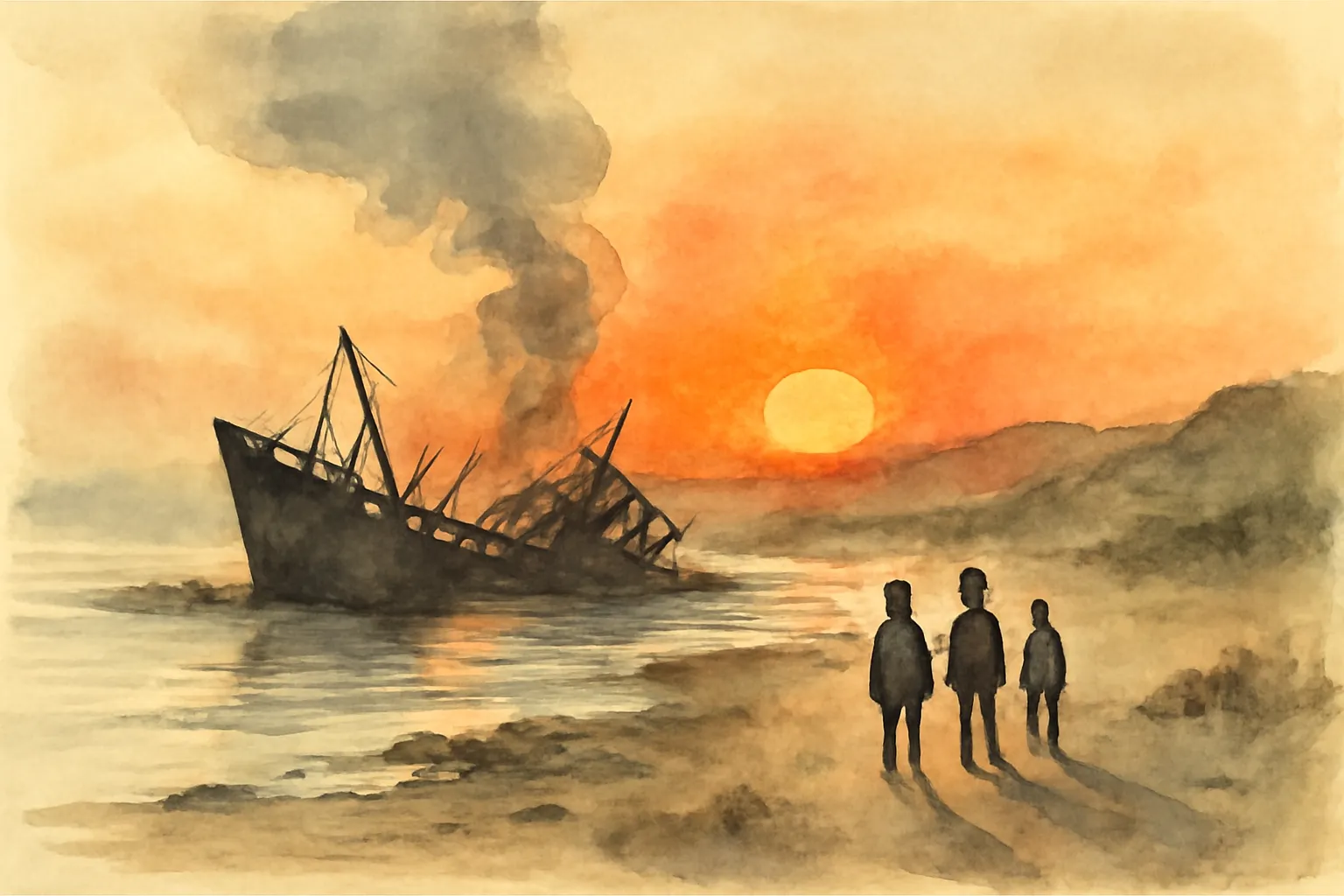
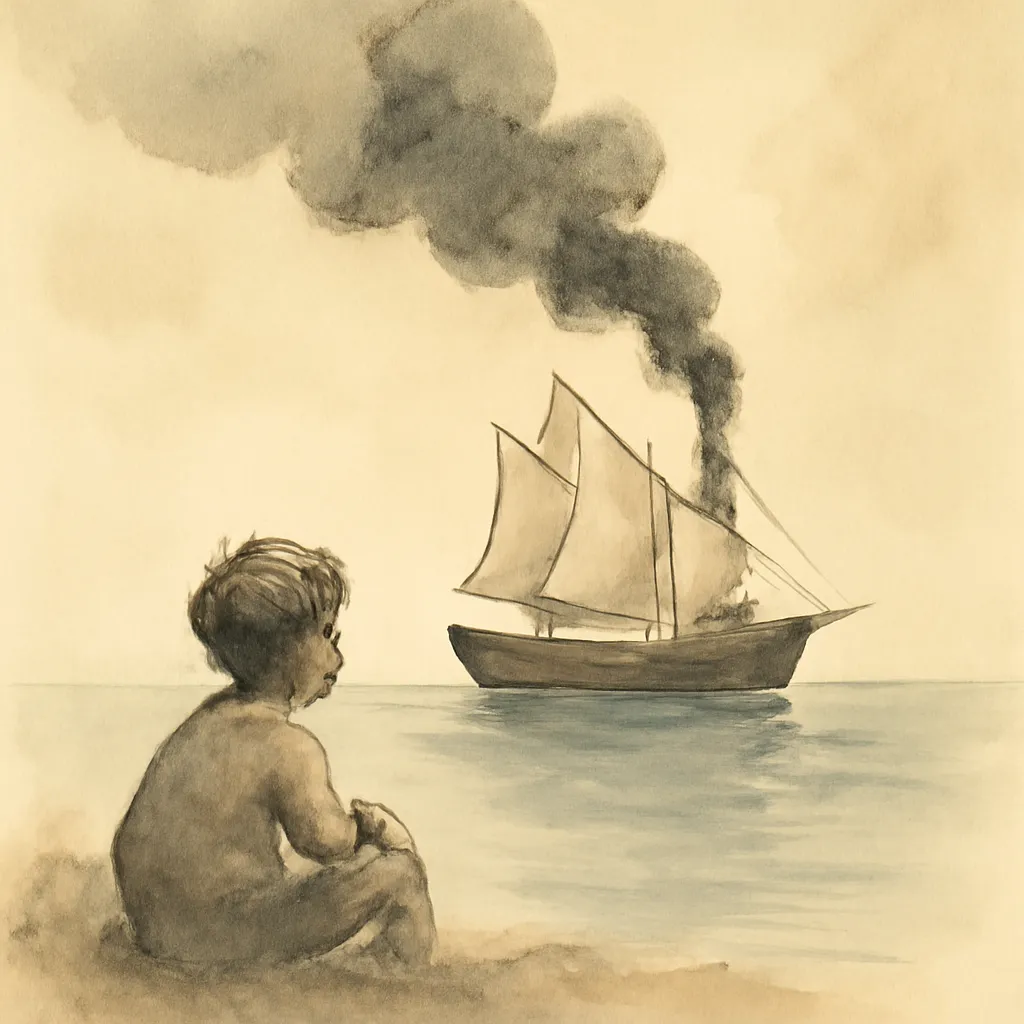
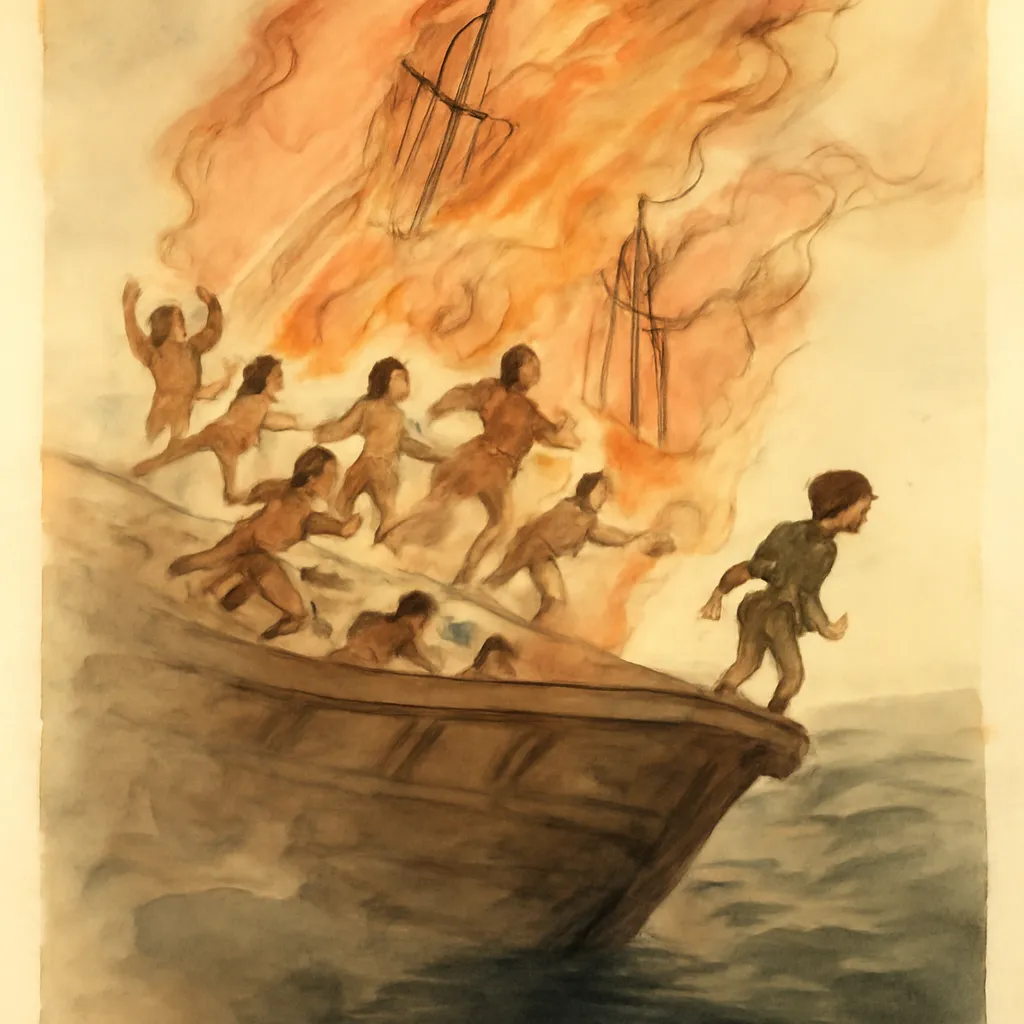
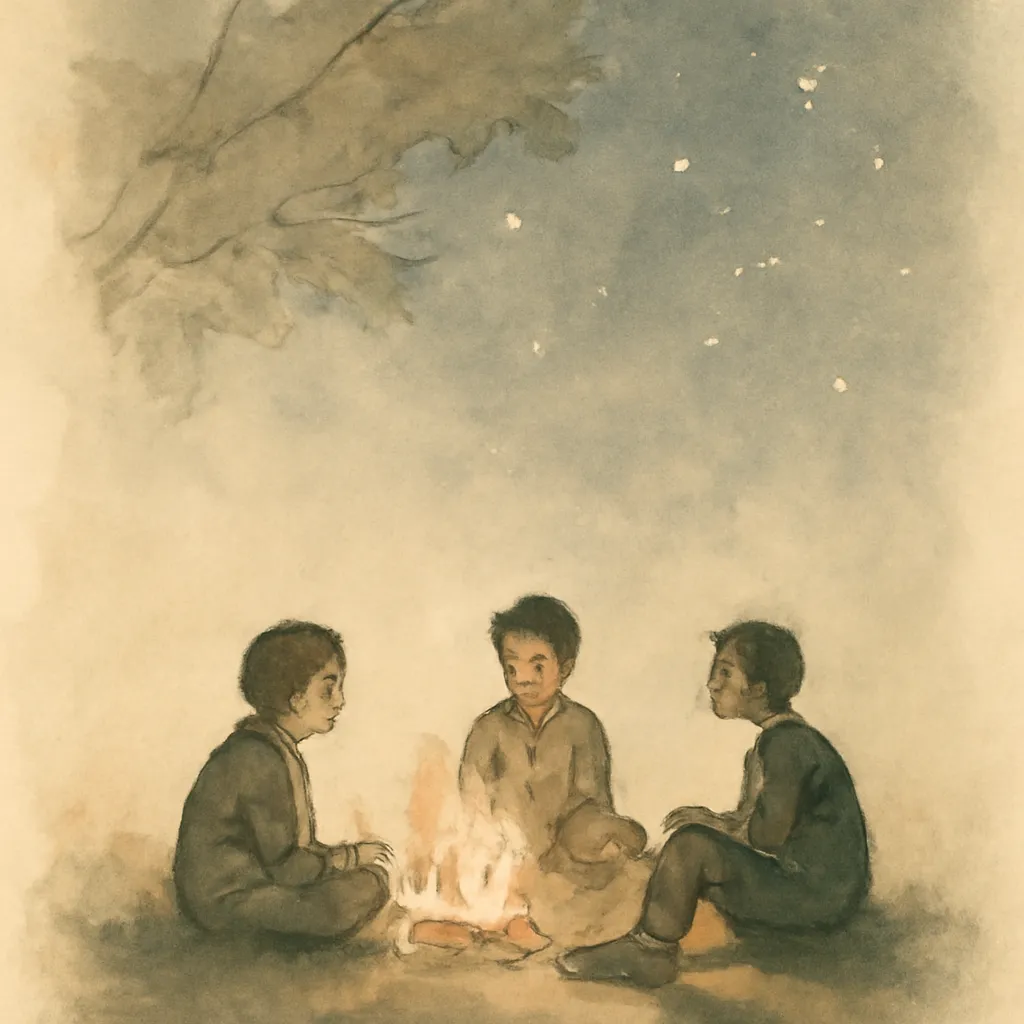
The story begins with the promise of adventure as the boys embark on a grand steamer headed for California. This journey, filled with hope and dreams of prosperity, quickly turns into a nightmare when a fire breaks out on the ship. The panic that ensues illustrates the thin veneer of civilization that can easily be shattered in moments of crisis. The boys' initial reactions to the fire—ranging from fear to disbelief—set the stage for their transformation from carefree youths to resourceful survivors. They must grapple with the immediate threat of the fire while also confronting the reality of their situation. This shift is crucial as it foreshadows their journey ahead, where they will face not only physical challenges but also emotional trials that will test their character and resolve. Their initial excitement transforms into a fight for survival, showcasing the stark difference between expectation and reality.
2.The Nature of Fear
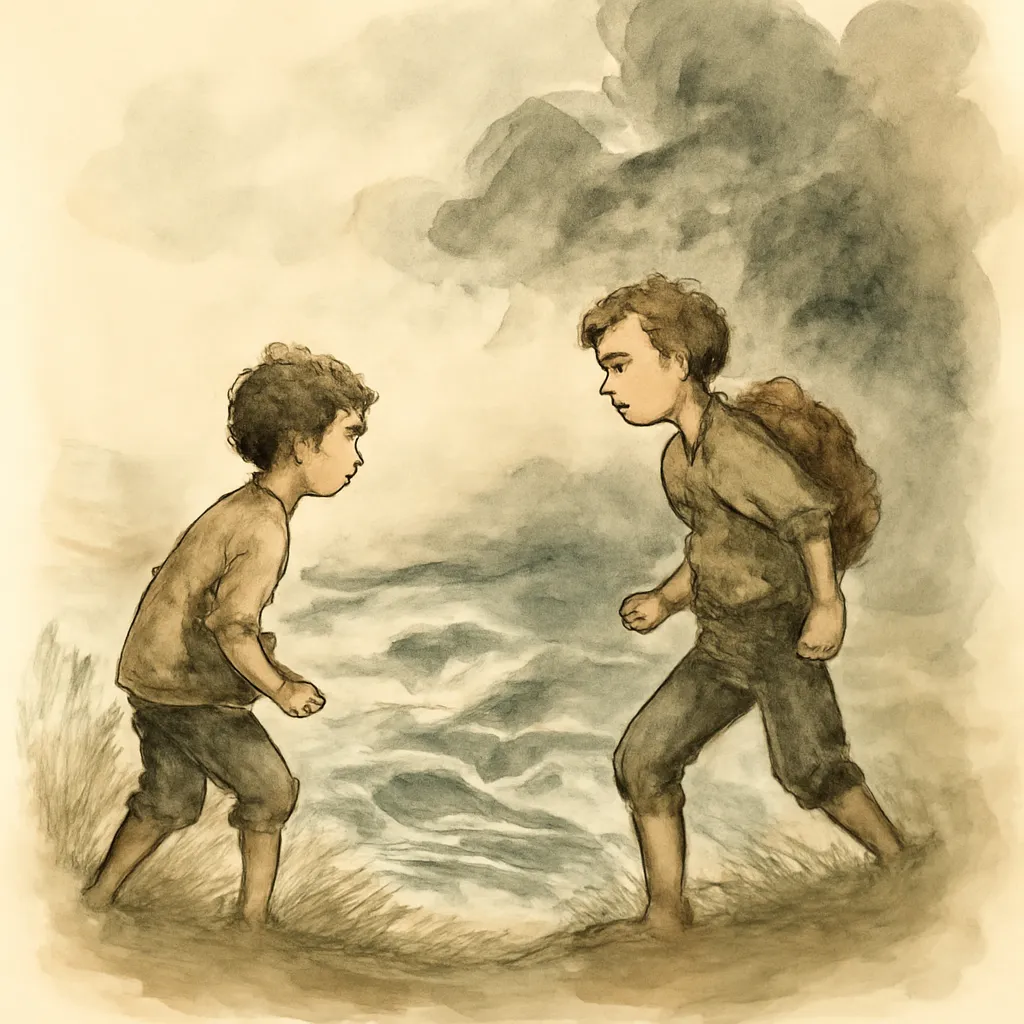
As the fire engulfs the ship, fear takes hold of the passengers, particularly Elwood, who panics and considers jumping overboard. This moment highlights the primal instinct to survive and the different ways individuals respond to danger. Howard's calm demeanor contrasts Elwood's fear, showcasing how personality influences behavior in crises. Tim O'Rooney acts as a stabilizing force, urging his friends to remain calm and think rationally. The tension among them reflects a deeper psychological exploration of fear—how it can immobilize or motivate individuals. Their varied responses also illustrate the complexity of human emotions in life-threatening situations. As they confront the flames and chaos, the boys learn that fear can be both a hindrance and a crucial motivator for action. This theme underscores the importance of emotional resilience, particularly in the face of overwhelming adversity.
3.The Power of Teamwork
Once the boys find themselves adrift in the ocean, their survival hinges on their ability to work together. Tim's buoyant spirit, Howard's logical approach, and Elwood's enthusiasm create a well-rounded team that can tackle the challenges they face. Their collective effort to paddle their makeshift raft toward shore showcases the power of teamwork in overcoming obstacles. Each boy brings unique strengths to the group, demonstrating that collaboration can lead to better outcomes. As they navigate the treacherous waters, they learn to communicate effectively and make decisions that benefit the group as a whole. Their teamwork is put to the test as they face physical exhaustion and mental fatigue, yet their shared goal of reaching safety keeps them motivated. This collective effort emphasizes the idea that survival is not a solitary endeavor; rather, it thrives on cooperation and mutual support.
4.The Struggle for Survival
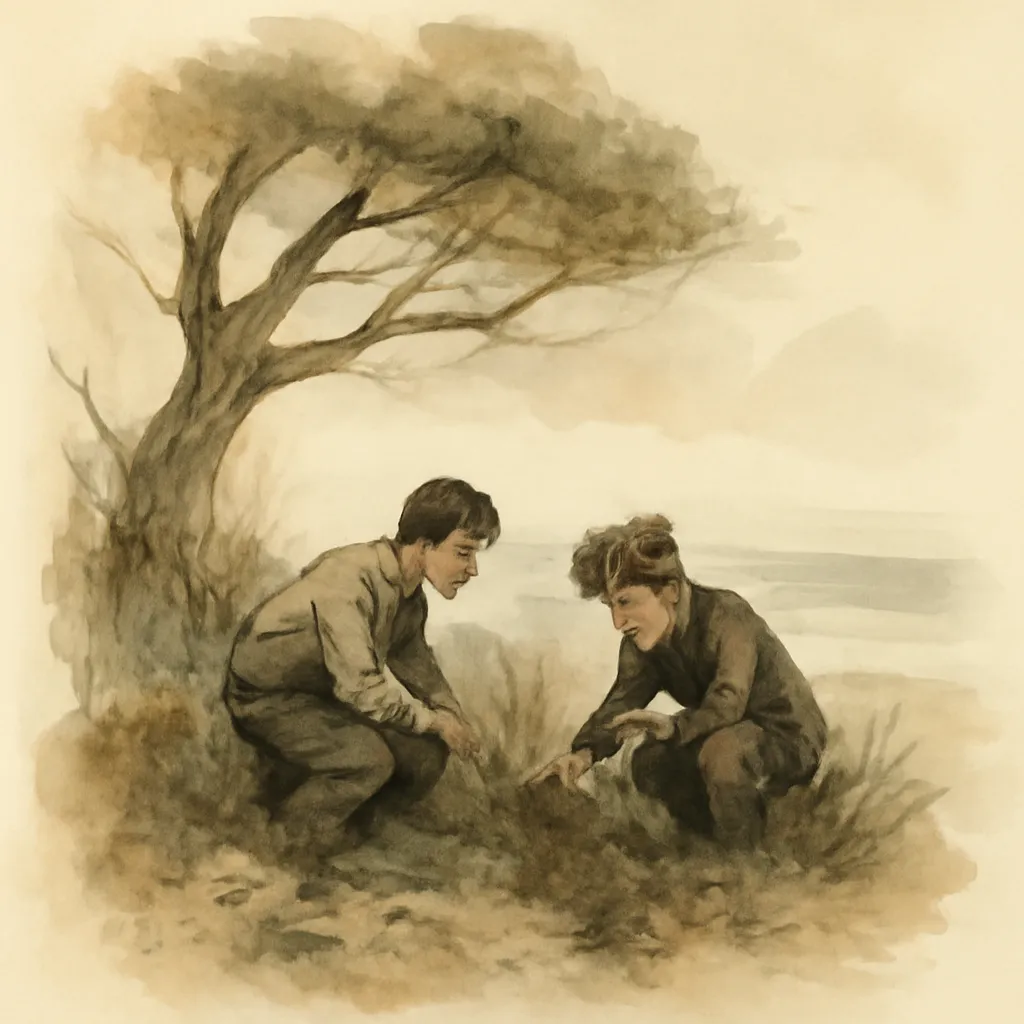
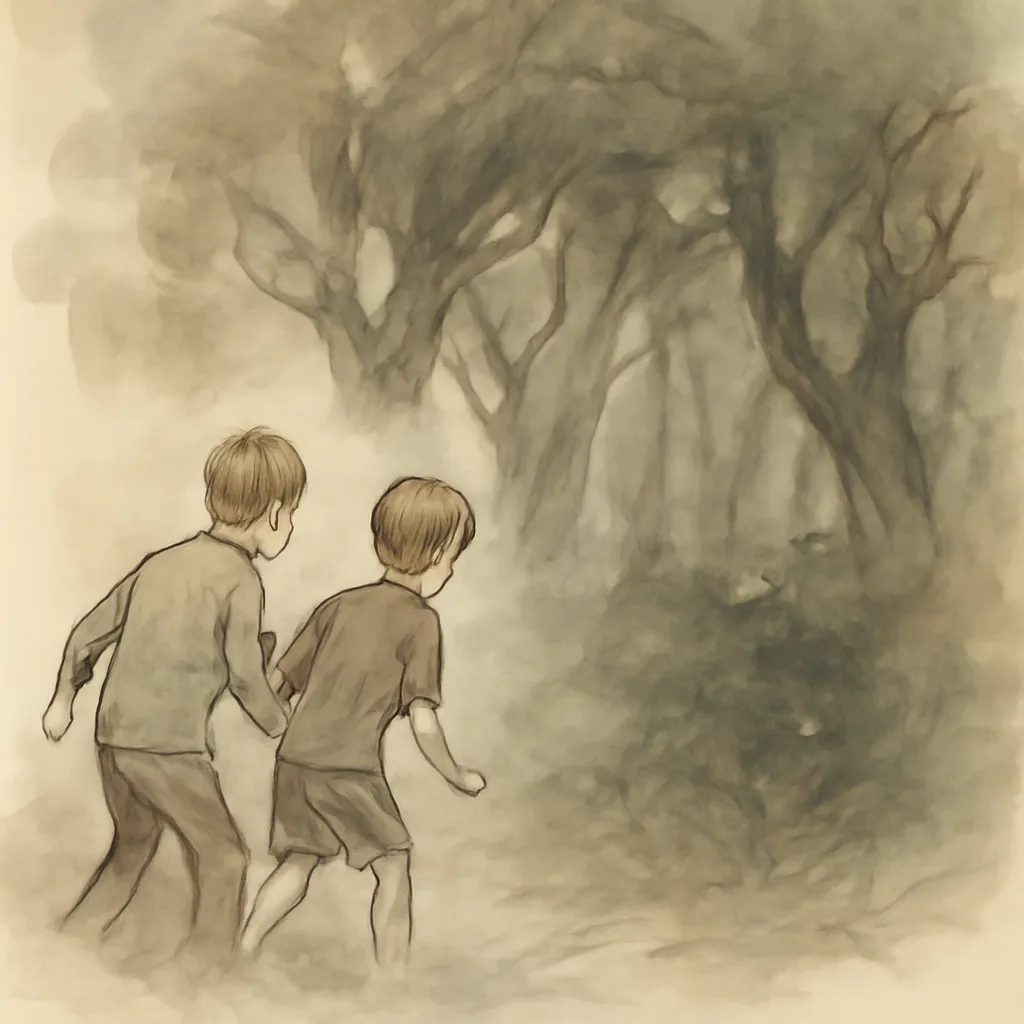
Upon reaching the California coast, the boys quickly realize that survival is far from guaranteed. The harsh landscape is unforgiving, and the absence of food and shelter forces them into a constant struggle for sustenance. The boys face hunger, thirst, and exposure to the elements, which tests their limits both physically and mentally. Their encounters with nature—ranging from the beauty of the land to the threat of hostile wildlife—paint a vivid picture of the wilderness they must navigate. The boys' ingenuity is tested as they devise ways to hunt and gather food, demonstrating resilience and adaptability. From crafting traps to searching for edible plants, their resourcefulness shines through. This struggle is not just physical; it also tests their mental fortitude as they face despair and uncertainty while learning to rely on one another. The narrative illustrates that the fight for survival is multifaceted, encompassing both external challenges and internal battles.
5.The Threat of Hostile Encounters
As the boys venture deeper into the wilderness, they become aware of the potential dangers posed by hostile Indians. The tension surrounding these encounters raises questions about fear, misunderstanding, and the complexities of human interaction. The boys' initial reactions—ranging from curiosity to fear—reflect the broader themes of cultural clash and survival instinct. Their encounters with Native Americans challenge their preconceived notions and force them to confront their biases. The narrative presents these interactions as pivotal moments that influence the boys' understanding of the world around them. The theme of fear of the unknown is prevalent, as they must navigate not only the physical dangers but also the emotional and social complexities of encountering a different culture. This exploration emphasizes the need for empathy and understanding, even in the face of potential threats.
6.The Importance of Resourcefulness

Throughout their ordeal, the boys demonstrate remarkable resourcefulness in the face of adversity. From crafting makeshift weapons to finding food sources, their ability to think creatively becomes a vital survival skill. Tim's humorous yet practical approach to problem-solving adds a layer of levity to their dire situation, reminding readers of the importance of maintaining a positive attitude. The boys also learn to improvise with the tools and materials at their disposal, whether it be using natural resources for shelter or devising fishing methods to secure food. Their resourcefulness is not only about physical survival but also encompasses emotional resilience as they learn to adapt to their circumstances. The narrative illustrates that survival often requires ingenuity and the willingness to think outside the box, especially when faced with unexpected challenges. This emphasis on creativity in crisis situations serves as a powerful reminder of human adaptability.
7.Friendship as a Lifeline
The bond of friendship among Tim, Elwood, and Howard serves as a lifeline throughout their harrowing journey. Their camaraderie is tested through various trials, yet it remains a source of strength that helps them persevere. The boys' loyalty to one another is evident as they support each other through moments of despair and doubt. This theme of friendship underscores the idea that human connection is essential in overcoming adversity. Their shared experiences forge a deeper understanding of each other, highlighting how relationships can be both a source of comfort and a catalyst for personal growth in the face of hardship. As they navigate the challenges of survival, their friendship evolves, demonstrating that true companionship is built on trust, sacrifice, and shared goals. The narrative reinforces the notion that solidarity in difficult times can be a powerful driver of resilience.
8.The Role of Nature
Nature is depicted as both a beautiful and treacherous force throughout the story. The boys experience the awe-inspiring landscapes of California, from the vast ocean to the rugged mountains, which are filled with both opportunity and danger. Their encounters with wildlife, such as the threat of sharks and the presence of rattlesnakes, emphasize the unpredictability of the natural world. This duality of nature serves as a backdrop for their survival story, illustrating how it can be both a nurturing and hostile environment. The boys' relationship with nature evolves as they learn to respect its power and adapt to its challenges, ultimately becoming an integral part of their journey. The narrative invites readers to reflect on the beauty and danger of nature, as well as the importance of coexistence in the wilderness. This theme serves as a reminder of the delicate balance between human beings and the natural world.
9.Self-Discovery Through Adversity
As the boys face numerous challenges, they undergo significant personal growth and self-discovery. Howard, initially portrayed as the cautious thinker, learns to embrace bravery and take risks, while Elwood transforms from a fearful boy into a confident leader. Tim's humor and optimism inspire his friends to maintain hope even in the darkest moments. Each character's journey reflects the broader theme of personal transformation through adversity, demonstrating that challenges can lead to profound insights and self-awareness. This exploration of identity is central to the story, as the boys' experiences shape their understanding of themselves and their capabilities. The narrative emphasizes that hardship often serves as a crucible for growth, enabling individuals to discover their strengths and redefine their limits.
10.The Journey Home
The conclusion of the boys' adventure is marked by their longing for home and the comfort of familiarity. After enduring countless trials, their desire to return to their families becomes a driving force in their journey. This longing highlights the importance of home as a place of safety and belonging, contrasting sharply with the wilderness they have navigated. The boys reflect on their experiences, recognizing that they have grown significantly through their ordeal. Their journey home symbolizes not only a return to physical safety but also an emotional reconciliation with their fears and challenges. The narrative culminates in a sense of resolution and hope, reinforcing the idea that home is not just a physical place but a state of mind characterized by love, safety, and community. This theme resonates deeply, reminding readers of the universal yearning for connection and belonging.