1.The Evolution of Black Hole Theory
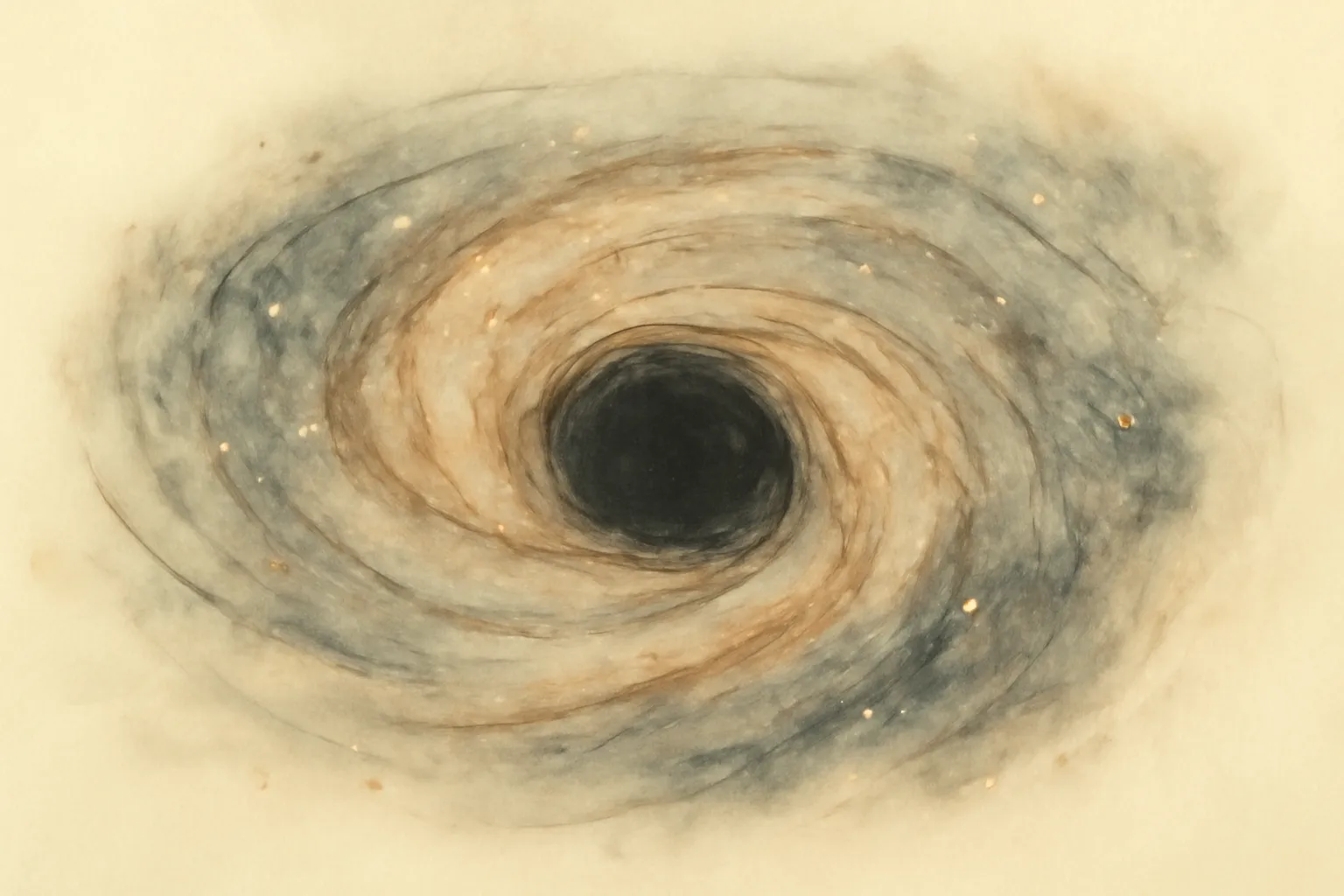
Thorne traces black holes from speculative mathematical curiosities to accepted astrophysical realities. He explores how early skepticism gave way to mounting evidence, thanks to advances in both theory and observation. The book shows how black holes moved from the fringes of physics to the center, highlighting the interplay between Einstein’s general relativity and the discoveries of later scientists. This historical perspective reveals science as a dynamic, collaborative process, not a collection of static facts.
2.Einstein’s Relativity and Its Outrageous Consequences
At the heart of the book is Einstein’s general relativity, which redefined gravity as the warping of spacetime. Thorne unpacks how this radical framework predicts phenomena that defy everyday intuition, such as the event horizon, gravitational time dilation, and the very possibility of time warps. He emphasizes that these are not just theoretical oddities, but real features of our universe supported by observation and experiment.
3.Black Holes: From Monsters to Laboratories
Thorne details how black holes, once thought to be cosmic monsters, have become invaluable tools for probing the laws of physics. He explains how their extreme environments allow scientists to test relativity and quantum theory in ways impossible on Earth. The book discusses the detection of black holes, their role in galaxy evolution, and their potential as laboratories for future discoveries.
4.Wormholes and the Physics of Time Travel
One of the book’s most captivating sections explores wormholes—hypothetical tunnels through spacetime—and their implications for time travel. Thorne discusses the physics behind these ideas, the challenges of stability and causality, and the line between science and science fiction. He candidly addresses what is possible within the known laws of physics and what remains speculative, inviting readers to imagine the future of exploration.
5.The Human Side of Scientific Discovery
Thorne weaves in stories of the scientists—rivalries, collaborations, and moments of inspiration—that shaped black hole theory. He reveals the personalities behind the equations, from Einstein and Wheeler to Hawking and Penrose. This human element makes the book not only a scientific chronicle but also a narrative of curiosity, persistence, and creativity.
6.The Ongoing Quest for Understanding
The book closes by emphasizing that black holes and time warps are not the end of the story, but milestones in an ongoing journey. Thorne discusses unresolved questions, such as the unification of general relativity and quantum mechanics, and the search for observational evidence of exotic phenomena. He encourages readers to see science as an ever-evolving adventure, with black holes as both destination and guidepost.