1.Development Means Expanding Freedoms
Sen argues that the true measure of development is the expansion of substantive human freedoms, not just increases in income or GDP. He identifies freedoms such as political participation, access to education, healthcare, and social opportunities as both the primary goal and the driving force of development. This view shifts the focus from mere economic metrics to a broader, more human-centered perspective.
2.Poverty as Unfreedom
For Sen, poverty is best understood not simply as low income, but as a deprivation of basic capabilities and freedoms. This includes lack of access to education, healthcare, or the ability to participate in society. By framing poverty as unfreedom, Sen encourages policies that address the roots of deprivation, not just its symptoms.
3.The Role of Institutions and Democracy
Sen emphasizes that markets, while important, are insufficient on their own to guarantee freedom. Effective development requires a range of institutions—democratic governance, legal protections, transparent public debate—that empower individuals and hold authorities accountable. He famously argues that no substantial famine has ever occurred in a functioning democracy, highlighting the protective power of public scrutiny.
4.Interconnectedness of Freedoms
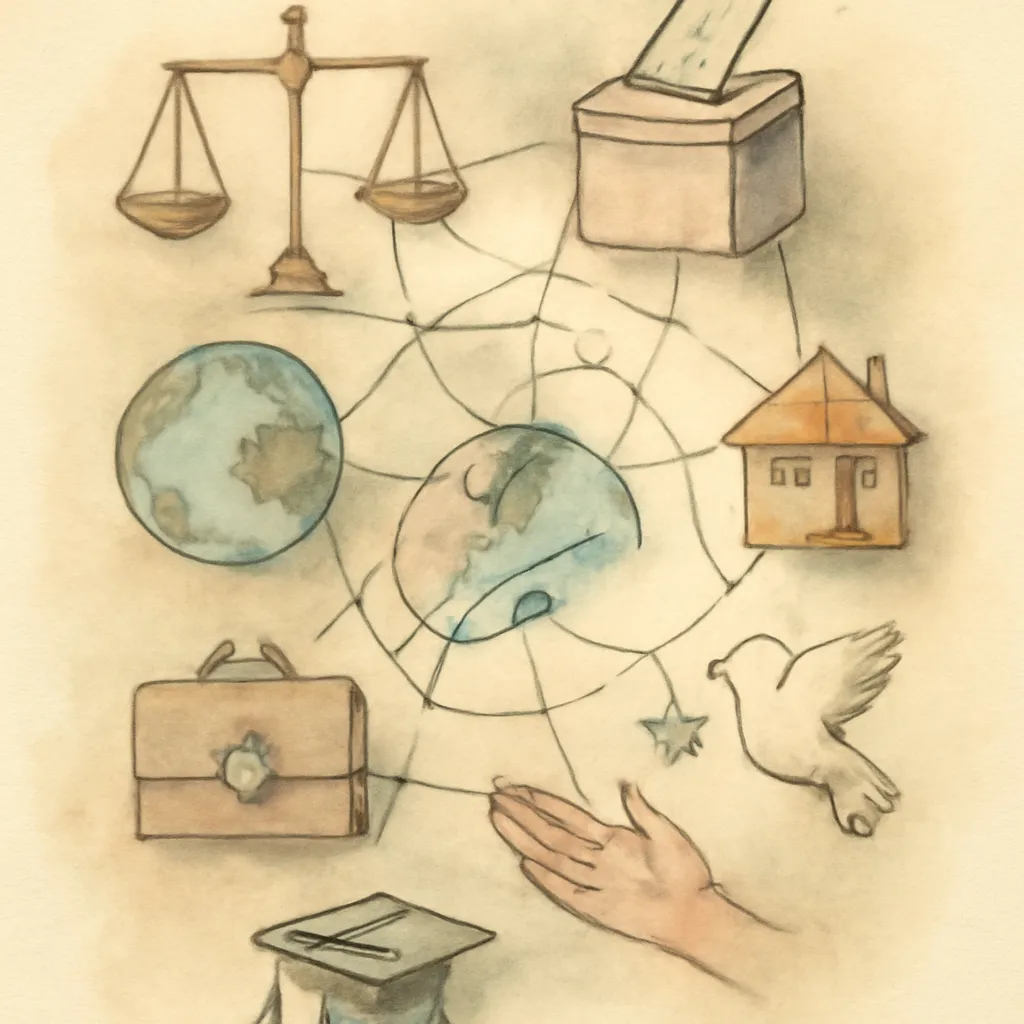
Different types of freedoms—political, economic, social—are deeply interlinked and reinforce one another. For example, political freedoms can help secure social opportunities, while economic facilities can empower people to participate in civic life. Sen’s framework rejects the idea that societies must choose between civil liberties and economic growth.
5.Agency and Participation
A core idea is that people are not just passive recipients of development but active agents in shaping their own destinies. Sen advocates for participatory approaches that involve individuals and communities in decision-making, arguing that genuine development requires empowering people to make choices and influence outcomes.
6.Critique of Technocratic and Growth-Only Models
Sen critiques traditional development models that prioritize economic growth above all else, often at the expense of individual rights or well-being. He warns against technocratic solutions that ignore the lived realities of people, arguing that development policy must be rooted in expanding real freedoms, not just statistical targets.