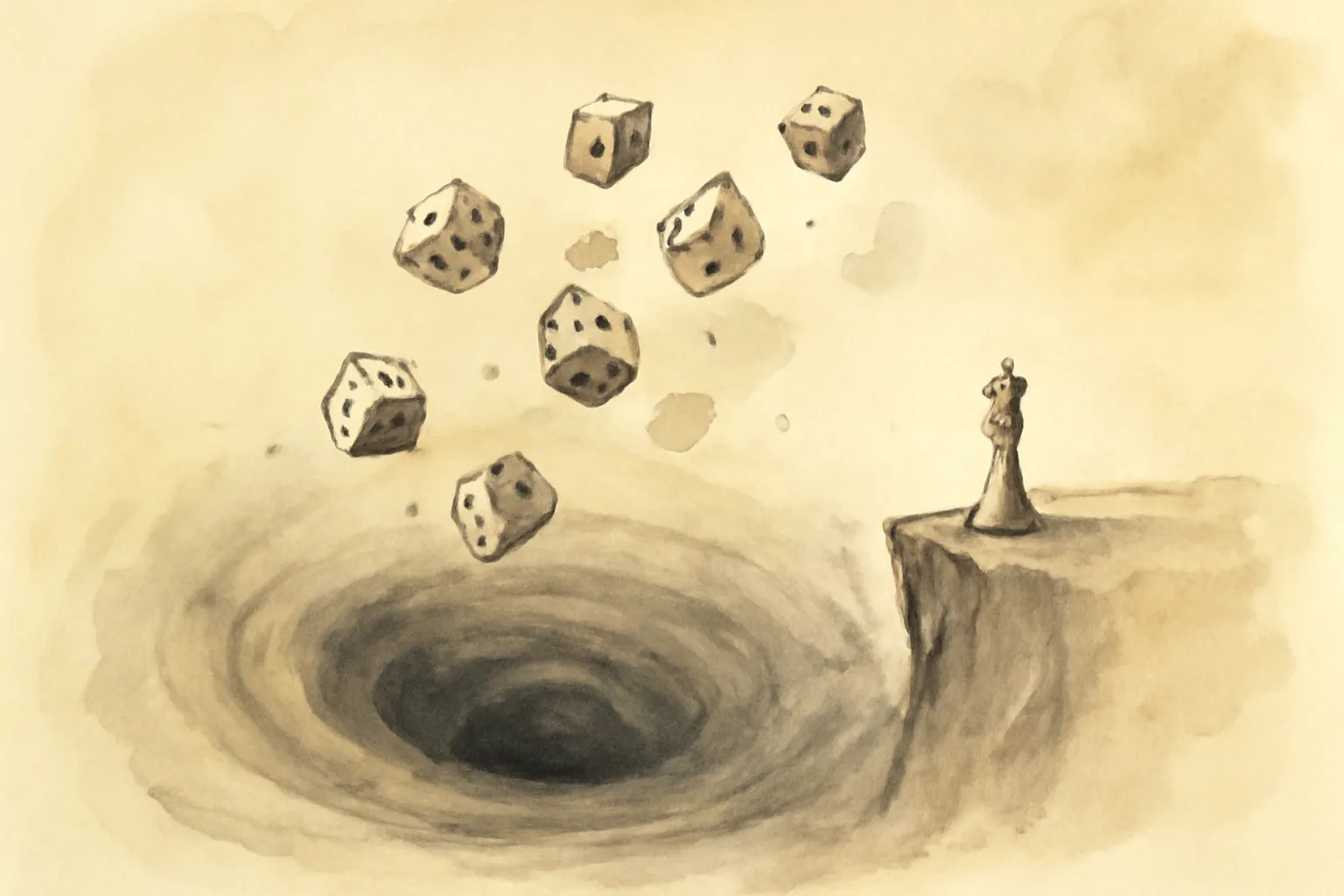
1.The Illusion of Skill
Taleb argues that humans are wired to see patterns and causality where there may be none, especially in complex systems like financial markets. Many so-called 'successful' investors or businesspeople may simply be beneficiaries of luck, not skill. Our tendency to attribute outcomes to personal ability rather than randomness leads to overconfidence and flawed decision-making, both in markets and everyday life.
2.Survivorship Bias
One of the book’s central concepts is survivorship bias—the error of focusing on winners while ignoring the vast majority of losers who followed the same strategies but failed. By only seeing the survivors, we overestimate the efficacy of their methods and underestimate the role of chance, leading to distorted lessons and misplaced admiration.
3.Narrative Fallacy
Taleb explores how people construct neat stories to explain past events, imposing order on what is often random. This 'narrative fallacy' gives us a false sense of understanding and control, making us believe we can predict or replicate success. The reality, he argues, is that much of what happens is unpredictable and cannot be easily explained after the fact.
4.Emotional Responses to Randomness
The book delves into how humans are emotionally ill-equipped to handle randomness. We react strongly to short-term outcomes, feeling elated by success and devastated by failure, even when these may be the result of chance. This emotional volatility can lead to poor decisions, especially in fields like investing, where randomness dominates.
5.The Limits of Prediction
Taleb warns against the overuse of statistical models and predictions in environments dominated by uncertainty. He contends that most models underestimate the probability of rare, high-impact events (so-called 'Black Swans'), leading to dangerous complacency. True wisdom, he suggests, lies in humility and recognizing the limits of our knowledge.
6.Learning to Live with Uncertainty
Rather than trying to eliminate randomness, Taleb advocates for embracing uncertainty and building resilience. This means focusing on processes rather than outcomes, avoiding overconfidence, and preparing for the unexpected. By acknowledging randomness, we can make better decisions and avoid being 'fooled' by chance events.