1.The Essence of Gödel’s Incompleteness Theorem
The book demystifies Gödel’s 1931 discovery: in any sufficiently complex formal mathematical system, there exist true statements that cannot be proven within that system. Nagel and Newman break down the logic behind this, showing how Gödel ingeniously encoded statements about arithmetic into the language of mathematics itself, revealing inherent limitations in formal systems like those championed by Hilbert and Russell.
2.The Dream and Limits of Formalism
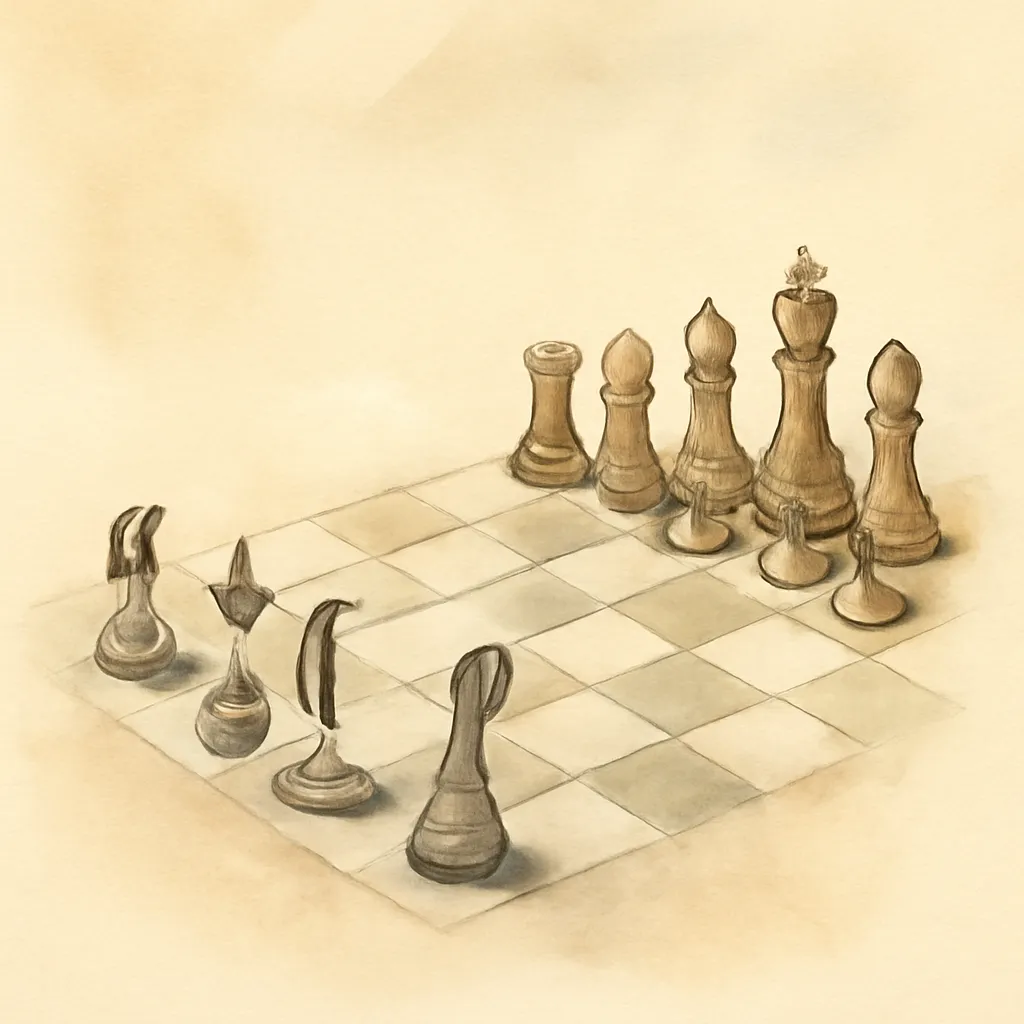
Nagel and Newman set the stage by describing the early 20th-century quest for absolute certainty in mathematics, led by thinkers like Hilbert. The authors explain the ambition to ground all mathematics on a finite set of axioms and rules, and how Gödel’s proof dashed hopes for such a complete and consistent foundation, fundamentally altering the philosophy of mathematics.
3.Self-Reference and Paradox
A central insight is how Gödel harnessed self-reference—crafting statements that refer to their own unprovability, reminiscent of the classic ‘liar paradox.’ The authors guide readers through the subtlety and brilliance of this maneuver, highlighting how self-reference can generate undecidable propositions and why this is more than just a logical trick.
4.Implications for Logic, Mathematics, and Beyond
The book explores the far-reaching consequences of Gödel’s work, not just for mathematics but for logic, philosophy, and even computer science. Nagel and Newman discuss how the incompleteness theorem challenges the notion of mechanical reasoning and has influenced debates about the nature of mind, computation, and the scope of human knowledge.
5.Making the Abstract Accessible
A hallmark of the book is its pedagogical clarity. Nagel and Newman use analogies, simplified examples, and careful exposition to make an abstract, technical subject approachable for non-specialists. Their methodical unpacking of the proof’s structure allows readers to appreciate both the technical achievement and its philosophical significance.
6.The Enduring Mystery of Mathematical Truth
Finally, the authors reflect on what Gödel’s proof means for our understanding of truth. If some truths can never be proven, what does it mean to 'know' something in mathematics? The book invites readers to grapple with the boundaries between proof, truth, and belief in the mathematical enterprise.