1.Quantum Biology: A New Paradigm
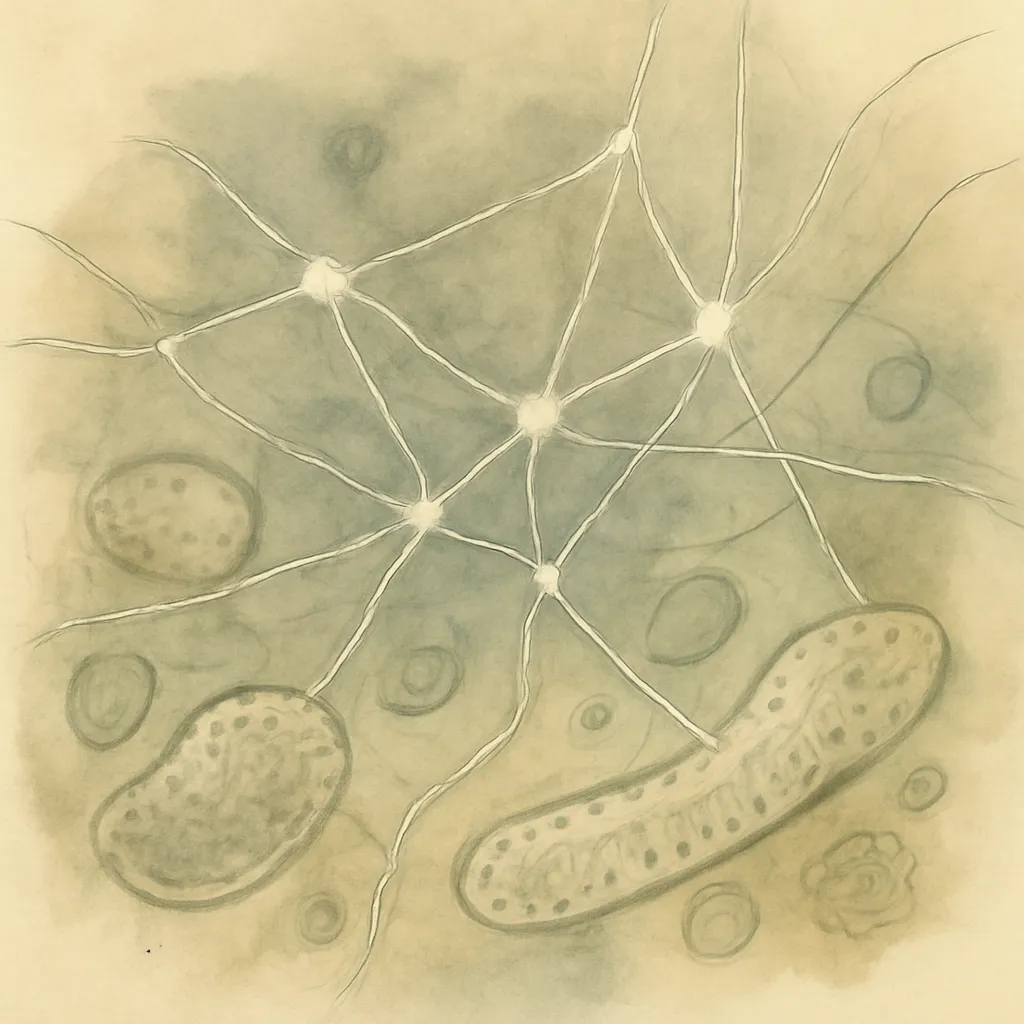
McFadden argues that traditional biology, focused on cells and molecules, misses a crucial layer: the quantum realm. He explores how quantum phenomena—like superposition, tunneling, and entanglement—may underpin processes as fundamental as photosynthesis, enzyme action, and even the sense of smell. By shifting the focus from classical to quantum explanations, the book proposes that life’s complexity and efficiency are deeply rooted in the weirdness of quantum mechanics.
2.Photosynthesis and Quantum Coherence
One of the book’s most compelling examples is photosynthesis. McFadden describes how plants and bacteria seem to exploit quantum coherence, allowing energy to be transferred with remarkable efficiency. This challenges the idea that biological systems are too 'warm and wet' for quantum effects, suggesting that life has evolved to harness these effects in ways that classical physics cannot explain.
3.Enzymes: Quantum Tunneling at Work
Enzymes are biological catalysts that accelerate chemical reactions essential for life. The book explores evidence that enzymes use quantum tunneling—where particles pass through energy barriers rather than over them—to speed up reactions far beyond what classical chemistry predicts. This insight could reshape our understanding of how life achieves such extraordinary biochemical feats.
4.Quantum Effects in Senses and Navigation
McFadden discusses how quantum mechanics may play a role in animal senses, such as the avian magnetic compass and the human sense of smell. For example, birds might use quantum entanglement in proteins to detect Earth’s magnetic field, while olfactory receptors could distinguish molecules by their quantum vibrations. These examples suggest that quantum effects are not just rare anomalies but integral to life’s toolkit.
5.The Origins of Life and the Quantum Edge
A central question is why life has never been synthesized entirely from non-living material. McFadden speculates that quantum mechanics might be the missing ingredient that enables the leap from chemistry to biology. By examining how quantum phenomena could have facilitated the emergence of life, the book offers a provocative answer to one of science’s oldest mysteries.
6.Implications for Science and Technology
If life routinely exploits quantum mechanics, this has profound implications for both biology and technology. Understanding these processes could inspire new advances in quantum computing, energy transfer, and even medicine. The book encourages readers to imagine a future where the lessons of quantum biology reshape our world.