
Big ideas · from the full text
Material World
by Ed Conway · 4 min read · Lumina’s commentary, written with AI
About this book
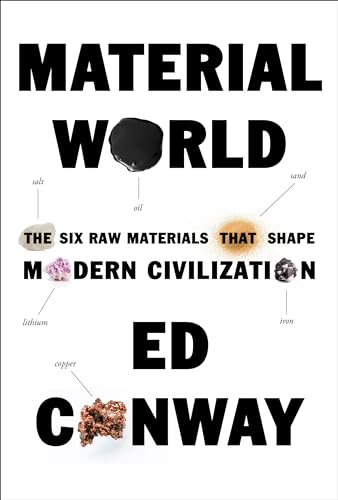
Sand, salt, iron, copper, oil, and lithium. These fundamental materials have created empires, razed civilizations and fed our ingenuity and our greed for thousands of years. Without them, our modern world would not exist, and the battle to control them will determine our future. The fiber-optic cables that weave the World Wide Web, the copper veins of our electric grid, the silicon chips and lithium batteries that power our phones and cars: though it can feel like we now live in a weightless world of information—what Ed Conway calls “the ethereal world”—our twenty-first-century lives are still very much rooted in the material. In fact, we dug more stuff out of the earth in 2017 than in all of human history before 1950. For every ton of fossil fuels, we extract six tons of other materials, from sand to stone to wood to metal. And in Material World, Conway embarks on an epic journey across continents, cultures and epochs to reveal the underpinnings of modern life on Earth—traveling from the sweltering depths of the deepest mine in Europe to spotless silicon chip factories in Taiwan to the eerie green pools where lithium originates. Material World is a celebration of the humans and the human networks, the miraculous processes and the little-known companies, that combine to turn raw materials into things of wonder. This is the story of human civilization from an entirely new perspective: the ground up.
As an Amazon Associate, Lumina earns from qualifying purchases. How this works
♫ AI-generated voice · press play below to listen and read along; tap any passage to jump to it
Digital life is built from physical stuff
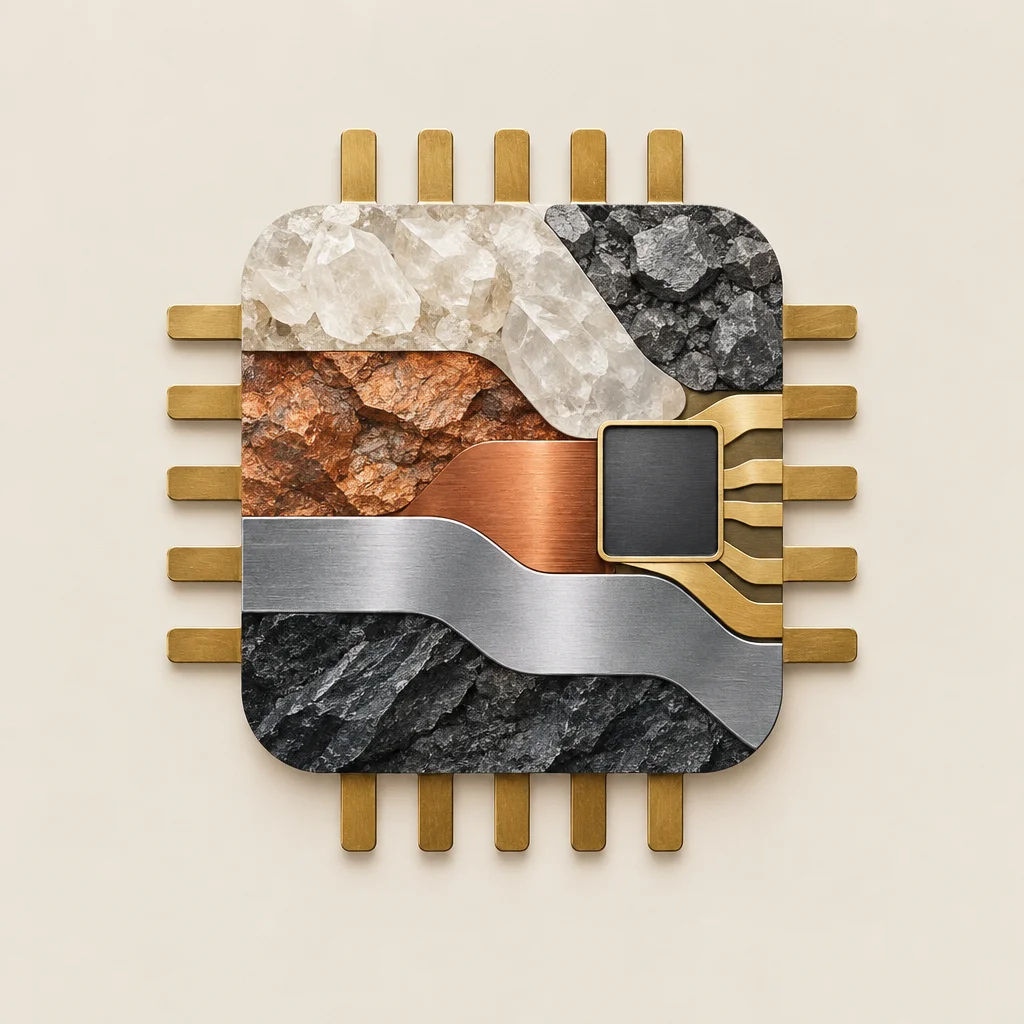
In Material World, Ed Conway argues that “digital” systems are still made of matter. A computer chip is not just code and design. It begins with raw minerals such as quartz, then moves through furnaces, chemical cleaning, crystal growth, wafer cutting, precision tools, and major fabrication plants. Fibre-optic networks and processors rely on mined inputs and highly specialised suppliers spread across multiple countries. The book’s point is that technology rests on physical supply chains, not weightless ideas.
Why it matters
It reframes technology as a physical system with costs and weak points, not a clean abstraction.
An example
A single processor can draw on Spruce Pine quartz, ASML equipment, German optics, and fabrication in Taiwan.
Keep in mind
The chip example is detailed, but it does not prove every technology has the same supply pattern.
The same materials can help and harm
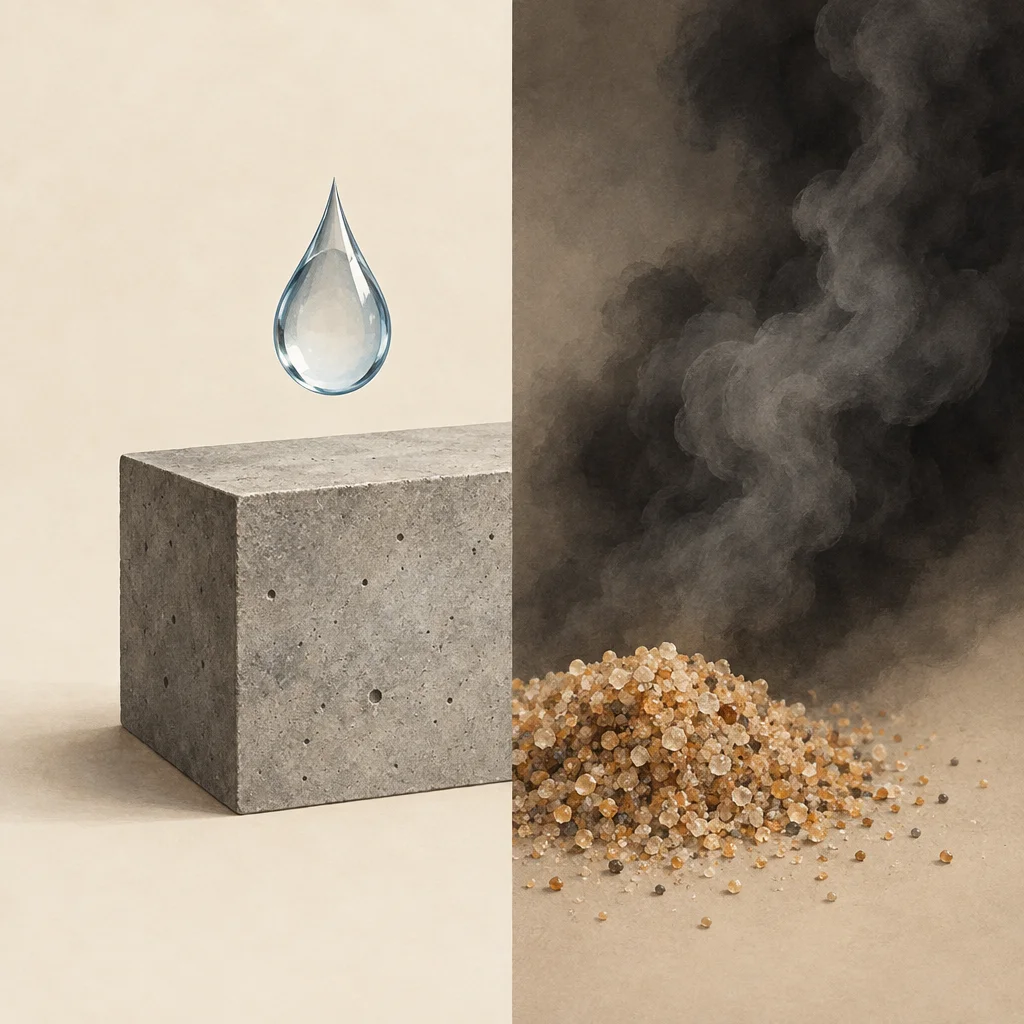
In Material World, Ed Conway repeatedly pairs material benefits with material harms. The book describes how concrete supports sanitation and housing, while cement production releases carbon and sand extraction can damage rivers and coasts. It also notes that fertiliser chemistry helps feed people but is linked to explosives and can push nitrogen into water and air. Oil enables transport, medicines, plastics, and food production, while its emissions remain dangerous. The point is not simple praise or blame, but seeing both sides together.
Why it matters
It pushes readers to assess a material across the whole chain, not just by the final product.
An example
Nitrates from the Atacama supported both fertiliser and explosives, tying food supply to war materials.
Keep in mind
The summary gives many trade-offs, but it does not give one rule for weighing them.
Decarbonisation still needs mining and building
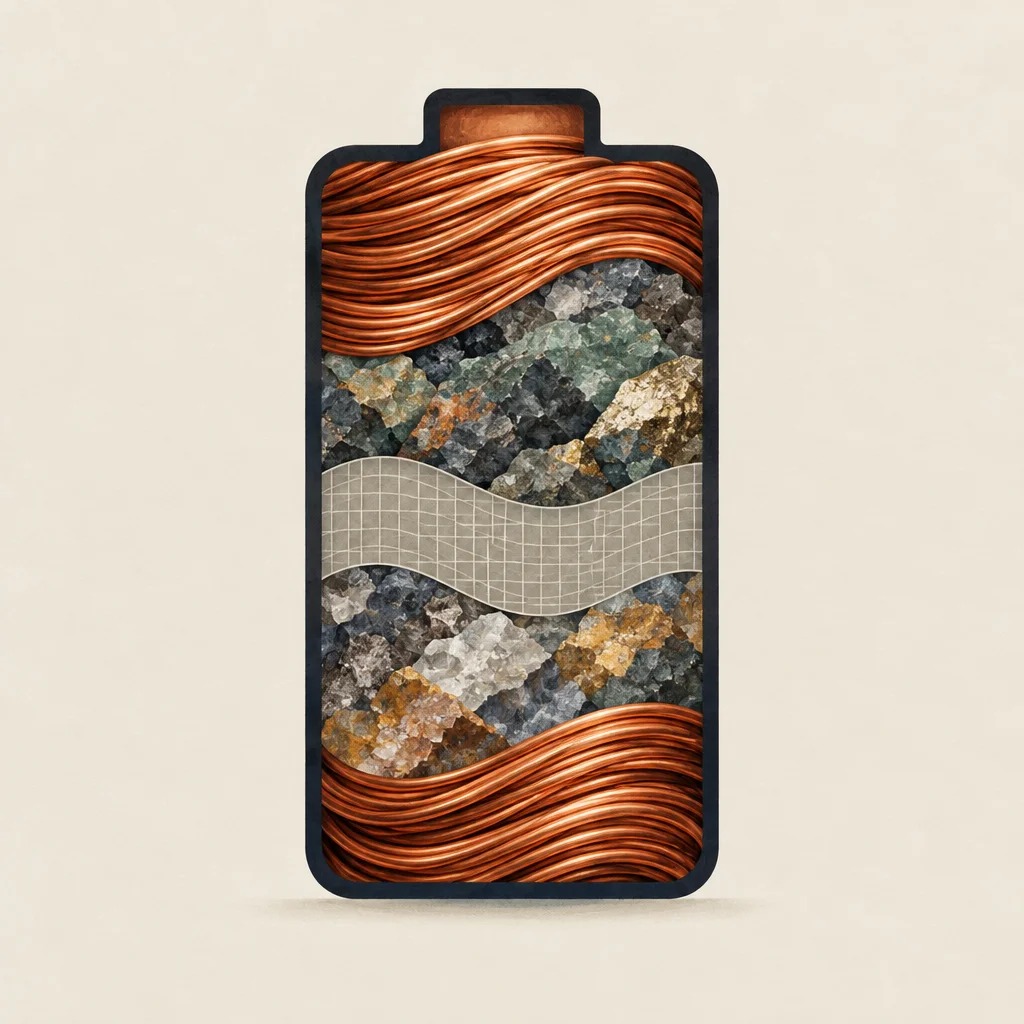
In Material World, Ed Conway argues that decarbonisation is not weightless: replacing fossil fuels requires large physical build-out. Electrification calls for more copper. Lithium batteries require mined and refined minerals. Cleaner steel and green hydrogen need vast amounts of clean power. The book also notes that recycling can help but cannot meet near-term demand on its own because demand is rising faster than discarded products become available. The central message is that a “clean” transition still involves mines, factories, and grids.
Why it matters
Plans that ignore permits, supply chains, factories, grids, and local impacts can run into hard constraints.
An example
The book notes rapid battery growth outpacing the near-term supply of end-of-life batteries available to recycle.
Keep in mind
The book’s hope depends on investment, cooperation, learning, and political support that may fail.
Limits can mean damage, politics, or concentration
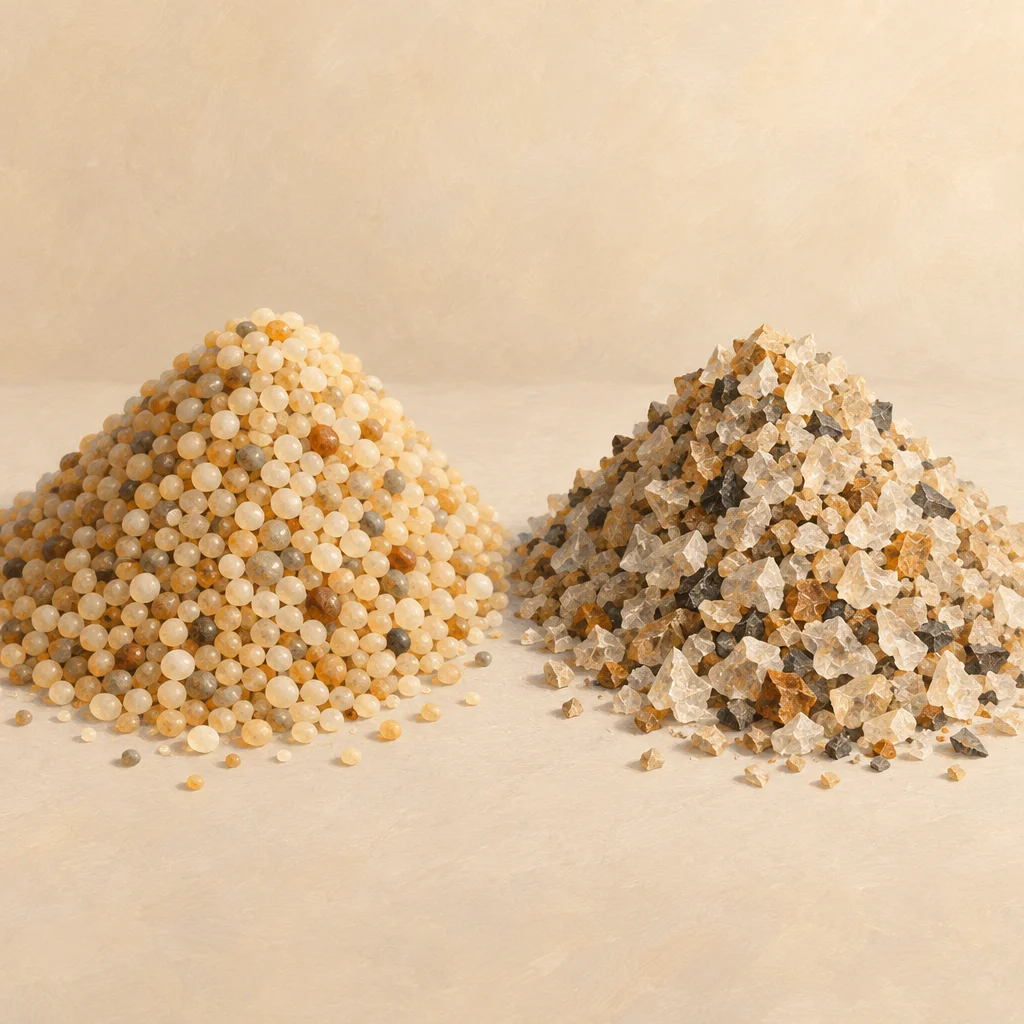
In Material World, Ed Conway presents scarcity as more than “running out.” He describes how copper reserves depend on what can be mined at a workable cost, not just what exists underground. Sand is another case: desert sand can be abundant yet often unsuitable for concrete. The book also shows fragility when key inputs come from only a few suppliers, as in parts of chip production. It adds that deep-sea minerals might expand supply, but ecological risks are uncertain. The core idea is that limits can be economic, technical, political, or environmental.
Why it matters
It shifts resource debates toward control, local damage, and oversight, not only total quantity in the ground.
An example
Rounded desert sand generally cannot substitute for the sand and aggregates used in construction.
Keep in mind
The summary supports this pattern across several materials, but each resource has its own limits.
A discovery is not enough

In Material World, Ed Conway argues that invention alone does not change the world; scale and practice do. Materials such as concrete, chips, steel, and batteries matter when people learn how to make them reliably and cheaply. The book’s conclusion applies this to cleaner technology too: costs may fall as experience accumulates, but only after large effort, investment, and repeated improvement. The focus is on learning-by-doing and industrial scale-up, not just breakthroughs in a lab.
Why it matters
It clarifies why a promising invention is different from a completed transition in the real economy.
An example
The book points to battery “gigafactories” as evidence that manufacturing skill matters alongside the original battery invention.
Keep in mind
Learning effects support hope, but the summary says they do not guarantee a smooth transition.
Liked the ideas? Read Material World in full.
The big ideas are free on Lumina. The complete book is available from:
As an Amazon Associate, Lumina earns from qualifying purchases. How this works