1.The Challenge of Science and Religion
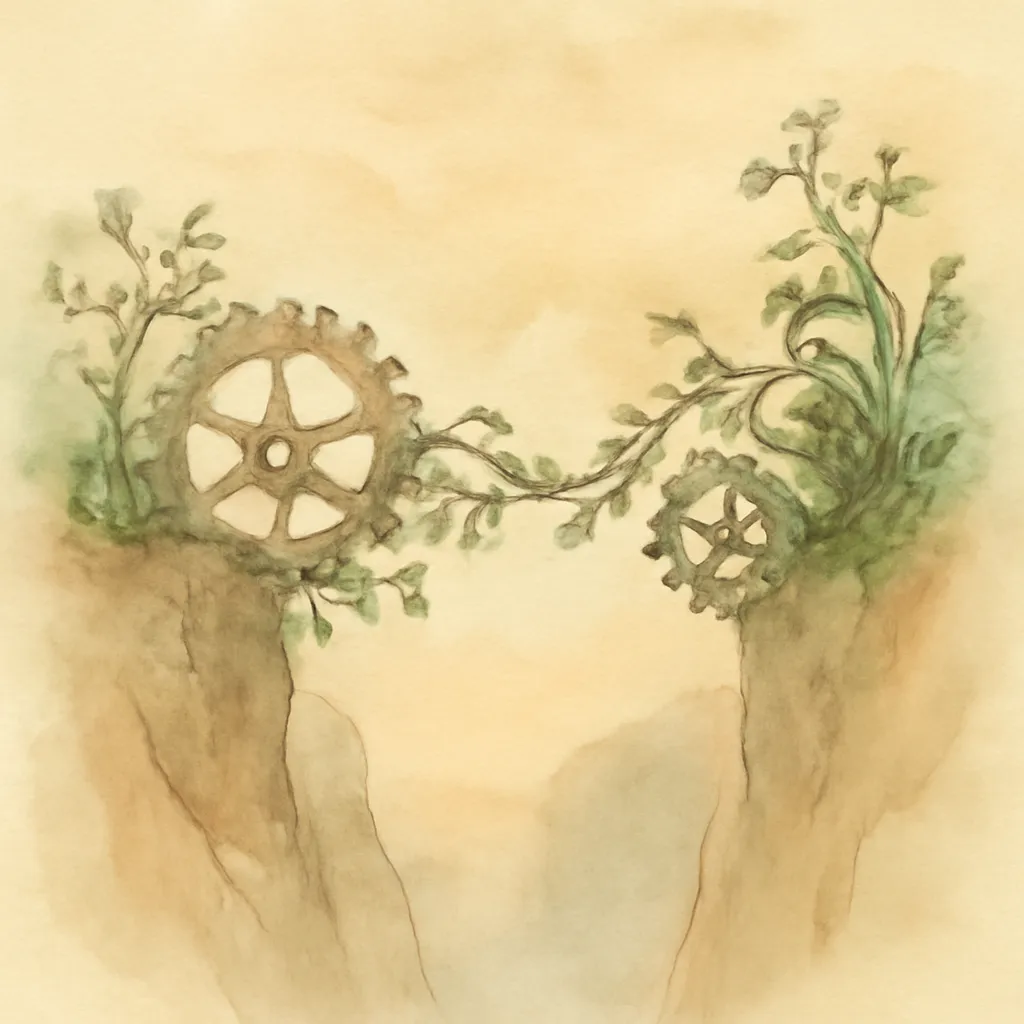
Drummond opens with a candid acknowledgment of the skepticism surrounding discussions that bridge science and religion. Both fields often appear at odds, with science dismissing religious metaphors and religion feeling undermined by scientific rationalism. Yet, Drummond posits that the concept of law—integral to both domains—offers a unique vantage point. This perspective encourages a dialogue that transcends mere reconciliation, aiming instead for a deeper understanding of the laws governing both the natural and spiritual worlds. By challenging the notion that these realms are fundamentally separate, Drummond sets the stage for a revolutionary approach to understanding human existence. He suggests that both science and religion can coexist and enrich one another, rather than remaining in conflict.
2.Redefining Natural Law

Natural law is not just a legalistic framework; it embodies the underlying principles that govern the universe's behavior. Drummond emphasizes that the pursuit of understanding these laws has been a hallmark of scientific inquiry since the time of early philosophers. The transition from viewing the universe as a chaotic jumble of phenomena to recognizing the relationships and laws connecting those phenomena marks a significant evolution in human thought. Drummond illustrates how early thinkers, including the Stoics and Pythagoreans, began to perceive an order in the cosmos, yet it was not until the advent of modern science that this notion truly flourished. The discovery of gravitational laws, for example, shifted the focus from isolated phenomena to the relationships that bind them. This shift has profound implications, suggesting that the laws of nature are not isolated facts but part of a grand, interconnected system. By recognizing natural law as a foundational aspect of reality, Drummond invites readers to consider its potential extensions into the spiritual realm.
3.The Law of Continuity

Central to Drummond's thesis is the Law of Continuity, which asserts that the principles governing the natural world should also apply within the spiritual domain. He argues that it is illogical to suggest that different sets of laws govern the physical and spiritual realms. If humanity is part of a singular universe characterized by harmony, then spiritual development must be rooted in the same laws that govern physical existence. Drummond uses the analogy of growth in plants and animals to illustrate this continuity; just as the natural world exhibits consistent laws of growth and change, so too should our understanding of spiritual growth reflect similar principles. This idea challenges the notion of a disjointed worldview, promoting a seamless understanding of existence where spiritual growth and natural development are interdependent. By applying the Law of Continuity, Drummond lays the groundwork for a unified approach to understanding both human nature and the universe.
4.Spiritual Laws Reflecting Natural Laws

Drummond proposes that many spiritual laws may simply be extensions of natural laws. For instance, principles such as love, justice, and morality can be seen through the lens of natural laws that govern human behavior and relationships. Instead of viewing spiritual laws as entirely separate entities, he invites a reexamination of their origins. Drummond discusses how concepts like empathy and altruism, important in both ethical philosophy and spiritual teachings, can be understood as natural phenomena that have evolved to enhance social cohesion and survival. This perspective opens avenues for exploring how these laws manifest in everyday life, suggesting that spiritual truths may be grounded in observable natural phenomena. By identifying parallels between natural and spiritual laws, Drummond encourages a broader understanding of morality that is rooted in the very fabric of the universe, making the pursuit of spirituality more tangible and relatable.
5.The Role of Ethical Science
Drummond discusses the importance of ethical science as a framework for understanding moral and spiritual truths. He argues that ethical principles should not merely rest on authority or tradition but instead be grounded in a scientific understanding of human nature and the universe. This approach emphasizes the need for a rational basis for morality, one that aligns with the laws of nature. By advocating for ethical science, Drummond seeks to establish a foundation for morality that is both scientifically informed and spiritually rich. He posits that as we learn more about the natural world and human behavior through scientific inquiry, we can develop ethical systems that reflect these insights. This shift has the potential to transform the way we approach morality, moving away from rigid dogma towards a more adaptive and responsive ethical framework.
6.The Implications of Law in Religion
By integrating the concept of law into religious discourse, Drummond suggests that theology can become more accessible and relatable. Instead of relying solely on dogma or tradition, religious beliefs can be examined through the lens of natural laws, which may help demystify and clarify spiritual concepts. He argues that this integration could lead to a more profound understanding of faith, where spiritual teachings are not seen as arbitrary rules but as reflections of the underlying order of the universe. Drummond highlights how this approach can foster a sense of unity among diverse belief systems. Theologians could benefit from exploring how their teachings align with natural laws, promote ethical behavior, and resonate with human experience. This shift could enhance religious practice by grounding it in a shared understanding of the universe, thereby fostering a sense of commonality in a diverse world.
7.Interconnectedness of Human Experience
Drummond's exploration emphasizes the interconnectedness of all aspects of human experience—physical, mental, moral, and spiritual. He argues that separating these dimensions undermines our understanding of human nature and the universe. By recognizing that these facets are interconnected and governed by the same underlying laws, we can gain a more holistic view of existence. This comprehensive perspective not only enriches personal understanding but also fosters empathy and compassion towards others, as it highlights our shared humanity. Drummond points out that by viewing our experiences through the lens of interconnected laws, we can better appreciate the struggles and triumphs of others, leading to a more compassionate society. In this framework, the spiritual journey becomes a natural extension of the human experience rather than a separate, isolated pursuit.
8.The Perils of Disconnection
Drummond warns against the dangers of viewing the spiritual and natural worlds as distinct and disconnected. This fragmentation leads to confusion and a lack of coherence in understanding life's complexities. When individuals compartmentalize their experiences, they miss the opportunity to see the broader patterns and connections that define existence. Drummond argues that such disconnection can result in a diminished sense of purpose and an inability to navigate moral dilemmas effectively. For instance, when spiritual beliefs are not aligned with scientific understanding, individuals may struggle to reconcile their experiences, leading to inner conflict and disillusionment. By advocating for a synthesis of knowledge from both realms, Drummond encourages a more integrated approach to understanding life. This synthesis not only enhances personal growth but also cultivates a sense of responsibility towards both the natural world and spiritual well-being.
9.The Journey Towards Understanding
The pursuit of understanding the laws of the spiritual world is portrayed as a journey rather than a destination. Drummond emphasizes the importance of inquiry, suggesting that the questions we ask shape our understanding of both the natural and spiritual realms. He argues that the process of exploration—whether through scientific investigation or spiritual reflection—enriches our lives and deepens our appreciation for the complexities of existence. This journey is not just about finding answers but also about embracing the process of seeking knowledge and wisdom. Drummond invites readers to engage actively in their quest for understanding, fostering a sense of curiosity that enriches both personal and collective experiences. He encourages individuals to remain open to new ideas and insights, recognizing that growth often comes from questioning established norms and exploring uncharted territories.
10.A Vision for the Future
Drummond's work culminates in a vision for a future where the integration of natural and spiritual laws leads to a more harmonious existence. He advocates for a worldview that recognizes the beauty and order inherent in both realms, fostering a sense of wonder and reverence for the universe. By embracing this vision, individuals can cultivate a deeper connection to themselves, others, and the world around them. This holistic approach not only enhances personal fulfillment but also encourages collective responsibility for the environment and society. Drummond's call to action is a reminder that the journey towards understanding is not just personal but also communal, urging us to work together towards a more enlightened future. He envisions a society where scientific knowledge enriches spiritual practice, and spiritual insights inform scientific inquiry, creating a balanced and integrated approach to human existence.