

Big ideas · from the full text
Prisoners of Geography
by Tim Marshall · 3 min read · Lumina’s commentary, written with AI
- Topic: Politics
About this book
All leaders are constrained by geography. Their choices are limited by mountains, rivers, seas and concrete. Yes, to understand world events you need to understand people, ideas and movements - but if you don't know geography, you'll never have the full picture. To understand Putin's actions, for example, it is essential to consider that, to be a world power, Russia must have a navy. And if its ports freeze for six months each year then it must have access to a warm water port - hence, the annexation of Crimea was the only option for Putin. To understand the Middle East, it is crucial to know that geography is the reason why countries have logically been shaped as they are - and this is why invented countries (e.g. Syria, Iraq, Libya) will not survive as nation states. Spread over ten chapters (covering Russia; China; the USA; Latin America; the Middle East; Africa; India and Pakistan; Europe; Japan and Korea; and Greenland and the Arctic), using maps, essays and occasionally the personal experiences of the widely traveled author, Prisoners of Geography looks at the past, present and future to offer an essential guide to one of the major determining factors in world history.
As an Amazon Associate, Lumina earns from qualifying purchases. How this works
♫ AI-generated voice · press play below to listen and read along; tap any passage to jump to it
Begin with terrain, then add the rest
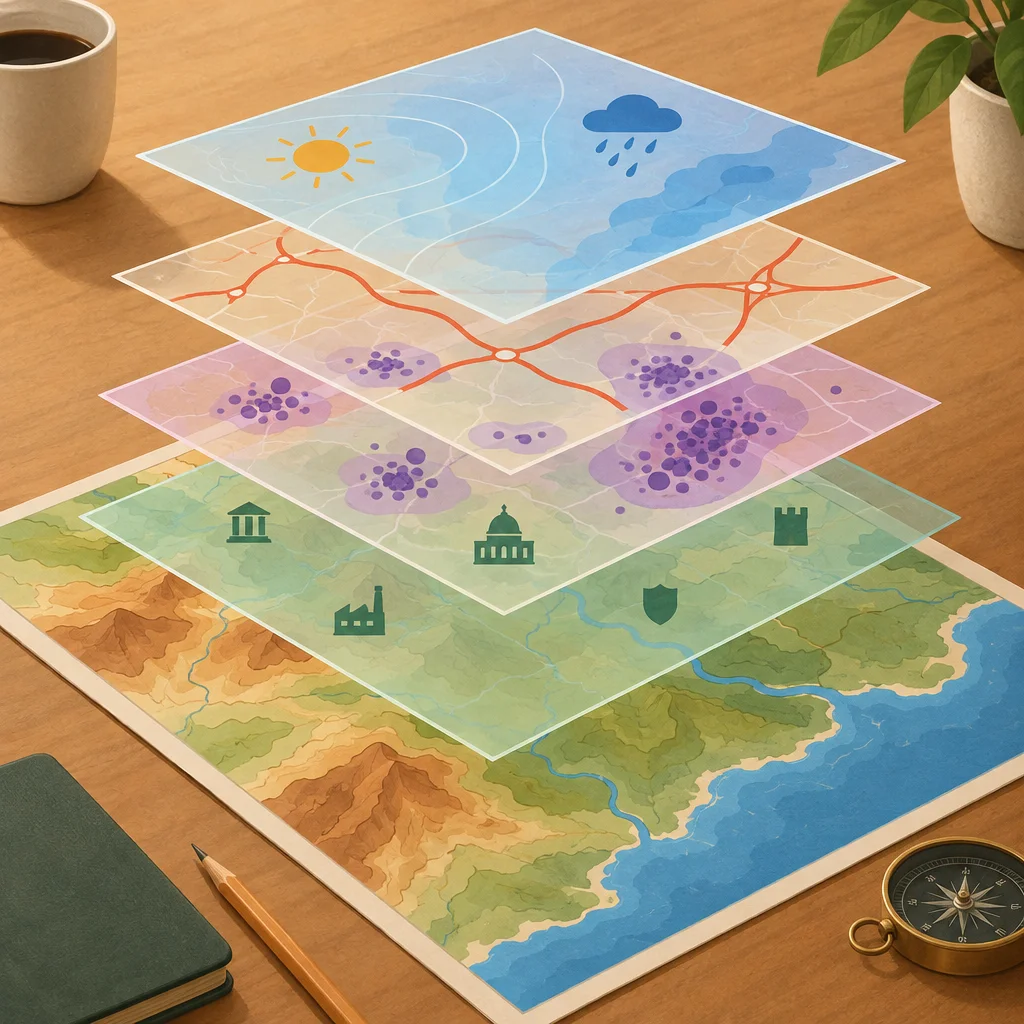
In Prisoners of Geography, Tim Marshall’s core move is to start with the map before judging politics. He asks what rivers, mountains, plains, ports, weather, distance, and resources make easier or harder for states and armies. But he also flags that geography is not the whole explanation. People, ideas, institutions, and technology still matter alongside terrain, so the map is a beginning, not an ending.
Why it matters
It helps readers resist one-cause stories about leaders, wars, trade, and alliances.
An example
The summary points to Kosovo, Afghanistan, and Syria to highlight factors like rivers, weather, roads, and where people can survive.
Keep in mind
The book’s own frame says geography is only one part of any explanation.
New tools relocate constraints
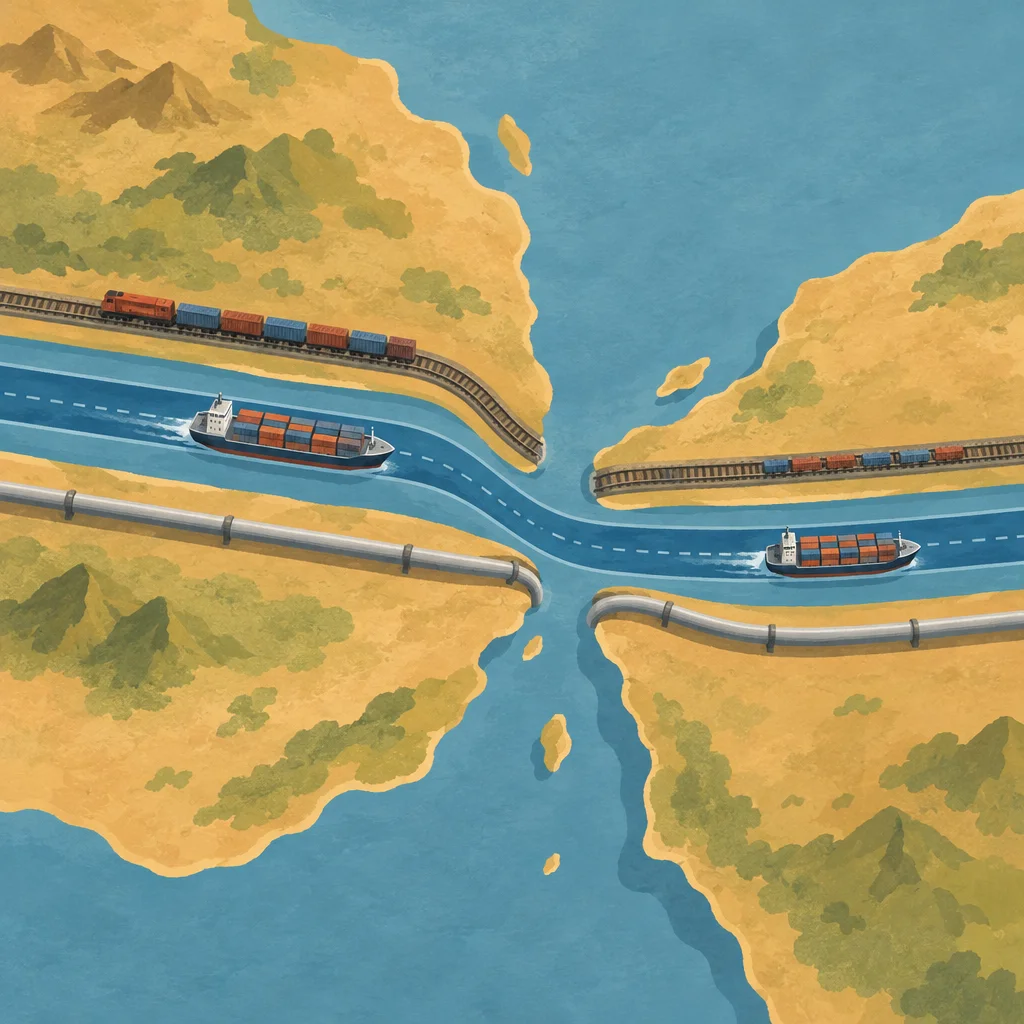
In Prisoners of Geography, Tim Marshall returns to the idea that technology changes barriers more than it removes them. Railways, ports, pipelines, and modern fleets can bypass older obstacles, but they introduce new vulnerabilities: chokepoints, blockades, dependence on partners, supply requirements, and the need for trained forces. The result is that power still has a physical footprint. Even advanced states remain tied to routes and locations, not just abstract networks.
Why it matters
This keeps modern politics from seeming weightless, borderless, or free from physical limits.
An example
The summary says China pursues naval reach, overseas ports, and alternate routes because imports can be blocked.
Keep in mind
The summary supports this as a broad pattern, not a rule that predicts every case.
Strategic fear often maps onto terrain
In Prisoners of Geography, Tim Marshall repeatedly links national security concerns to physical space. He frames territory not only as land to own, but as depth, access, and approach routes. The summary’s Russia example reads Crimea through defensive depth and access to Sevastopol. Across the book’s survey, the point is that buffers, passes, ports, islands, and sea routes can matter even when holding them is expensive or difficult. Explaining perceived fear is not the same as endorsing coercion.
Why it matters
It explains why states fight over buffers, passes, ports, islands, and narrow sea routes.
An example
The summary interprets Russia’s move in Crimea in terms of defensive depth and access to Sevastopol.
Keep in mind
Explaining a state’s fear does not make coercion, annexation, or intervention justified.
Resources aren’t power unless they’re usable
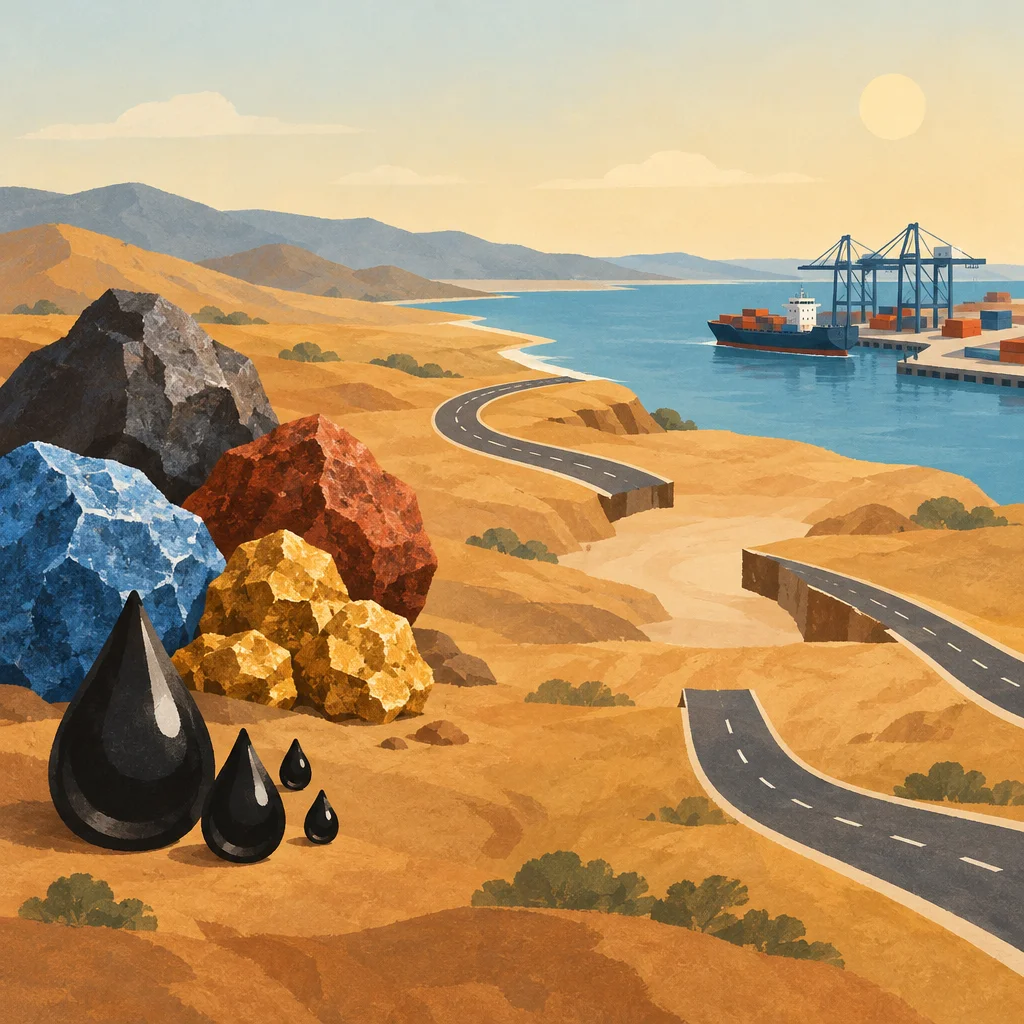
In Prisoners of Geography, Tim Marshall challenges the idea that natural wealth automatically becomes national strength. Oil, minerals, farmland, rivers, and shale matter, but so do the paths and systems that make them usable: roads, harbours, investment, stable institutions, and peace. The summary’s Africa discussion pairs resource potential with obstacles such as weak manufacturing, corruption, conflict, and difficult transport links. The broader point is to treat “resources” as a chain that can break at access, governance, or infrastructure.
Why it matters
It turns resource wealth into a practical question about access, rule, and public gain.
An example
The summary says Africa’s resource prospects sit alongside weak manufacturing, corruption, conflict, and difficult transport connections.
Keep in mind
The summary gives regional patterns, not full evidence for every country named.
Geography creates shared needs and shared rivalries
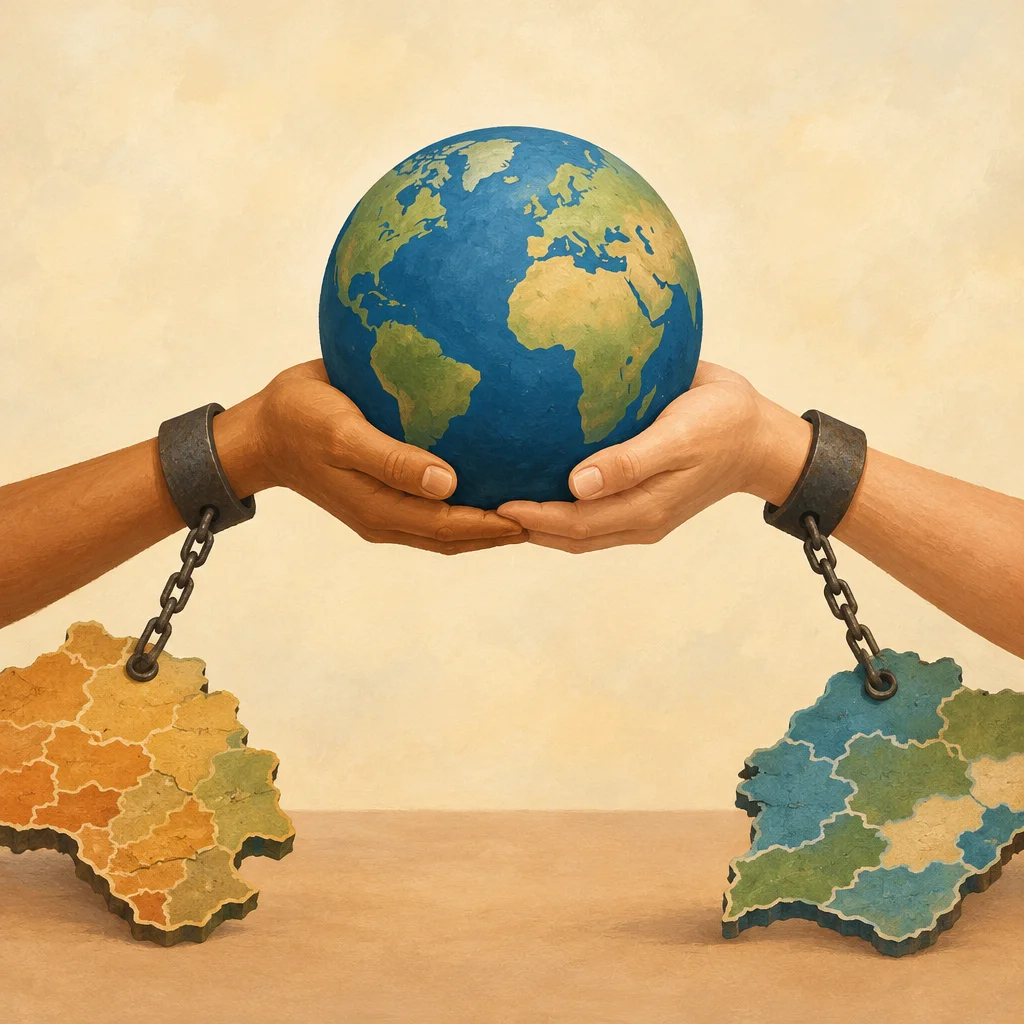
In Prisoners of Geography, Tim Marshall often shows that cross-border pressures can pull neighbours toward cooperation while also feeding suspicion. Rivers, migration, sea lanes, rescue needs, climate stress, and environmental harm don’t stop at borders, so states have reasons to coordinate. Yet coordination stays fragile when routes, territory, and leverage are at stake. The summary’s Arctic example captures this duality: practical needs like rescue and environmental concerns exist alongside continental shelf claims and disputed passages. Geography can produce common interests without guaranteeing trust.
Why it matters
This explains why obvious shared problems can still produce slow, partial, or tense cooperation.
An example
The summary notes that in the Arctic, rescue and environmental needs coexist with shelf claims and disputed passages.
Keep in mind
The book points to both cooperation and rivalry, so it does not support one fixed outcome.
Liked the ideas? Read Prisoners of Geography in full.
The big ideas are free on Lumina. The complete book is available from:
As an Amazon Associate, Lumina earns from qualifying purchases. How this works