1.Demystifying Turing’s 1936 Paper
At its core, The Annotated Turing is a line-by-line exploration of Turing’s 'On Computable Numbers,' a paper that is often cited but rarely read in full. Petzold unpacks Turing’s dense mathematical language, providing historical context, clarifying explanations, and modern analogies. This approach not only makes the original work accessible to a broader audience, but also highlights the paper’s subtle brilliance and the leap of imagination required to invent the concept of a programmable machine decades before computers existed.
2.The Birth of the Turing Machine
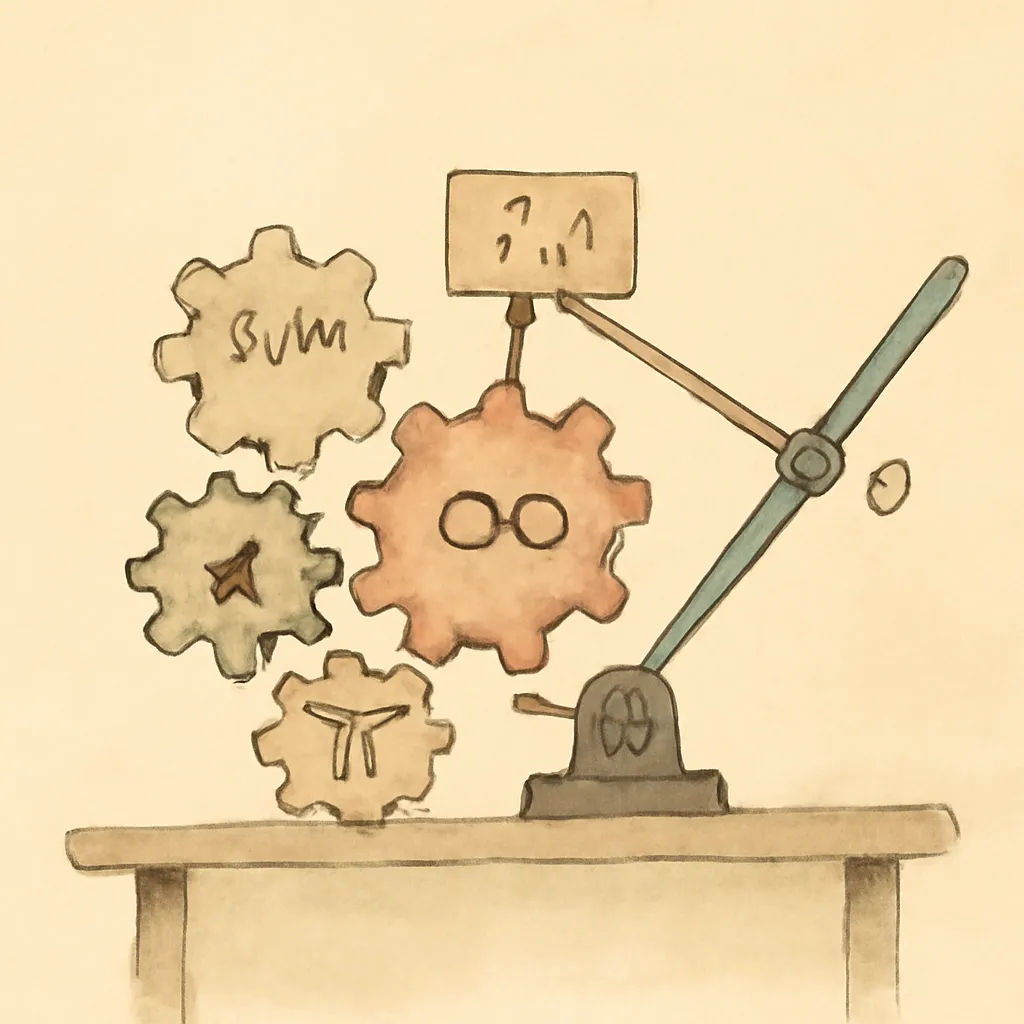
One of the book’s central themes is the invention of the Turing Machine—an imaginary device that could, in principle, perform any computation that can be described by an algorithm. Petzold shows how this abstraction was revolutionary: it gave mathematicians a concrete way to talk about the limits of computation, and it laid the groundwork for the digital computers that would follow. The book illustrates how Turing’s simple model, with its tape and read/write head, elegantly captures the essence of algorithmic processes.
3.What Does It Mean to Compute?
Turing’s paper didn’t just invent a machine; it asked a profound question: what does it mean for something to be computable? Petzold guides readers through Turing’s answer, showing how he formalized the notion of an algorithm and distinguished between problems that can and cannot be solved by mechanical procedures. This leads to the concept of undecidability, a foundational idea in computer science that still shapes our understanding of what computers can and cannot do.
4.The Human Side of Mathematical Discovery
Petzold weaves in biographical details about Turing and the intellectual climate of the 1930s, showing how Turing’s work was both a response to the mathematical crises of his time and a product of his own unique imagination. The book highlights Turing’s independence, creativity, and the challenges he faced, making the history of ideas feel personal and immediate rather than abstract and remote.
5.From Theory to Modern Computing
The Annotated Turing doesn’t just dwell in the past—it draws clear lines from Turing’s theoretical work to the computers, software, and artificial intelligence of today. Petzold explains how the concepts in the 1936 paper underpin programming languages, computer architecture, and even debates about machine intelligence. Readers come away with a deep appreciation for how foundational Turing’s ideas remain, and how they continue to inform the evolution of technology.
6.Making the Abstract Concrete
A key strength of Petzold’s approach is his ability to make abstract mathematics tangible. Through diagrams, analogies, and step-by-step walkthroughs, he brings Turing’s thought experiments to life. This not only aids comprehension but also inspires readers to see the beauty and creativity inherent in mathematical thinking.