1.Evolution Is Happening Now
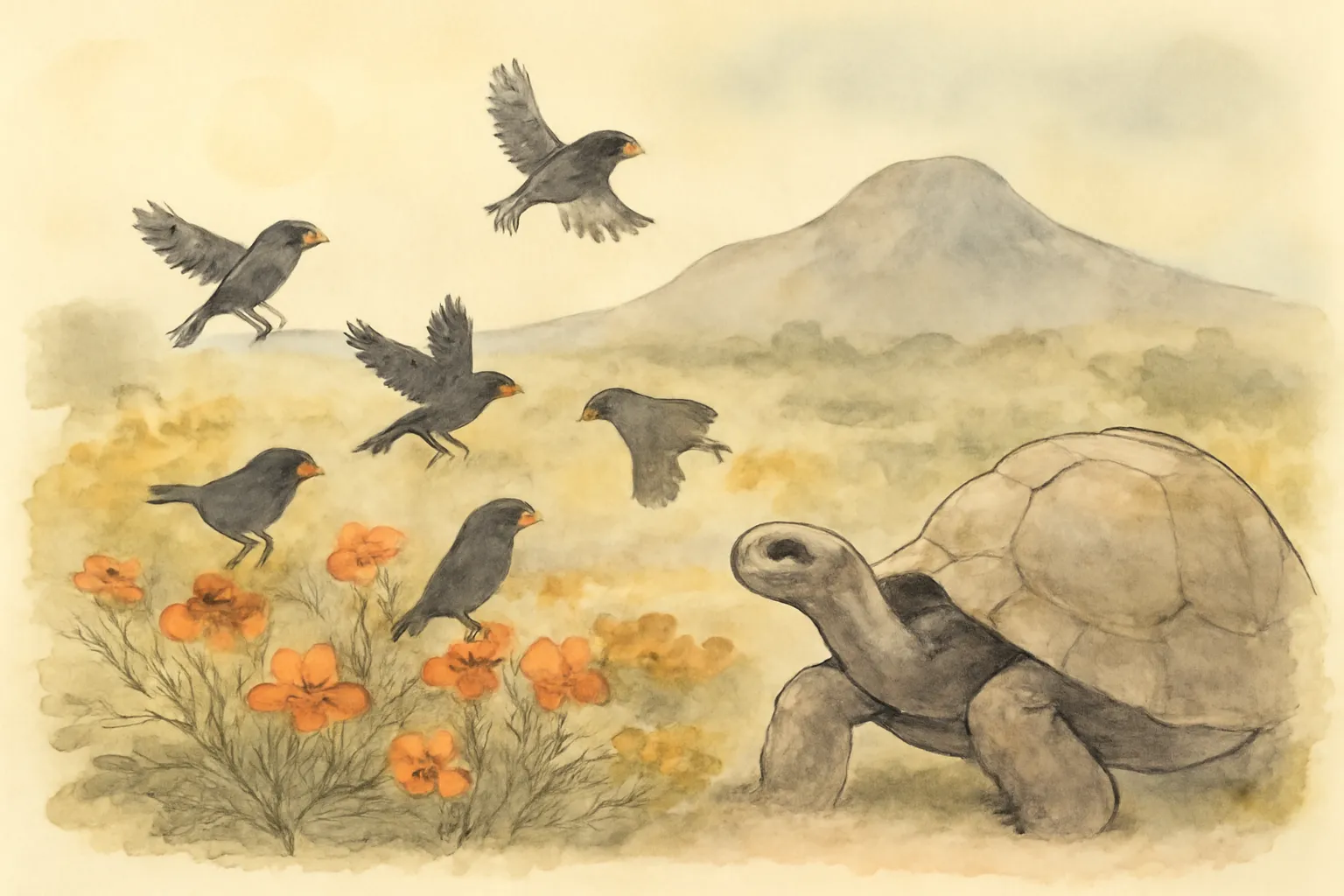
Weiner’s narrative centers on the Grants’ decades-long study of finches on Daphne Major, showing that evolution is not just a phenomenon of the distant past. The book documents how, in response to environmental changes like droughts or floods, the finches’ beak sizes and shapes shift measurably within just a few generations. This real-time evidence upends the traditional view that evolution is always slow and imperceptible, making the process vivid and immediate.
2.Natural Selection’s Power and Precision
By meticulously tracking individual birds, the Grants reveal how even minute environmental pressures can drive significant evolutionary changes. The book details how a single season of drought can favor birds with slightly deeper beaks, who are better able to crack tough seeds, leading to a rapid shift in the population. This demonstrates natural selection’s relentless, fine-tuned influence, operating continuously and shaping species with remarkable speed.
3.The Complexity of Adaptation
Weiner explores how adaptation is not a straightforward process. The finches’ environment is unpredictable, with selection pressures shifting from year to year. Traits that are advantageous in one season may become liabilities in another. This complexity highlights the dynamic, ever-changing nature of evolutionary processes, and the constant balancing act that organisms face in adapting to their surroundings.
4.Challenging Darwin’s Timetable
The book argues that Darwin himself underestimated how quickly evolution can occur. Through the Grants’ data, Weiner shows that significant evolutionary changes can happen in years or decades, not just millennia. This challenges the classic image of evolution as a glacially slow process, suggesting that species can and do adapt rapidly when circumstances demand it.
5.Science as Human Endeavor
Beyond the science, Weiner gives readers insight into the lives and motivations of the Grants and their team. The book captures the patience, perseverance, and passion required for long-term field research. It also reflects on the broader scientific community’s debates and the ongoing process of discovery, making the story as much about people as about finches.
6.The Broader Implications of Rapid Evolution
The findings on Daphne Major have far-reaching implications. Weiner connects the Grants’ work to issues like antibiotic resistance and pesticide adaptation, showing that rapid evolution is not confined to remote islands. Understanding how quickly species can change is crucial for addressing contemporary challenges in medicine, agriculture, and conservation.