

Big ideas · from the full text
The Dawn of Everything
by David Graeber and David Wengrow · 3 min read · Lumina’s commentary, written with AI
- Topic: History
About this book
The renowned activist and public intellectual David Graeber teams up with the professor of comparative archaeology David Wengrow to deliver a trailblazing account of human history, challenging our most fundamental assumptions about social evolution—from the development of agriculture and cities to the emergence of "the state," political violence, and social inequality—and revealing new possibilities for human emancipation For generations, our remote ancestors have been cast as primitive and childlike—either free and equal innocents, or thuggish and warlike. Civilization, we are told, could be achieved only by sacrificing those original freedoms or, alternatively, by taming our baser instincts. David Graeber and David Wengrow show how such theories first emerged in the eighteenth century as a conservative reaction to powerful critiques of European society posed by Indigenous observers and intellectuals. Revisiting this encounter has startling implications for how we make sense of human history today, including the origins of farming, property, cities, democracy, slavery, and civilization itself. Drawing on pathbreaking research in archaeology and anthropology, the authors show how history becomes a far more interesting place once we learn to throw off our conceptual shackles and perceive what’s really there.
As an Amazon Associate, Lumina earns from qualifying purchases. How this works
♫ AI-generated voice · press play below to listen and read along; tap any passage to jump to it
Freedom means having real ways out

In The Dawn of Everything, David Graeber and David Wengrow treat freedom as concrete options, not just an ideal. In their conclusion, they emphasize three: being able to leave, to refuse demands, and to make new social arrangements. Because of that, visible hierarchy—leaders, ranks, ceremonies—cannot be read as the same kind of domination everywhere. Power becomes more dangerous when people lose the ability to exit or reshape the rules.
Why it matters
This gives readers a concrete test for power, beyond counting wealth or naming formal ranks.
An example
The conclusion presents leaving, refusing, and making new arrangements as key human freedoms.
Keep in mind
The book’s account of how these freedoms faded is described as provisional.
Farming and cities did not decide everything
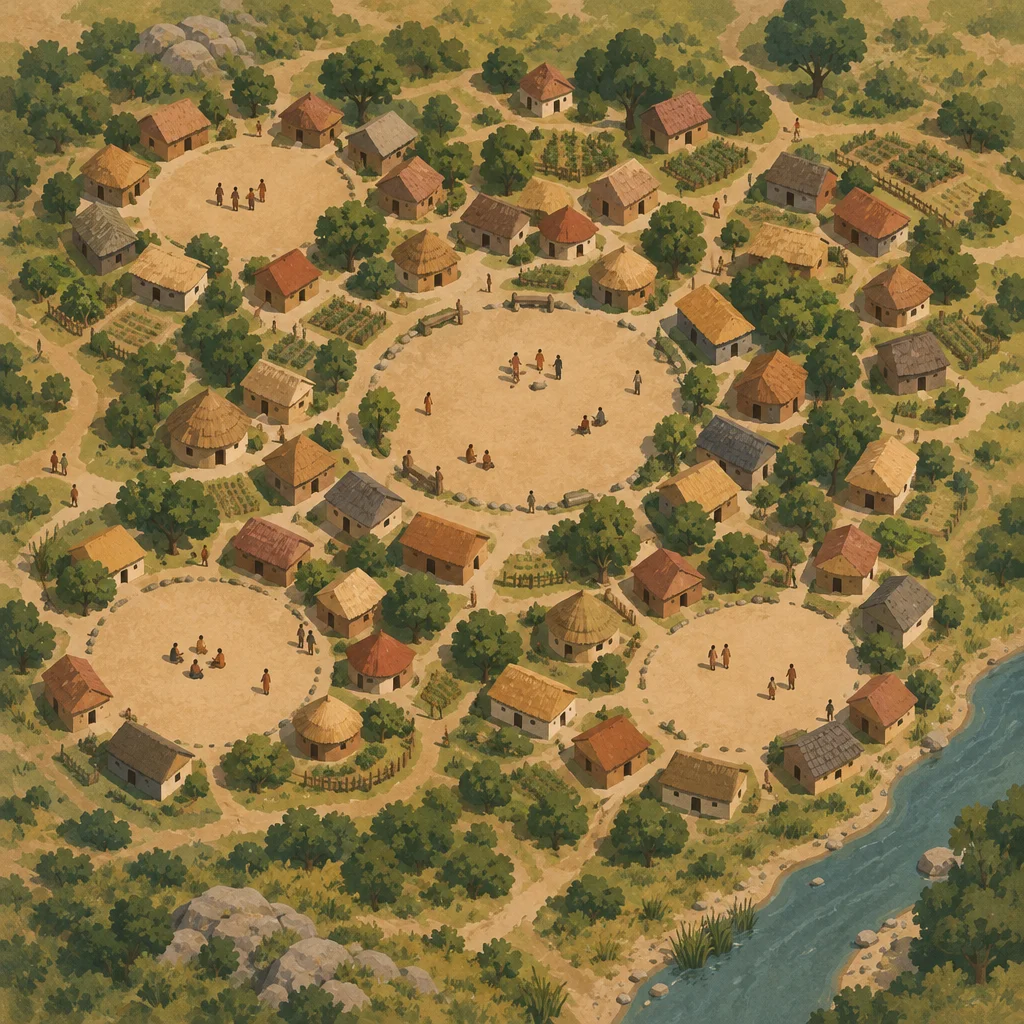
In The Dawn of Everything, David Graeber and David Wengrow argue that agriculture and large settlements did not force one political outcome. People could combine cultivation with hunting, gathering, craft work, and movement. They highlight Ukrainian “mega-sites” with many homes and gathering spaces, alongside little evidence for lasting rulers. Large settlements, in their account, could also draw on older networks—kinship, hospitality, trade, and ritual—without automatically producing monarchy.
Why it matters
This weakens the claim that complex life must end in rule from above.
An example
Ukrainian mega-sites had many homes and gathering spaces, with little evidence for lasting rulers.
Keep in mind
The archaeological record is uneven, so some political reconstructions remain uncertain.
Indigenous thinkers are part of political theory
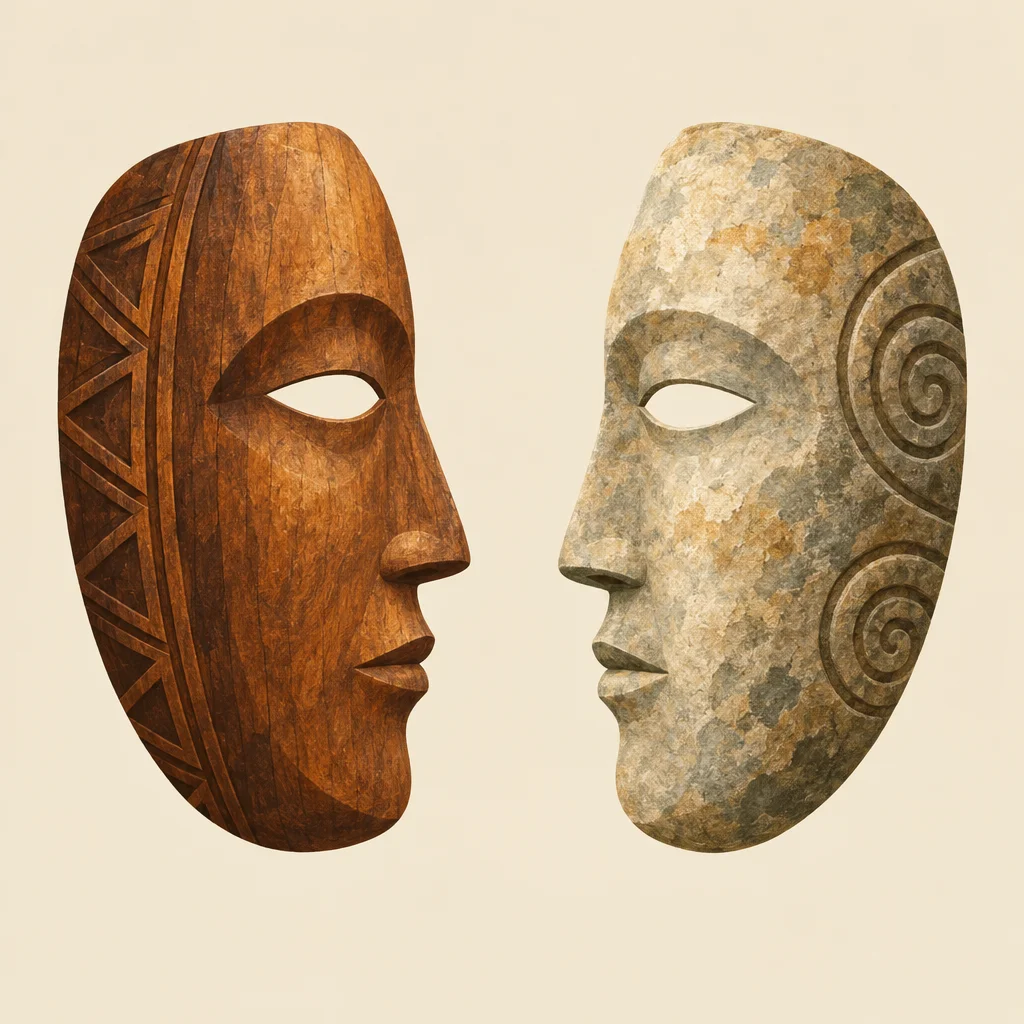
In The Dawn of Everything, David Graeber and David Wengrow treat Indigenous American critics as participants in political theory debates about freedom, property, punishment, money, and mutual help. They foreground Kandiaronk in Lahontan’s dialogues, where he attacks European religion, punishment, money, and private property as a serious argument. The book rejects two easy dismissals: reducing this to vague “wisdom,” or calling it only European invention. Because the dialogues were edited and enlarged, their claim is framed as plausibility, not perfect access.
Why it matters
This changes who counts as a source of ideas about freedom and inequality.
An example
In Lahontan’s dialogues, Kandiaronk attacks European religion, punishment, money, and private property.
Keep in mind
Those dialogues were edited and enlarged, so the book argues for plausibility, not perfect access.
The state has several roots, not one birth

In The Dawn of Everything, David Graeber and David Wengrow split “the state” into three forms of domination: control over violence, control over information, and power based on personal appeal. These can exist separately or combine in different ways, so there is no single origin story. They note that Egypt, Mesopotamia, Maya kingdoms, Aztec institutions, and Inca institutions mixed these powers differently. Record-keeping can help coordinate shared duties, yet when tied to force it can also become debt, servitude, or command. The categories are comparison tools, not a full account of every society.
Why it matters
This helps explain why ancient societies do not fit one simple state-making sequence.
An example
Egypt, Mesopotamia, Maya kingdoms, Aztec institutions, and Inca institutions mixed these powers differently.
Keep in mind
These categories are tools for comparison, not a full account of every society.
Care can support freedom or become control

In The Dawn of Everything, David Graeber and David Wengrow describe care and dependence as double-edged. Mutual aid can coexist with autonomy, but the language of protection can also hide command, especially in households where dependants may be treated like possessions. They connect this risk to slavery, which can sever people from earlier ties. As a specific example from the Pacific coast, they note Northwestern nobles sought captives partly because free followers could leave or resist heavy work. This is presented as a bounded case, not a universal explanation.
Why it matters
This makes domination harder to spot, because it can appear inside help and protection.
An example
Northwestern nobles sought captives partly because free followers could leave or resist heavy work.
Keep in mind
This example concerns particular Pacific coast cases; it does not explain all domination everywhere.
Liked the ideas? Read The Dawn of Everything in full.
The big ideas are free on Lumina. The complete book is available from:
As an Amazon Associate, Lumina earns from qualifying purchases. How this works