1.A Personal and National Quest
Nehru’s narrative is both intensely personal and broadly national. Writing from prison, he reflects on his own journey as well as India’s, blending autobiography with historical analysis. This dual perspective allows readers to see how individual experience and national history intertwine, and how the search for self-knowledge mirrors the search for a collective identity.
2.Unity in Diversity
A central theme is India’s incredible diversity—of languages, religions, philosophies, and cultures—held together by a deep underlying unity. Nehru explores how this pluralism has been a source of strength, allowing India to absorb and adapt influences over millennia. He argues that India’s identity is not static but a living synthesis, constantly evolving yet rooted in shared values.
3.Civilizational Continuity and Change
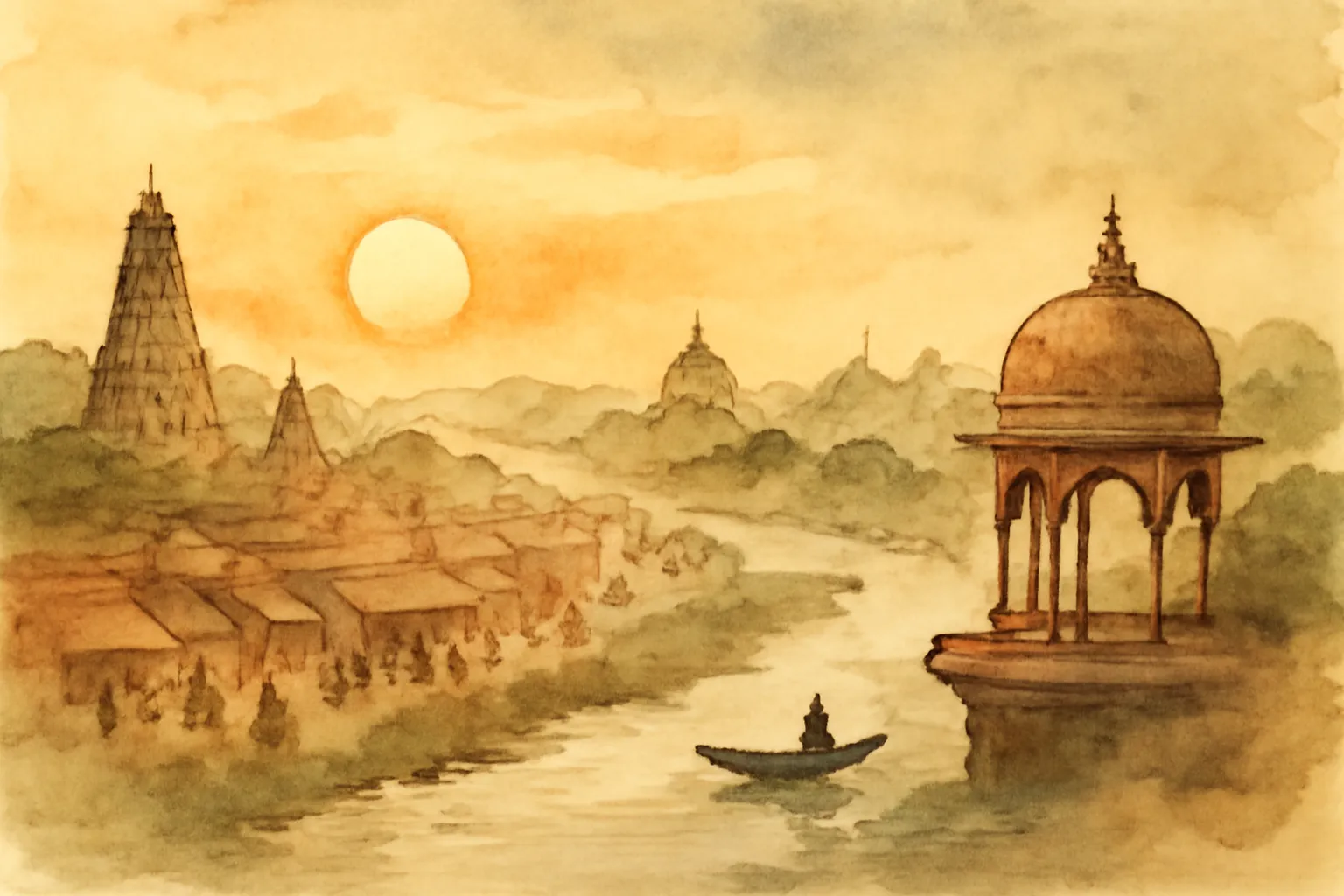
Nehru traces the arc of Indian civilization from the Indus Valley to the British Raj, emphasizing both continuity and transformation. He admires ancient achievements in philosophy, science, and art, while also critiquing periods of stagnation or decline. The book shows how India’s civilization has survived invasions and upheavals by adapting, not by rigidly clinging to the past.
4.Colonialism and the Struggle for Freedom
A major focus is the impact of British colonial rule: its economic exploitation, cultural dislocation, and the awakening of modern nationalism. Nehru is critical of colonialism but also acknowledges its role in provoking new questions about identity and justice. The struggle for independence is portrayed as both a political and moral awakening, linking India’s past aspirations to its future hopes.
5.The Role of Ideas and Philosophies
Nehru delves into India’s rich intellectual traditions, from the Vedas and Upanishads to Buddhism, Jainism, and later Islamic and Western influences. He sees India’s openness to ideas as vital to its resilience. The book is not just a history of events, but of philosophies—how ideas about life, duty, and society have shaped Indian civilization.
6.India’s Place in the World
Throughout, Nehru situates India within the wider context of world history. He is keenly aware of global currents—scientific, political, and cultural—and argues for India’s engagement with the world, not isolation. He envisions a modern India that draws on its heritage while embracing progress and internationalism.