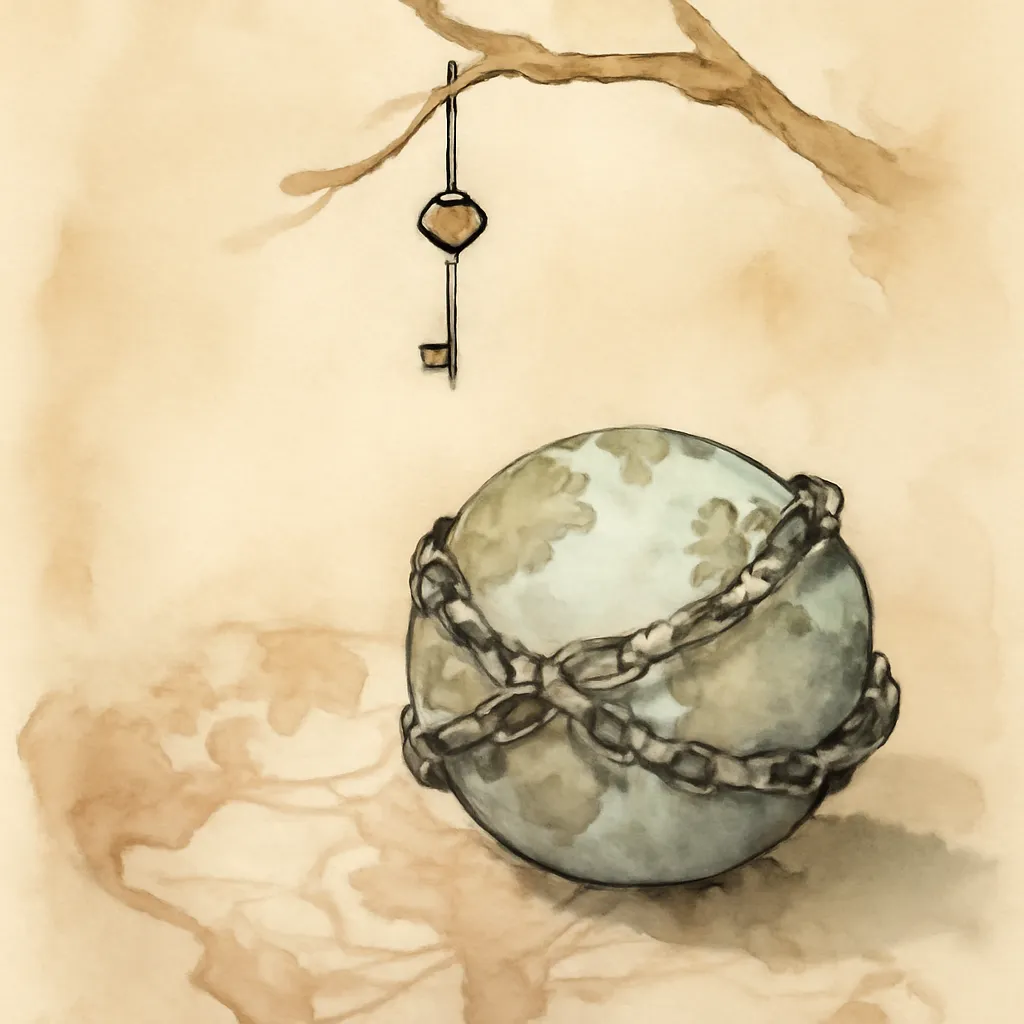
1.Banking as Alchemy
King contends that modern banking is akin to alchemy: banks promise to turn risky, illiquid assets into safe, liquid money, seemingly creating stability out of fragility. This system works—until it doesn’t. The mismatch between short-term liabilities (deposits) and long-term assets (loans) creates inherent instability, making banks vulnerable to runs and crises. King argues that this ‘alchemy’ is not a technical glitch but a fundamental flaw in the way we structure our financial system.
2.The Illusion of Stability
The decades before 2008 were seen as an era of economic wisdom and stability, but King shows this was a dangerous illusion. Low inflation and steady growth masked growing imbalances and risks within the banking sector. King warns that reliance on past stability breeds complacency, making the system more fragile when shocks inevitably come.
3.Radical Uncertainty
A central theme is ‘radical uncertainty’—the idea that not all risks can be measured or predicted. King criticizes the overreliance on mathematical models and probabilities in finance and policy-making. Instead, he calls for humility and judgment, recognizing that the future is inherently unpredictable and that policy must be robust to the unknown.
4.Flawed Incentives and Moral Hazard
King details how the structure of modern banking creates perverse incentives. Because banks know they are likely to be bailed out in a crisis, they take greater risks, leading to moral hazard. He argues that reforms since 2008 have not fully addressed these incentives, and that without deeper change, the system remains prone to future crises.
5.A New Framework for Money and Banking
King proposes a radical overhaul: separating the creation of money from risky lending. He suggests a system where deposits are fully backed by safe assets, while lending is financed by longer-term investments, reducing the risk of bank runs. This would mark the true ‘end of alchemy’—eliminating the dangerous transformation at the heart of banking.
6.Global Imbalances and the Limits of Central Banking
King extends his analysis beyond banks to the global system, highlighting how trade and capital imbalances contribute to instability. He argues that central banks are often expected to do too much with too few tools, and that international cooperation is needed to address the root causes of financial fragility.