1.The Long Road to Computability
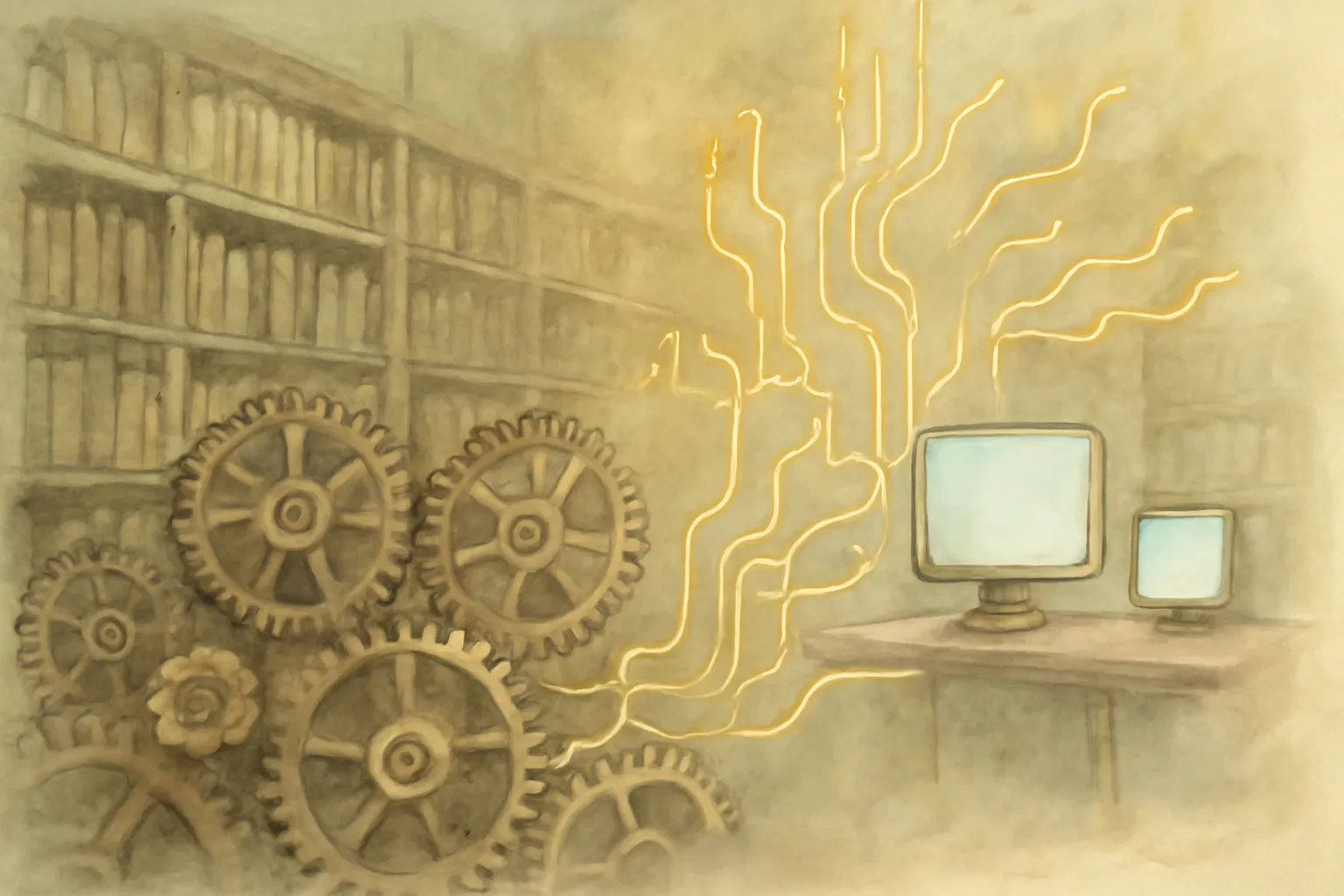
Davis traces the intellectual roots of the computer back to the 17th century, showing how the quest to mechanize reasoning began long before electronics. From Leibniz's dream of a universal language and calculating machine, through the work of Boole, Frege, and Gödel, the book reveals how each generation advanced the idea that thought itself could be formalized and made mechanical. The computer is presented not as a sudden invention, but as the culmination of centuries of abstract thought.
2.The Power of Abstraction
One of the central themes is the role of abstraction in mathematics and logic. The book explains how figures like Boole and Frege developed symbolic systems that allowed reasoning to be manipulated like algebra. This abstraction made it possible to ask—and eventually answer—questions about what could, in principle, be computed. Davis shows how these abstract breakthroughs were essential precursors to the practical computer.
3.The Entscheidungsproblem and Its Consequences
A pivotal episode in the book is the story of the Entscheidungsproblem, or 'decision problem,' which asked whether there could be a mechanical procedure to decide the truth of any mathematical statement. Davis details how this challenge motivated the work of Church, Gödel, and especially Turing, whose answer—showing that some problems are undecidable—set the limits of computation and defined what computers can and cannot do.
4.Alan Turing: The Visionary
Davis gives special attention to Alan Turing, the only figure in the book who recognized the full implications of his work for real machines. Turing's concept of the 'universal machine' is shown as the theoretical blueprint for all modern computers. Davis explores Turing's genius in translating abstract logic into a practical model, and his prescient understanding that a single device could, in principle, simulate any computation.
5.Unintended Foundations of the Digital Age
A striking insight from the book is that most of the pioneers Davis profiles had no inkling that their theories would lead to computers. Their work was motivated by philosophical puzzles, mathematical curiosity, or the search for certainty in logic. Yet, collectively, they laid the intellectual groundwork for the digital revolution, illustrating how pure thought can have world-changing consequences.
6.The Interplay of Biography and Ideas
Davis humanizes the history by delving into the personalities, ambitions, and struggles of the key figures. Readers see not just the evolution of ideas, but the drama of lives shaped by war, prejudice, and intellectual rivalry. This approach makes the story accessible and engaging, and highlights the contingency and unpredictability of scientific progress.