1.Sea Level Rise Is Inevitable—and Already Happening
Goodell makes it clear that sea level rise is not a distant threat but a present reality. Melting ice sheets and thermal expansion are already pushing water higher onto coasts, and even if carbon emissions stopped today, the momentum of warming means seas will continue to rise for centuries. The book dispels the hope that there’s a technological fix or political solution that can fully stop this process. Instead, Goodell frames sea level rise as a slow-moving disaster that will force adaptation on a massive scale.
2.Cities on the Front Lines
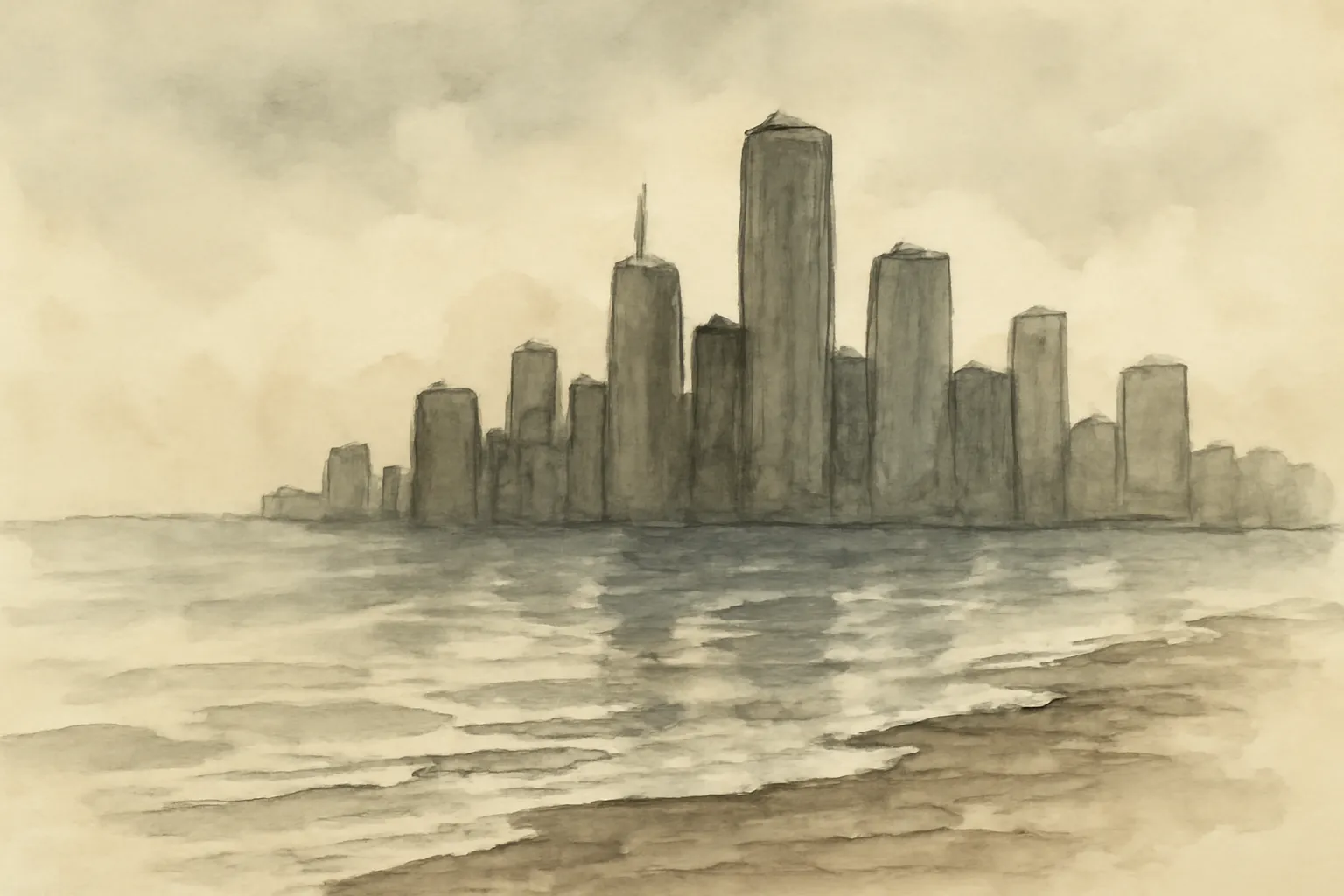
Through vivid reporting from Miami, Lagos, Venice, New York, and beyond, Goodell shows how major cities—often built at or near sea level—are uniquely vulnerable. He details the engineering challenges, political denial, and economic calculations that shape how cities respond. The book highlights how wealthier cities may buy time with expensive infrastructure, while poorer regions face existential threats. The fate of cities becomes a lens for understanding global inequality and the limits of human adaptation.
3.Political Inertia and Denial
Goodell explores how political systems are ill-equipped to deal with slow-moving, long-term crises like sea level rise. He documents denial and delay at every level, from local zoning boards to national governments, often driven by short-term economic interests and a reluctance to confront uncomfortable truths. The book argues that this inertia is as dangerous as the physical changes themselves, because it wastes precious time for adaptation and planning.
4.The Human Cost: Displacement and Migration
One of Goodell’s most powerful themes is the human cost of rising seas. He describes how millions will be forced to move as their homes become unlivable, creating climate refugees and new social tensions. The book draws parallels to past migrations but emphasizes that the scale and speed of what’s coming will be unprecedented. Goodell challenges readers to consider not just the technical or economic aspects, but the profound social and ethical dilemmas ahead.
5.Nature’s Power and Human Limits
A recurring motif is the hubris of believing we can control nature. Goodell uses stories of failed seawalls, overwhelmed drainage systems, and the relentless encroachment of water to illustrate the limits of engineering solutions. The book urges humility in the face of planetary forces and warns against overconfidence in our ability to outsmart the ocean.
6.Opportunity for Reinvention
Despite its dire warnings, the book also sees rising seas as a catalyst for reimagining how and where we live. Goodell suggests that retreat from vulnerable coasts could prompt new thinking about urban design, social organization, and our relationship with the environment. The crisis, he argues, could be a chance for creative adaptation—if we act with foresight and courage.