
Big ideas · from the full text
Ultra-Processed People
by Chris van Tulleken · 3 min read · Lumina’s commentary, written with AI
About this book
We have entered a new age of eating. For the first time in human history, most of our calories come from an entirely novel set of substances called Ultra-Processed Food. There's a long, formal scientific definition, but it can be boiled down to this: if it's wrapped in plastic and has at least one ingredient that you wouldn't find in your kitchen, it's UPF. These products are specifically engineered to behave as addictive substances, driving excess consumption. They are now linked to the leading cause of early death globally and the number one cause of environmental destruction. Yet almost all our staple foods are ultra-processed. UPF is our food culture and for many people it is the only available and affordable food. In this book, Chris van Tulleken, father, scientist, doctor, and award-winning BBC broadcaster, marshals the latest evidence to show how governments, scientists, and doctors have allowed transnational food companies to create a pandemic of diet-related disease. The solutions don't lie in willpower, personal responsibility, or exercise. You'll find no diet plan in this book—but join Chris as he undertakes a powerful self-experiment that made headlines around the world: under the supervision of colleagues at University College London he spent a month eating a diet of 80 percent UPF, typical for many children and adults in the United States. While his body became the subject of scientific scrutiny, he spoke to the world's leading experts from academia, agriculture, and—most important—the food industry itself. But more than teaching him about the experience of the food, the diet switched off Chris's own addiction to UPF. In a fast-paced and eye-opening narrative he explores the origins, science, and economics of UPF to reveal its catastrophic impact on our bodies and the planet. And he proposes real solutions for doctors, for policy makers, and for all of us who have to eat. A book that won't only upend the way you shop and eat, Ultra-Processed People will open your eyes to the need for action on a global scale.
As an Amazon Associate, Lumina earns from qualifying purchases. How this works
♫ AI-generated voice · press play below to listen and read along; tap any passage to jump to it
UPF is an industrial pattern, not ordinary cooking
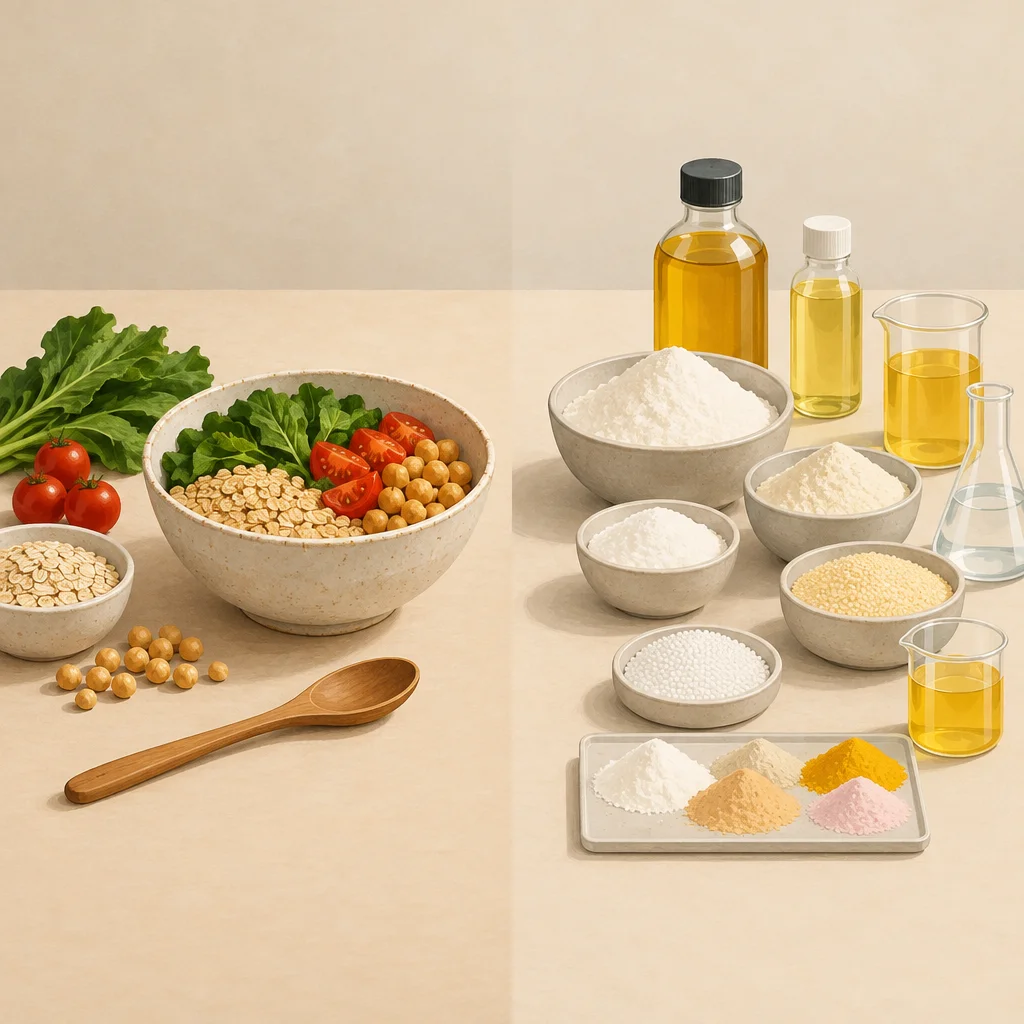
In Ultra-Processed People, Chris van Tulleken says ultra-processed food (UPF) is defined by why it is made and how it is designed, not simply by a food changing form. Cooking, grinding, fermenting, and preserving can still belong to ordinary eating. UPF is different because companies break cheap materials down, rebuild them, and tune texture, flavour, shelf life, and marketing so products sell and get eaten often.
Why it matters
This avoids two bad conclusions: fearing all processing, or ignoring how industrial design changes food.
An example
Ice cream that hardly melts is used as an example of additives and altered fats solving cost and distribution problems.
Keep in mind
The summary says NOVA has unclear edges, so the category can help without being perfectly tidy.
Appetite is not just a choice made in the head
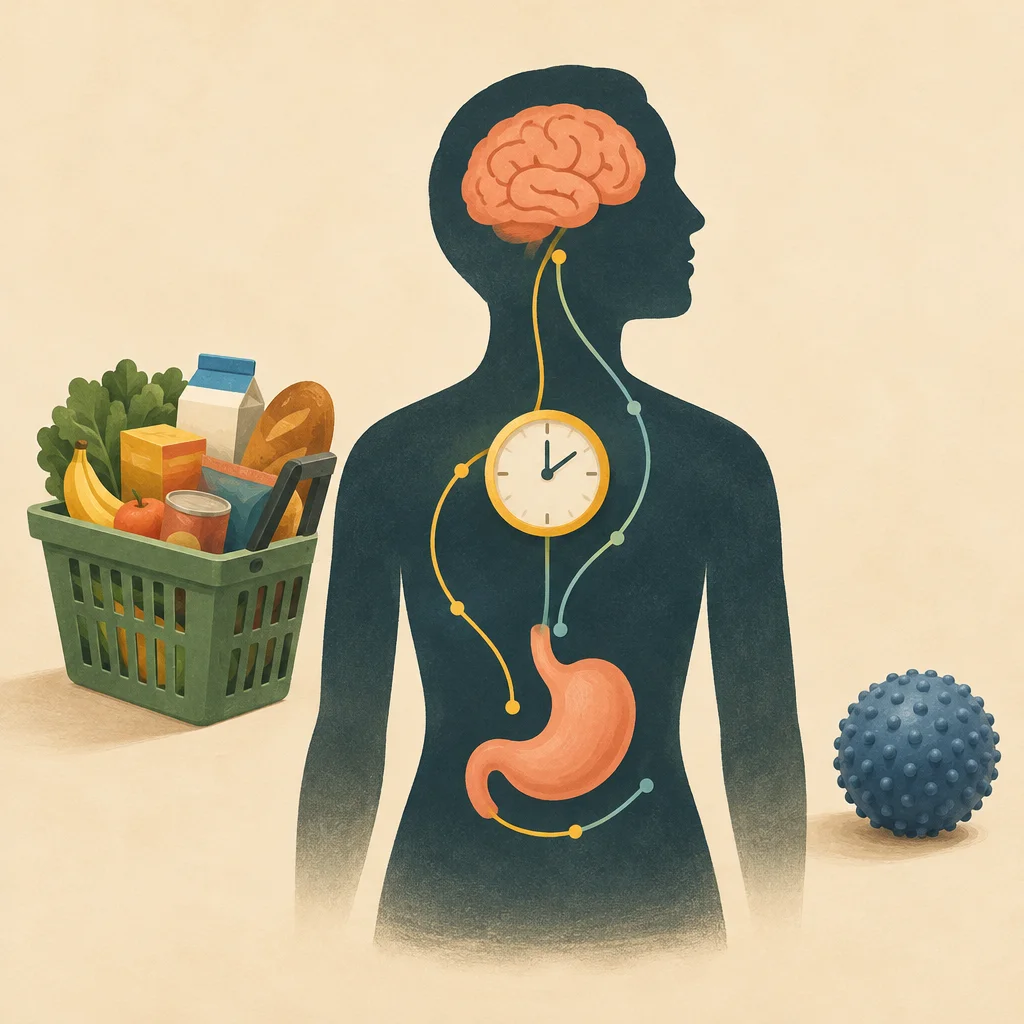
In Ultra-Processed People, Chris van Tulleken argues that appetite is shaped by body systems, not just willpower. Hunger and fullness involve hormones, nerves, genes, stress, poverty, and what food is available. The book suggests UPF may disrupt these signals through features like soft texture, faster eating, reward cues, and learned packaging signals. It presents this as a serious explanation while noting the exact pathways are still unresolved.
Why it matters
It weakens blame and explains why simple advice to eat less can fail people.
An example
During the narrator’s month of mostly UPF, he gained weight and reported poor sleep, anxiety, and night eating.
Keep in mind
The narrator’s diet test involved one person, so it cannot show what happens to everyone.
The strongest evidence is about whole diets
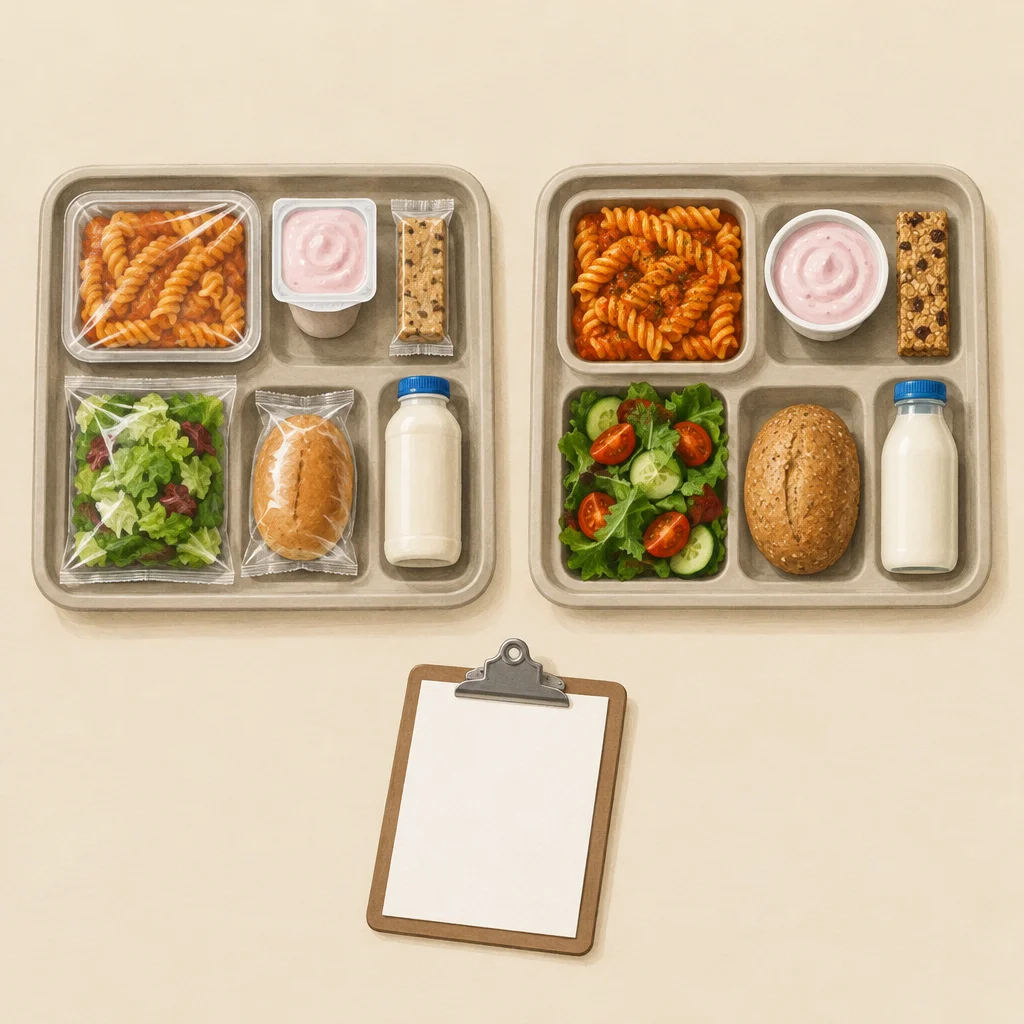
In Ultra-Processed People, Chris van Tulleken separates broad evidence from narrower ingredient claims. He treats Hall’s controlled feeding trial and large associations with health outcomes as major reasons to take UPF seriously. He also says evidence about individual components—like artificial sweeteners, emulsifiers, and flavourings—is mixed, incomplete, or sometimes based on animal studies whose meaning for people is uncertain. The point is that the overall dietary pattern matters most in the argument.
Why it matters
The argument does not need every unfamiliar ingredient to be proven dangerous on its own.
An example
In Hall’s trial, people ate more and gained weight on a UPF diet with major nutrients matched.
Keep in mind
Observational studies can find links, but they cannot prove cause by themselves.
Cheap food can push costs elsewhere
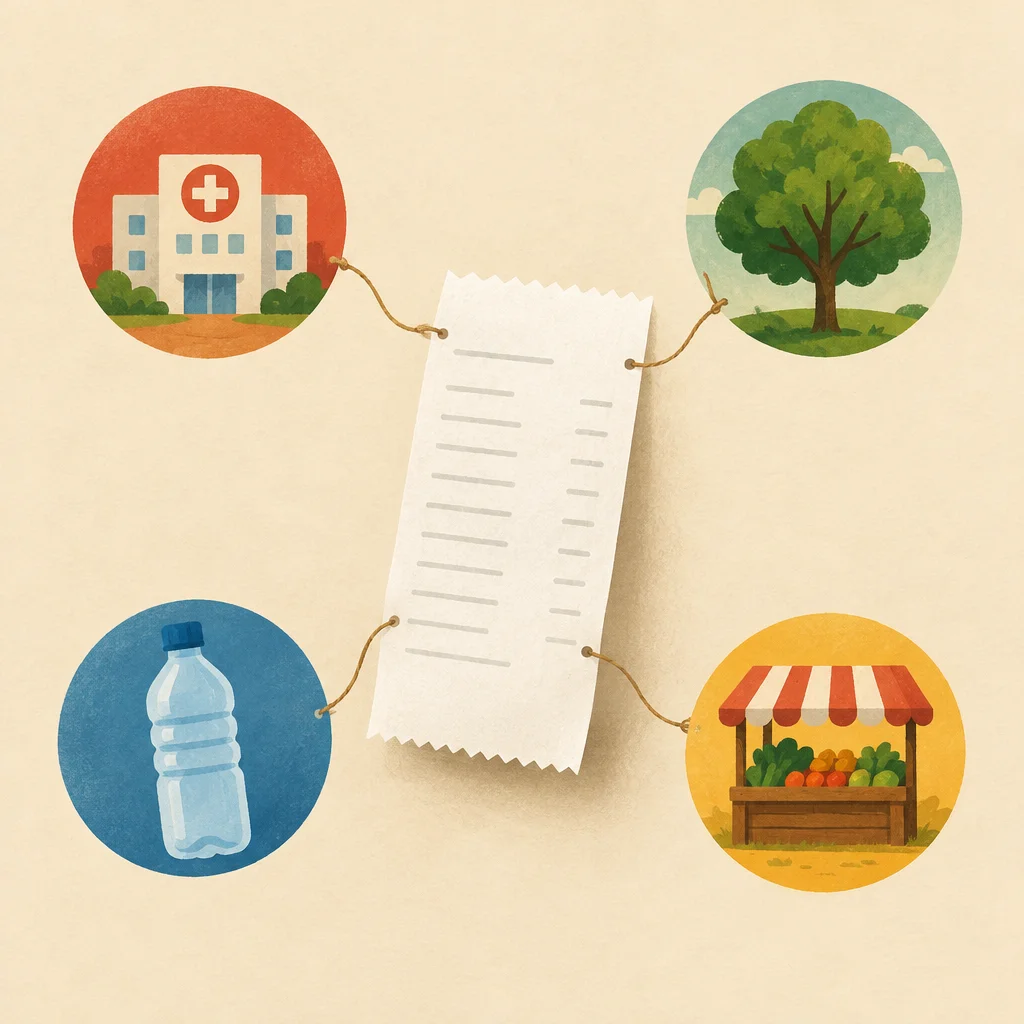
In Ultra-Processed People, Chris van Tulleken argues that a low checkout price can hide other costs. The book points to issues such as weak public review of some additives, plastic waste, fossil-fuel use, deforestation, intensive animal farming, antibiotic resistance, and damage to existing food markets. It also describes how branded products can enter communities and help create lasting demand. The Brazil example shows Nestlé using direct sales and a floating supermarket to move products into established markets.
Why it matters
A product can look cheap while health systems, ecosystems, and local food markets carry part of the bill.
An example
In Brazil, Nestlé’s direct sales and floating supermarket show branded products entering existing food markets.
Keep in mind
The summary says alternatives such as agroecology look promising, but face hard problems under current meat demand.
Real choice needs both support and rules
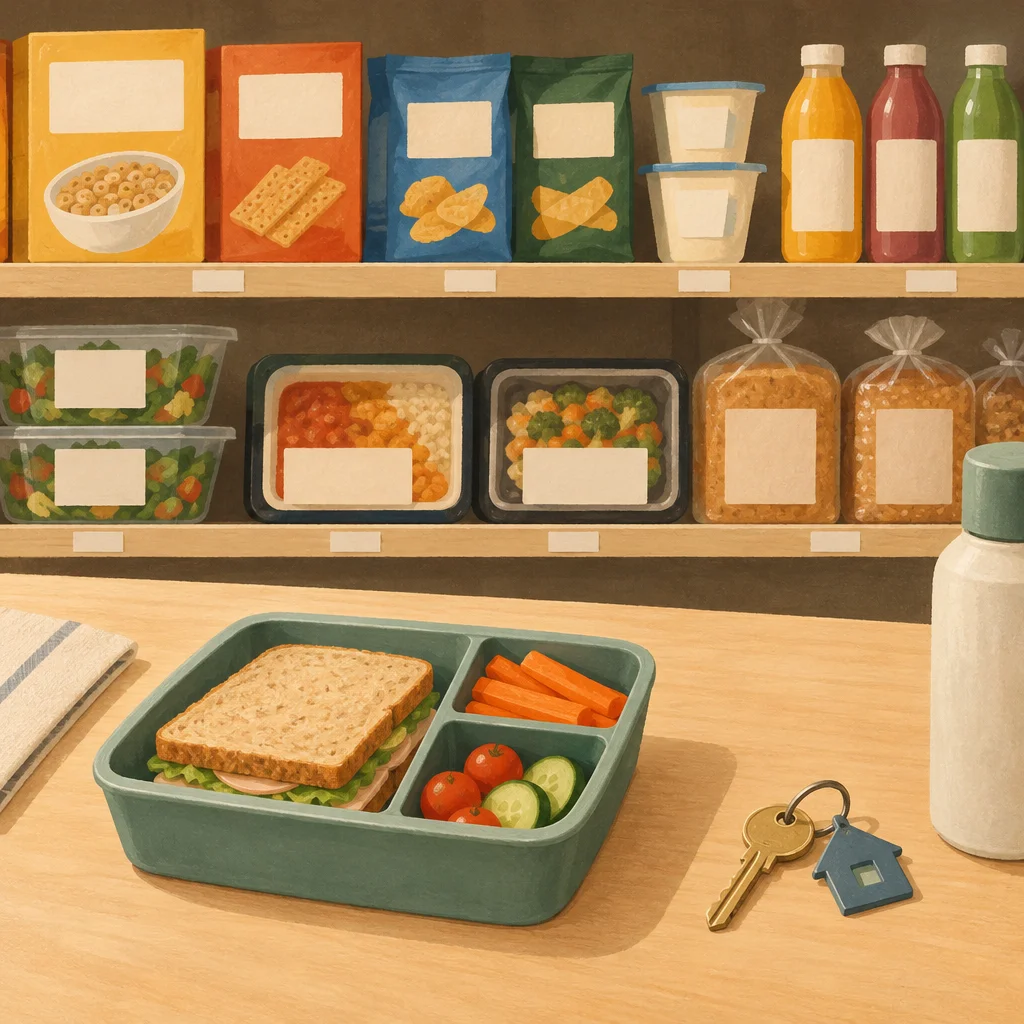
In Ultra-Processed People, Chris van Tulleken argues that personal change should not become a purity test. Some people may cut down on UPF, while others may find abstinence easier. But replacing UPF can require money, time, storage, cooking space, and help from others. For wider change, the book calls for warning labels, limits on marketing to children, better public meals, careful taxes, poverty action, and policy made without industry money. Chile’s warning labels are presented as encouraging buying changes, with long-term obesity effects still uncertain.
Why it matters
Healthy eating becomes a shared problem of access and rules, not only private discipline.
An example
Chile’s warning-label rules are presented as encouraging buying changes, while long-term obesity results remain uncertain.
Keep in mind
The summary gives promising policy signs, but not proof that every proposal works over time.
Liked the ideas? Read Ultra-Processed People in full.
The big ideas are free on Lumina. The complete book is available from:
As an Amazon Associate, Lumina earns from qualifying purchases. How this works