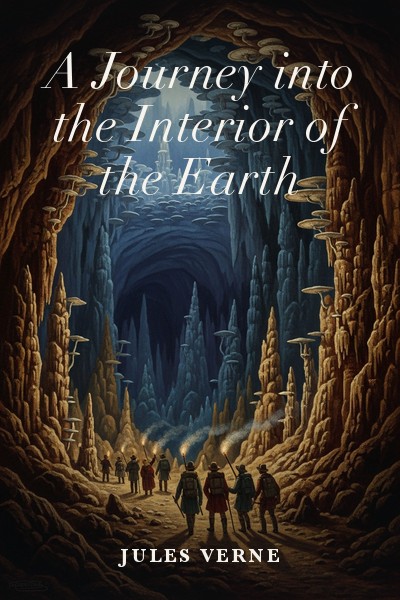

Embark on an extraordinary adventure beneath the Earth's surface, where science and imagination collide in a quest for knowledge and discovery
Read full overviewShow less›
Jules Verne's 'A Journey into the Interior of the Earth' is a captivating blend of adventure and scientific exploration that takes readers deep beneath the Earth's crust to uncover the mysteries of our planet. The story follows Professor Liedenbrock, his reluctant nephew Axel, and their stoic guide Hans, as they embark on a journey that stretches the limits of human understanding and endurance. Through their expedition, Verne masterfully intertwines geological principles, thrilling challenges, and philosophical musings on the nature of discovery. Readers will not only experience the rush of adventure but also gain insights into the scientific knowledge of the time, making it a profound reflection on humanity's insatiable curiosity and the pursuit of knowledge. This summary will delve into the key ideas and themes of the novel, revealing the depths of Verne's imagination and the scientific marvels that inspired him.
Jules Verne's 'A Journey into the Interior of the Earth' is a timeless exploration of the interplay between adventure, science, and the human spirit. Through the trials and triumphs of Liedenbrock, Axel, and Hans, Verne delves into the depths of human curiosity, the importance of teamwork, and the moral implications of discovery. The novel serves as a reminder of the wonders of our planet and the complexities of the natural world, encouraging readers to embrace their own journeys of exploration and understanding. As we navigate the unknowns of life, Verne's narrative resonates with the enduring human spirit that seeks knowledge and adventure, reminding us that the quest for understanding is a journey worth taking.
Ratings at a glance
- 1The Catalyst of Curiosity
- 2The Power of Teamwork
- 3The Wonders of Geology
- 4The Nature of Fear and Courage
- 5The Role of Nature
Notable quotes
“Here's a remarkable book! What a wonderful book!”
“He is gone! cried Martha, running out of her kitchen at the noise of the violent slamming of doors.”
“What does it all mean? he kept repeating mechanically.”
A glimpse inside

The story begins with Professor Liedenbrock's discovery of an ancient manuscript containing cryptic Runic writing, which ignites his insatiable curiosity. Read moreThe story begins with Professor Liedenbrock's discovery of an ancient manuscript containing cryptic Runic writing, which ignites his insatiable curiosity. The professor's obsession with deciphering the text leads to an intense exploration of the unknown, demonstrating how curiosity can drive individuals to pursue knowledge at any cost. This theme resonates throughout the narrative, as Liedenbrock's relentless determination to unlock the secrets of the Earth compels him, Axel, and Hans to undertake a perilous journey. Verne illustrates that curiosity is a double-edged sword; while it can lead to groundbreaking discoveries, it can also result in dire consequences. The professor's character embodies the archetype of the passionate scientist, willing to risk everything for the sake of understanding, reflecting the broader human experience of seeking knowledge. For instance, Liedenbrock's disregard for the potential dangers and his fixation on the manuscript serve to highlight how an unquenchable thirst for knowledge often leads individuals to venture into uncharted territories, both physically and intellectually. Show less
Liedenbrock, Axel, and Hans represent different facets of human personality and skills, showcasing the importance of teamwork in overcoming challenges. Read moreLiedenbrock, Axel, and Hans represent different facets of human personality and skills, showcasing the importance of teamwork in overcoming challenges. Liedenbrock's fiery enthusiasm contrasts sharply with Axel's cautious nature, while Hans serves as the steady, pragmatic guide through the treacherous landscape. Their dynamic illustrates that diverse perspectives and strengths are crucial for success in any endeavor, especially one as daunting as their journey to the Earth's core. The trio faces numerous obstacles, including physical dangers and psychological trials, yet it is their collective efforts that ultimately enable them to push forward. Verne emphasizes that collaboration, trust, and mutual respect are essential for navigating the unknown, a lesson that resonates beyond the pages of the book into real-world endeavors. The interactions between Axel and Liedenbrock serve as a microcosm of the larger journey, where contrasting opinions and approaches lead to constructive dialogues, fostering camaraderie and ultimately reinforcing their resolve to venture into the depths of the Earth. Show less
Read the full text — free
About the author
Jules Verne has 8 works free to read on Lumina, including A Journey to the Centre of the Earth, Around the World in Eighty Days, Five Weeks in a Balloon: Or, Journeys and Discoveries in Africa by Three Englishmen