A pioneering balloon expedition reveals the wonders and absurdities of African exploration
Read full overviewShow less›
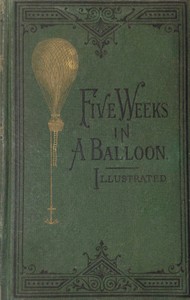
In 'Five Weeks in a Balloon', Jules Verne crafts a thrilling narrative that blends scientific exploration with satirical commentary on the age of African discovery. The story follows Dr. Samuel Ferguson, along with two companions, as they attempt to traverse the vast African continent in a specially designed balloon. The novel paints a vivid picture of the geography, flora, and fauna of Africa while also poking fun at the exaggerated tales of contemporary explorers. Verne's clever intertwining of factual geography with imaginative, sometimes outlandish, adventures allows readers to engage with the text on multiple levels, appreciating both the entertainment factor and the deeper themes of human ambition, the unpredictability of nature, and cultural misunderstandings. As they navigate the skies, the trio’s camaraderie becomes essential, reflecting the human spirit's resilience and curiosity in the face of the unknown.
Jules Verne's 'Five Weeks in a Balloon' transcends mere adventure storytelling; it is a profound exploration of the themes of exploration, friendship, and the quest for understanding. Through the journey of Dr. Ferguson and his companions, Verne prompts readers to reflect on the complexities of cultural interactions, the unpredictability of nature, and the moral dimensions of exploration. The novel serves as a tribute to the pioneers of scientific inquiry while simultaneously critiquing the sensationalism that often accompanied their tales. Ultimately, Verne encourages a deeper appreciation for the human spirit, its resilience in facing the unknown, and the value of curiosity and empathy in our quests for knowledge.

Ratings at a glance
- 1The Intersection of Science and Adventure
- 2Satirizing Exploration Narratives
- 3Friendship as the Core of the Journey
- 4Geographical Accuracy and Educational Value
- 5Nature's Unpredictability and Its Lessons
Notable quotes
“Africa is, at length, about to surrender the secret of her vast solitudes; a modern Œdipus is to give us the key to that enigma which the learned men of sixty centuries have not been able to decipher.”
“The moment’s at hand. It seems that we are to sail for the moon.”
“The balloon always retains the same quantity of hydrogen, and the variations of temperature that I produce in the midst of this shut-up gas are, of themselves, sufficient to provide for all these ascending and descending movements.”
A glimpse inside

Dr. Samuel Ferguson's balloon expedition embodies the melding of scientific inquiry and adventurous spirit typical of the 19th century. Read moreDr. Samuel Ferguson's balloon expedition embodies the melding of scientific inquiry and adventurous spirit typical of the 19th century. Verne meticulously describes the principles of ballooning, including hydrogen's properties and the calculations necessary for a successful flight. Ferguson explains how he can manage altitude through a system of ballast and valves, enthralling his companions and readers alike. This grounding in scientific fact serves a dual purpose: it lends credibility to the narrative while demonstrating the era's fascination with technological advancements. Ferguson’s confidence in his calculations emphasizes the prevailing belief in human ingenuity and the capacity to overcome natural barriers. For instance, he provides detailed accounts of the combustion process that generates steam for propulsion, reinforcing the message that exploration is as much about intellectual rigor as it is about courage and daring. Show less
Verne's narrative functions as a poignant satire of the sensationalized travel accounts popular in his time. By exaggerating the exploits and encounters of Ferguson and h… Read moreVerne's narrative functions as a poignant satire of the sensationalized travel accounts popular in his time. By exaggerating the exploits and encounters of Ferguson and his companions, he critiques the tendency of real explorers to embellish their stories for fame. The humor in their misadventures, such as mistaken identities or encounters with curious natives, reflects the absurdity inherent in the pursuit of glory through exploration. This satirical lens encourages readers to question the authenticity of travel narratives and the motives behind them. For example, the locals’ initial reverence for the balloon as a divine object underlines the cultural misunderstandings prevalent in exploration, highlighting how explorers often viewed foreign cultures through a lens of condescension and ignorance. Verne’s playful critique of these themes serves to illuminate the tension between genuine discovery and the performative aspects of exploration. Show less
Read the full text — free
About the author
Jules Verne has 8 works free to read on Lumina, including A Journey into the Interior of the Earth, A Journey to the Centre of the Earth, Around the World in Eighty Days