
Development · Macroeconomics · POLITICAL SCIENCE
Doughnut Economics by Kate Raworth — Summary, Key Ideas & Quotes
2017347 pages✦ 3-min Big ideas★ 4.5 (2)
Rate it
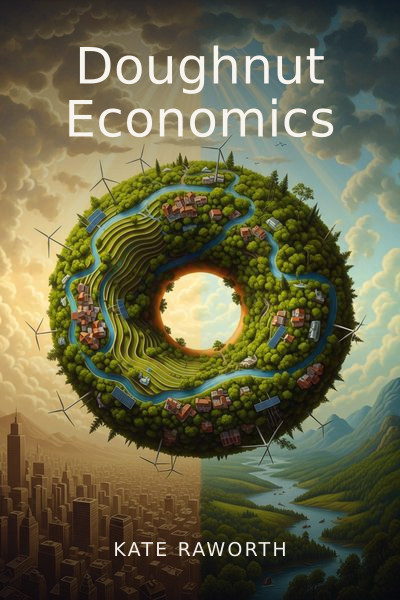
Raworth sets out seven key ways to fundamentally reframe our understanding of what economics is and does. Along the way, she points out how we can break our addiction to growth; redesign money, finance, and business to be in service to people; and create economies that are regenerative and distributive by design. Named after the now-iconic doughnut? image that Raworth first drew to depict a sweet spot of human prosperity (an image that appealed to the Occupy Movement, the United Nations, eco-activists, and business leaders alike), Doughnut Economics offers a radically new compass for guiding global development, government policy, and corporate strategy, and sets new standards for what economic success looks like.

Raworth’s central metaphor is the ‘doughnut’: a visual framework that defines a safe and just space for humanity. The inner ring represents the social foundation—basic human needs like food, health, and education—while the outer ring marks the ecological ceiling—planetary boundaries we must not overshoot. The sweet spot is the doughnut itself, where everyone’s needs are met without breaching the Earth’s limits. This model reframes economic success as thriving within these boundaries, not endless growth.
Raworth critiques the obsession with GDP and perpetual growth, arguing that it’s both unsustainable and misaligned with real human well-being. She calls for economies to become ‘agnostic’ about growth, focusing instead on meeting needs and regenerating resources. This shift demands new metrics and a willingness to embrace economies that are healthy, even if they’re not always growing.
“Humanity’s 21st century challenge is to meet the needs of all within the means of the planet.”
“We have an economy that needs to grow, whether or not it makes us thrive. What we need is an economy that makes us thrive, whether or not it grows.”