

New York Times bestseller · military education · end of the world
Ender's Game by Orson Scott Card — Summary, Key Ideas & Quotes
1985330 pages✦ 3-min Big ideas★ 4.3 (414)
Rate it
Ender's Game is a 1985 military science fiction novel by American author Orson Scott Card. Set at an unspecified date in Earth's future, the novel presents an imperiled humankind after two conflicts with the Formics, an insectoid alien species they dub the "buggers". In preparation for an anticipated third invasion, children, including the novel's protagonist, Andrew "Ender" Wiggin, are trained from a very young age by putting them through increasingly difficult games, including some in zero gravity, where Ender's tactical genius is revealed. The book originated as a short story of the same name, published in the August 1977 issue of Analog Science Fiction and Fact. The novel was published on January 15, 1985. Later, by elaborating on characters and plotlines depicted in the novel, Card was able to write additional books in the Ender's Game series. Card also released an updated version of Ender's Game in 1991, changing some political facts to reflect the times more accurately (e.g., to include the recent collapse of the Soviet Union and the end of the Cold War). The novel has been translated into 34 languages. Reception of the book has been mostly positive. It has become suggested reading for many military organizations, including the United States Marine Corps. Ender's Game was recognized as "best novel" by the 1985 Nebula Award\[3\] and the 1986 Hugo Award\[4\] in the genres of science fiction and fantasy. Its four sequels—Speaker for the Dead (1986), Xenocide (1991), Children of the Mind (1996), and Ender in Exile (2008)—follow Ender's subsequent travels to many different worlds in the galaxy. In addition, the later novella A War of Gifts (2007) and novel Ender's Shadow (1999), plus other novels in the Shadow saga, take place during the same time period as the original.
Contained in: Ender's War See also: - Ender's Game: 1/2
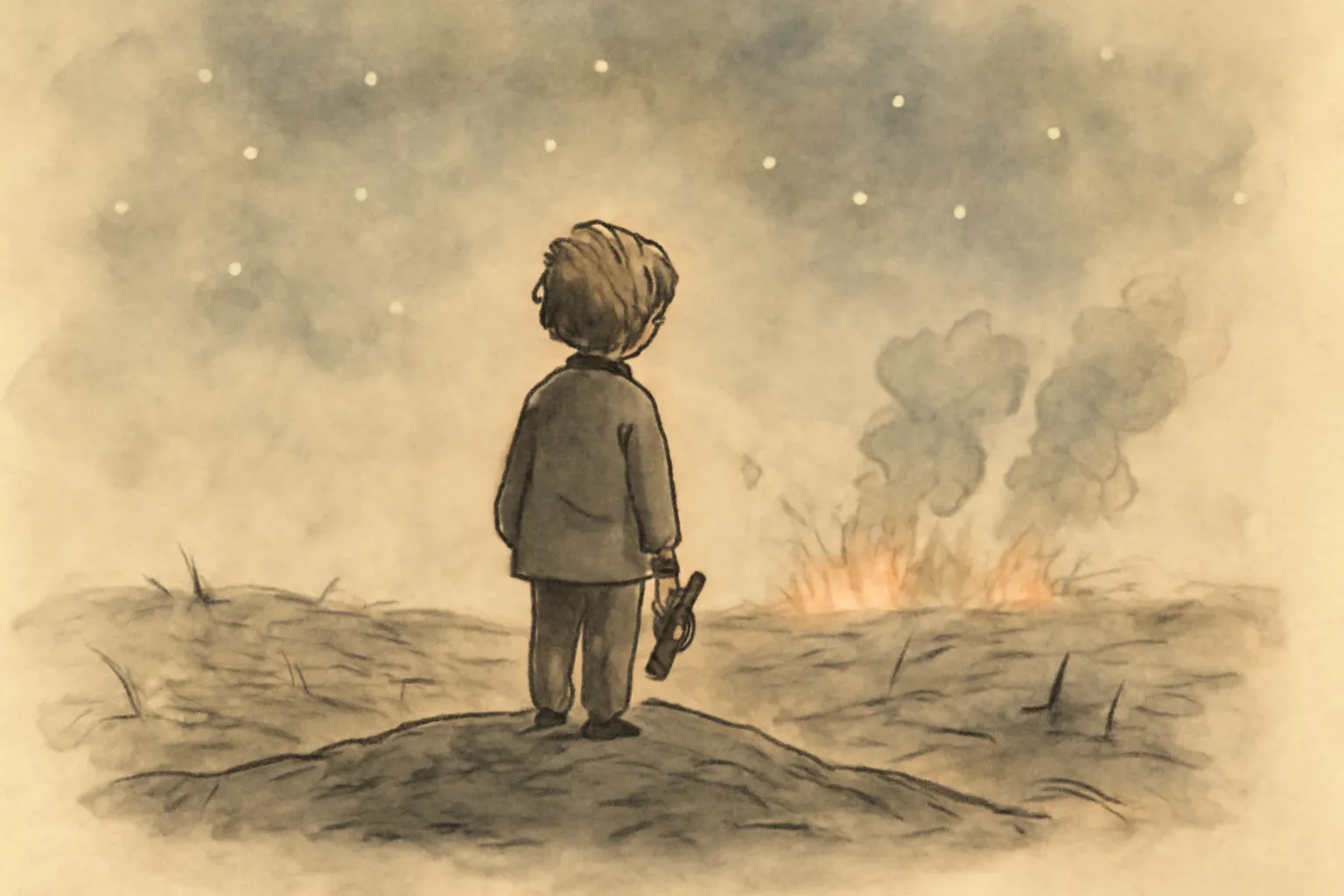
Ender's Game interrogates the morality of using manipulation and deception to achieve a greater good. Ender is constantly maneuvered by adult authorities who justify their actions as necessary for humanity's survival. The novel asks whether ends truly justify the means, especially when the means involve the exploitation of children. Through Ender's experiences, Card explores the psychological toll of leadership, particularly when one is forced to make decisions without full knowledge or consent.
By making children the central figures in a war for survival, the novel highlights the loss of innocence and the psychological scars inflicted by conflict. Ender and his peers are forced to grow up quickly, their games becoming deadly serious. The book questions society's willingness to sacrifice its youngest and brightest in the name of security, and whether such sacrifices can ever be justified.
“The enemy's gate is down.”
“Perhaps it's impossible to wear an identity without becoming what you pretend to be.”
“In the moment when I truly understand my enemy, understand him well enough to defeat him, then in that very moment I also love him.”