Fiction · Philosophy · Short Reads
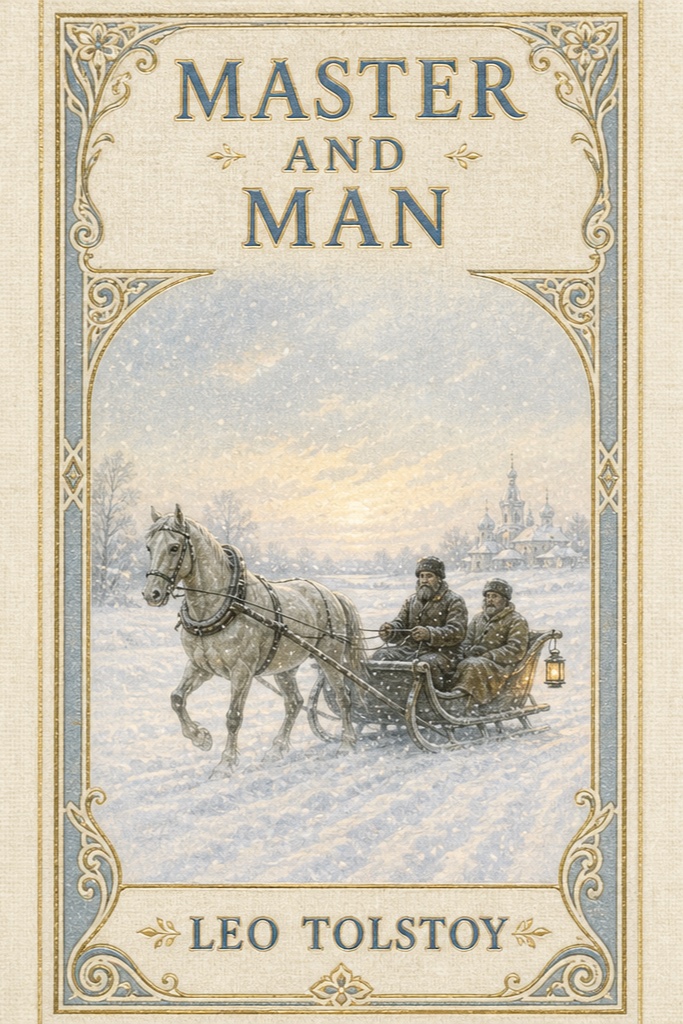
Master and Man by Leo Tolstoy — Summary, Key Ideas & Full Text
64 pages10 chapters1h 17m read55 min speed read✦ 7-min Big ideasFree · no account
Rate it
In the harsh winter landscape, a merchant's greed and a peasant's humility illuminate the profound truths of life and death
Leo Tolstoy's 'Master and Man' presents a gripping narrative that delves into the complexities of human relationships, morality, and the struggle for survival against nature's elements. Set in a bleak winter landscape, the story follows the wealthy merchant Vasili Andreevich Brekhunov and his laborer Nikita as they embark on a fateful journey that challenges their character and beliefs. Through their interactions and the dire circumstances they face, Tolstoy explores themes of class disparity, the weight of conscience, and the essence of true humanity. Readers will find themselves reflecting on the nature of power, the fragility of life, and the transformative power of compassion in the face of adversity. This poignant tale serves as a reminder of the interconnectedness of all people, regardless of status or circumstance.
In 'Master and Man,' Tolstoy crafts a powerful narrative that transcends time, addressing timeless themes of greed, compassion, and the human experience. Through the juxtaposition of Vasili's materialistic pursuits and Nikita's humble resilience, readers are invited to reflect on the true essence of humanity. The story serves as a poignant reminder that in the face of adversity, our shared vulnerabilities can foster understanding and connection. Ultimately, Tolstoy's exploration of life and death challenges us to seek meaning beyond material wealth and to embrace the profound relationships that define our existence. Nikita's quiet sacrifice and Vasili's belated awakening offer a model of how crisis can strip away pretense and reveal what we owe one another. This enduring tale resonates with readers, urging us to find empathy and compassion in a world often divided by class and circumstance. Few stories compress the distance between proprietor and servant so completely as this winter night in the Russian snow, making it one of Tolstoy's most accessible parables about moral awakening.
“‘This road doesn’t give him a chance—it’s too snowy,’ said Vasili Andreevich.”
“‘Why, this is Grishkino,’ said Vasili Andreevich.”
“‘I’m dy... ing, that’s what,’ said Nikita brokenly and with difficulty.”
Leo Tolstoy has 4 works free to read on Lumina, including Anna Karenina, Resurrection, War and Peace
All 4 books by Leo Tolstoy →