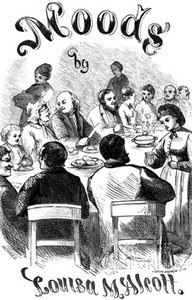

In 'Moods', Louisa May Alcott delves into the emotional landscape of her characters, revealing their struggles with identity, desire, and the constraints imposed by society.
Read full overviewShow less›
In 'Moods', Louisa May Alcott delves into the emotional landscape of her characters, revealing their struggles with identity, desire, and the constraints imposed by society. The narrative centers around Sylvia, a young woman navigating the tumultuous waters of love and self-discovery. Through her relationships with her family and suitors, Alcott examines how moods can shape one's perception of reality and influence life's choices. Readers will witness a vivid portrayal of the protagonist's journey, marked by moments of joy, melancholy, and profound introspection. This exploration not only captivates but also invites reflection on the nature of happiness, the weight of expectations, and the quest for authenticity in a world filled with contradictions.
Louisa May Alcott's 'Moods' presents a rich tapestry of human emotion, exploring the intricate interplay between love, identity, and societal expectations. Through Sylvia's journey, readers are invited to reflect on their own experiences with self-discovery, the impact of moods on perception, and the significance of personal aspirations. Alcott's nuanced portrayal of her characters reveals the complexities of the human experience, emphasizing that joy and sorrow are both essential to personal growth. Ultimately, 'Moods' serves as a poignant reminder that navigating the emotional landscape of life requires courage, introspection, and the embrace of one's authentic self. Alcott's exploration of these themes continues to resonate with readers today, affirming the timeless nature of her insights into the human condition.
- 1The Weight of Expectations
- 2The Complexity of Love
- 3The Journey of Self-Discovery
- 4The Role of Nature in Healing
- 5The Dichotomy of Freedom and Constraint
Notable quotes
“I am only tired of everybody and everything, and see nothing worth getting up for; so I shall just stay here till I do.”
“I only know that I am happy, Prue. Why it is so I cannot tell; but now I seldom have the old dissatisfied and restless feeling.”
“I think I am. You tried to make a woman of me at sixteen, but it was impossible until the right time came.”
A glimpse inside

From the outset, Alcott highlights the societal pressures that dictate the lives of women like Sylvia. The narrative reveals how Sylvia grapples with the expectations pla… Read moreFrom the outset, Alcott highlights the societal pressures that dictate the lives of women like Sylvia. The narrative reveals how Sylvia grapples with the expectations placed upon her by her family and society, particularly in her relationships with men. Her sister Prue embodies the voice of practicality, urging Sylvia to engage with the world, yet Sylvia resists, feeling a profound dissatisfaction with external demands. This conflict illustrates the tension between personal desire and societal obligation, a theme that resonates throughout the novel as Sylvia's moods fluctuate in response to these pressures. Alcott masterfully portrays how the weight of expectations can stifle individuality and lead to a sense of entrapment. Sylvia's refusal to conform to societal norms highlights Alcott's critique of the era's rigid gender roles, emphasizing that the struggle for self-identity often comes at a cost. Show less
Alcott intricately weaves the theme of love through Sylvia's relationships with Geoffrey Moor and Adam Warwick, showcasing the different facets of romantic entanglement. Read moreAlcott intricately weaves the theme of love through Sylvia's relationships with Geoffrey Moor and Adam Warwick, showcasing the different facets of romantic entanglement. Sylvia's initial infatuation with Warwick represents a youthful, passionate love that is idealized and filled with longing. In contrast, her relationship with Moor evolves into a more stable and grounded partnership, reflecting a deeper understanding of companionship. Alcott explores how love can be both a source of joy and a catalyst for personal growth, as Sylvia learns to navigate her feelings and the realities of her relationships. This duality in love serves to illustrate that true intimacy often requires sacrifice, understanding, and the courage to confront one's own vulnerabilities. Alcott's portrayal of love also critiques the romantic ideals of the time, suggesting that genuine affection transcends superficial attraction and is rooted in mutual respect and understanding. Show less
Read the full text — free
About the author
Louisa May Alcott has 2 works free to read on Lumina, including Little Women.
All 2 books by Louisa May Alcott →Frequently asked
Worlds to get lost in
Take Lumina everywhere
Read offline, listen to AI summaries, speed-read, and sync your progress across devices — free on iPhone.
Download for iPhone