
American Novelists · Biography · Basketball players
My Losing Season by Pat Conroy — Summary, Key Ideas & Quotes
2002402 pages✦ 3-min Big ideas★ 3.5 (6)
Rate it
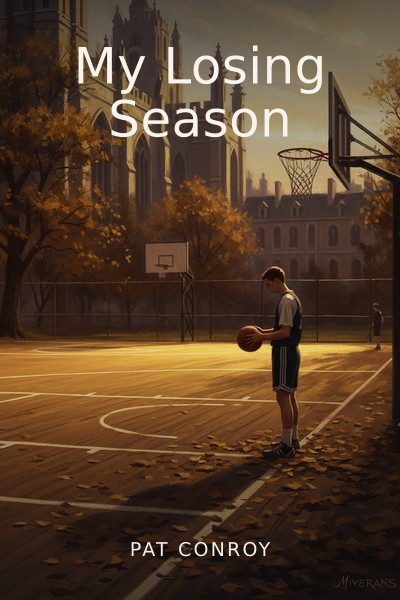
PAT CONROY--AMERICA'S MOST BELOVED STORYTELLER--IS BACK!"I was born to be a point guard, but not a very good one. . . .There was a time in my life when I walked through the world known to myself and others as an athlete. It was part of my own definition of who I was and certainly the part I most respected. When I was a young man, I was well-built and agile and ready for the rough and tumble of games, and athletics provided the single outlet for a repressed and preternaturally shy boy to express himself in public....I lost myself in the beauty of sport and made my family proud while passing through the silent eye of the storm that was my childhood." So begins Pat Conroy's journey back to 1967 and his startling realization "that this season had been seminal and easily the most consequential of my life." The place is the Citadel in Charleston, South Carolina, that now famous military college, and in memory Conroy gathers around him his team to relive their few triumphs and humiliating defeats. In a narrative that moves seamlessly between the action of the season and flashbacks into his childhood, we see the author's love of basketball and how crucial the role of athlete is to all these young men who are struggling to find their own identity and their place in the world.In fast-paced exhilarating games, readers will laugh in delight and cry in disappointment. But as the story continues, we gradually see the self-professed "mediocre" athlete merge into the point guard whose spirit drives the team. He rallies them to play their best while closing off the shouts of "Don't shoot, Conroy" that come from the coach on the sidelines. For Coach Mel Thompson is to Conroy the undermining presence that his father had been throughout his childhood. And in these pages finally, heartbreakingly, we learn the truth about the Great Santini.In My Losing Season Pat Conroy has written an American classic about young men and the bonds they form, about losing and the lessons it imparts, about finding one's voice and one's self in the midst of defeat. And in his trademark language, we see the young Conroy walk from his life as an athlete to the writer the world knows him to be.From the Hardcover edition.

Conroy’s central thesis is that losing—especially in youth—can be more formative than winning. Through the relentless defeats of his senior basketball season, he learns humility, empathy, and the ability to confront pain rather than hide from it. The book argues that loss strips away illusions, forcing one to face their limitations and, ultimately, to grow. Conroy’s honest reckoning with failure challenges the cultural obsession with victory, suggesting that the lessons of defeat are more enduring and transformational.
Basketball, for Conroy, is not just a game but a crucible where identity, relationships, and values are tested. The team’s struggles mirror the personal battles each player faces—against family expectations, self-doubt, and institutional pressures. Conroy uses the basketball court as a stage for exploring broader themes: loyalty, leadership, and the search for meaning in adversity.
“I was born to be a point guard, but not a very good one.”
“Loss is a fiercer, more uncompromising teacher than victory.”