
Electrons.
0 · Quantum electrodynamics · Photons
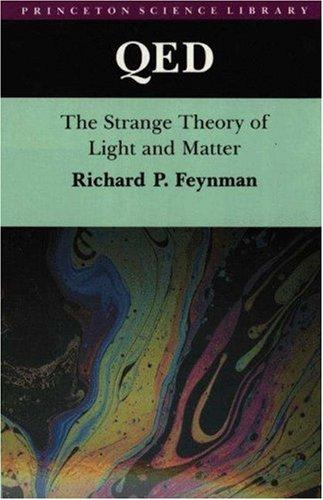
QED: The Strange Theory of Light and Matter by Richard P. Feynman — Summary, Key Ideas & Quotes
1985171 pages✦ 3-min Big ideas★ 4.3 (7)
Rate it
light and matter
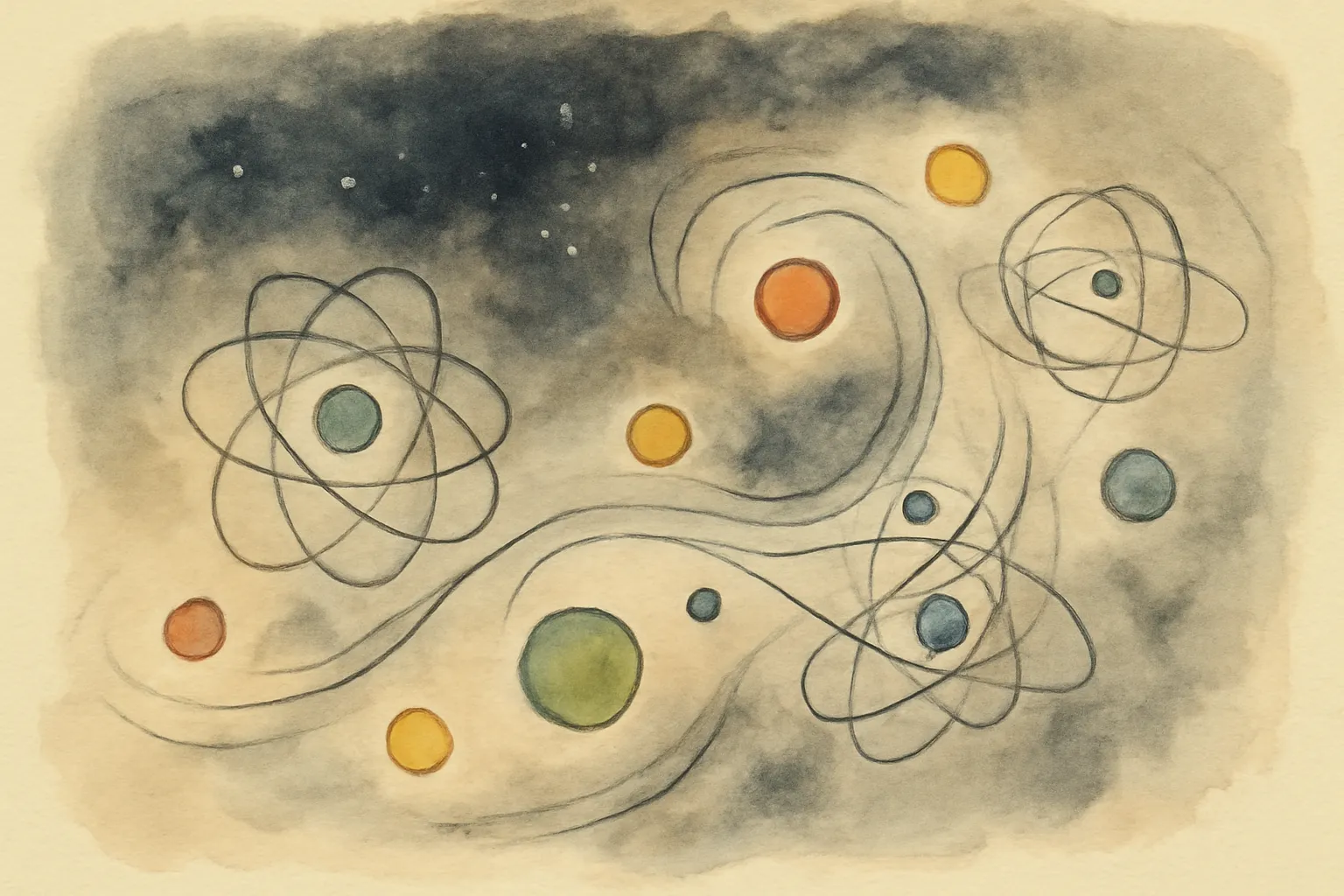
Feynman demystifies the highly abstract field of quantum electrodynamics (QED) by using everyday language, analogies, and his signature diagrams. Rather than relying on heavy mathematics, he explains how light interacts with matter—how photons are absorbed, emitted, and reflected—using simple visual tools. This approach allows readers to understand the core principles of QED without needing a physics background, revealing the surprising logic behind phenomena like reflection, refraction, and interference.
A central theme is the inherent uncertainty of quantum processes. Feynman explains that, at the quantum level, events do not happen with certainty but with probabilities. He introduces the idea of calculating the likelihood of a photon taking a particular path by adding 'arrows' (representing complex numbers) and shows how these probabilities underpin all of light’s behavior. This challenges classical intuition and invites readers to accept a reality where chance is fundamental.
“I think I can safely say that nobody understands quantum mechanics.”
“Nature uses only the longest threads to weave her patterns, so each small piece of her fabric reveals the organization of the entire tapestry.”


