
Technology and civilization · Human beings · Historical Chronology
Sapiens by Yuval Noah Harari — Summary, Key Ideas & Quotes
2011456 pages✦ 3-min Big ideas★ 4.2 (207)
Rate it
From a renowned historian comes a groundbreaking narrative of humanity’s creation and evolution—a #1 international bestseller—that explores the ways in which biology and history have defined us and enhanced our understanding of what it means to be “human.” One hundred thousand years ago, at least six different species of humans inhabited Earth. Yet today there is only one—homo sapiens. What happened to the others? And what may happen to us? Most books about the history of humanity pursue either a historical or a biological approach, but Dr. Yuval Noah Harari breaks the mold with this highly original book that begins about 70,000 years ago with the appearance of modern cognition. From examining the role evolving humans have played in the global ecosystem to charting the rise of empires, Sapiens integrates history and science to reconsider accepted narratives, connect past developments with contemporary concerns, and examine specific events within the context of larger ideas. Dr. Harari also compels us to look ahead, because over the last few decades humans have begun to bend laws of natural selection that have governed life for the past four billion years. We are acquiring the ability to design not only the world around us, but also ourselves. Where is this leading us, and what do we want to become? Featuring 27 photographs, 6 maps, and 25 illustrations/diagrams, this provocative and insightful work is sure to spark debate and is essential reading for aficionados of Jared Diamond, James Gleick, Matt Ridley, Robert Wright, and Sharon Moalem.
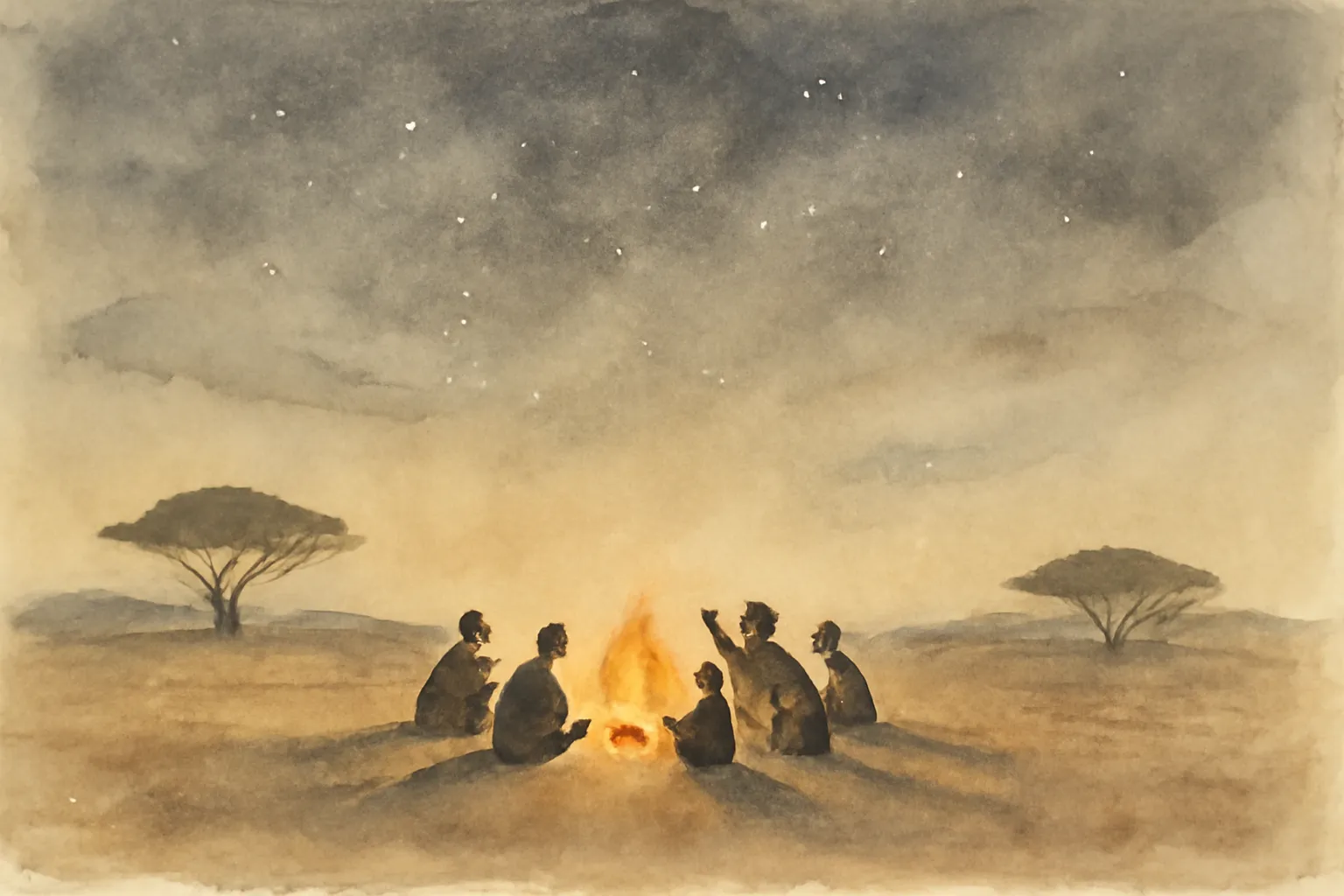
Harari identifies the Cognitive Revolution, around 70,000 years ago, as the turning point that set Homo sapiens apart from other human species. This leap in imagination and communication enabled large-scale cooperation, storytelling, and the creation of shared myths. Our ability to believe in collective fictions—gods, nations, money—became a unique evolutionary advantage, allowing us to organize in numbers far beyond what instinct alone would allow.
A core argument of Sapiens is that human societies are built on shared beliefs, not just material realities. From religious doctrines to modern corporations, our capacity to collectively believe in abstract concepts underpins everything from legal systems to economies. These myths, while intangible, have real-world power, shaping behavior and enabling cooperation among strangers on a massive scale.
“You could never convince a monkey to give you a banana by promising him limitless bananas after death in monkey heaven.”
“There are no gods, no nations, no money and no human rights, except in our collective imagination.”
“Homo sapiens conquered the world thanks above all to its unique language.”