
Physics
Six Easy Pieces by Richard Feynman — Summary, Key Ideas & Quotes
2008144 pages✦ 3-min Big ideas
Rate it
Richard Feynman's Six Easy Pieces is the perfect layman's introduction to the mindboggling universe of physics. In Feynman's safe hands, the reader is introduced to the very basics of atoms, energy, force, gravity and quantum behaviour. If the greatest physicist since the Second World War can't explain it to you, no one can.
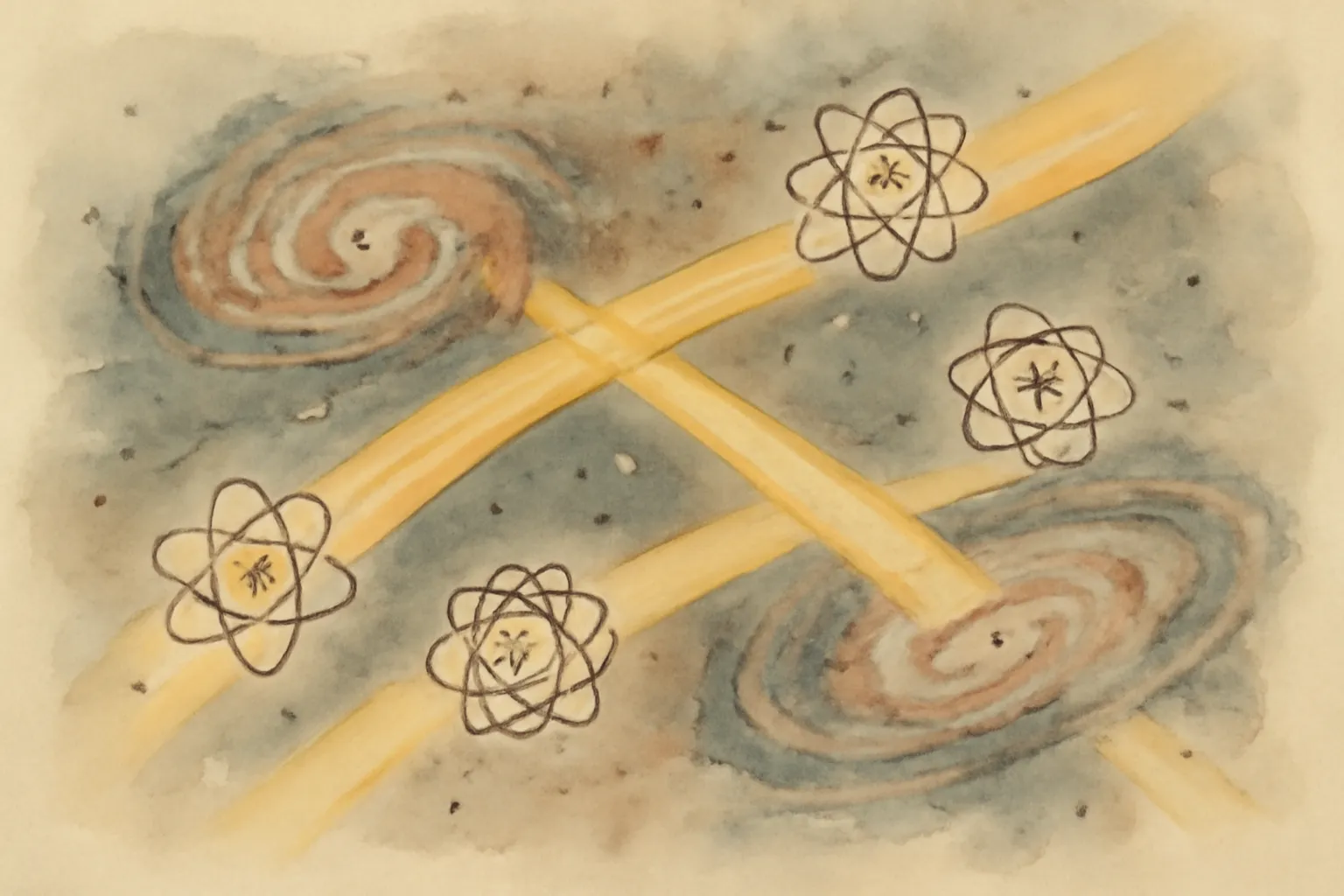
Feynman emphasizes that physics is fundamentally about discovering the patterns and laws that govern the natural world. Rather than memorizing isolated facts, he encourages readers to see science as a process of inquiry—asking questions, making observations, and finding the underlying simplicity in complex phenomena. This perspective demystifies physics, showing it as a human endeavor driven by curiosity and logic.
One of the core ideas is the atomic hypothesis: that all matter is made of tiny, indivisible atoms. Feynman explains how this concept underpins our understanding of chemistry, biology, and physics, and how it leads to profound insights about the nature of matter, energy, and life itself. By tracing how atomic theory explains everyday phenomena, he demonstrates its central role in all of science.
“If, in some cataclysm, all of scientific knowledge were to be destroyed, and only one sentence passed on to the next generations of creatures, what statement would contain the most information in the fewest words? I believe it is the atomic hypothesis.”